

$4,604,819
Palais Renaissance Au Cœur De Catane
- 10 Chambres
- 6 SdB
- 21,528 Sqft
-
47
Vues des 30 derniers jours
- 45
À propos de la propriété
La description a été traduite automatiquement.
La description est affichée dans la langue d'origine.
Au coeur du centre historique de Catane, le long de la Via Etnea, se dresse un bâtiment d’exception rappelant le style de la Renaissance florentine. Commandé en 1875 par son premier propriétaire à l’architecte milanais Carlo Sada, l’édifice présente trois façades, dont la principale, donnant sur la Via Etnea, se distingue par ses statues, ses terrasses et un jardin enchanteur, tandis que la façade
In the heart of Catania’s historic centre, along Via Etnea, stands an exclusive building reminiscent of the Florentine Renaissance style. Commissioned in 1875 by the first owner to the Milanese architect Carlo Sada, the building has three façades, among which the main one stands out, overlooking Via Etnea and enriched with statues, terraces and an enchanting garden, and the internal one, character
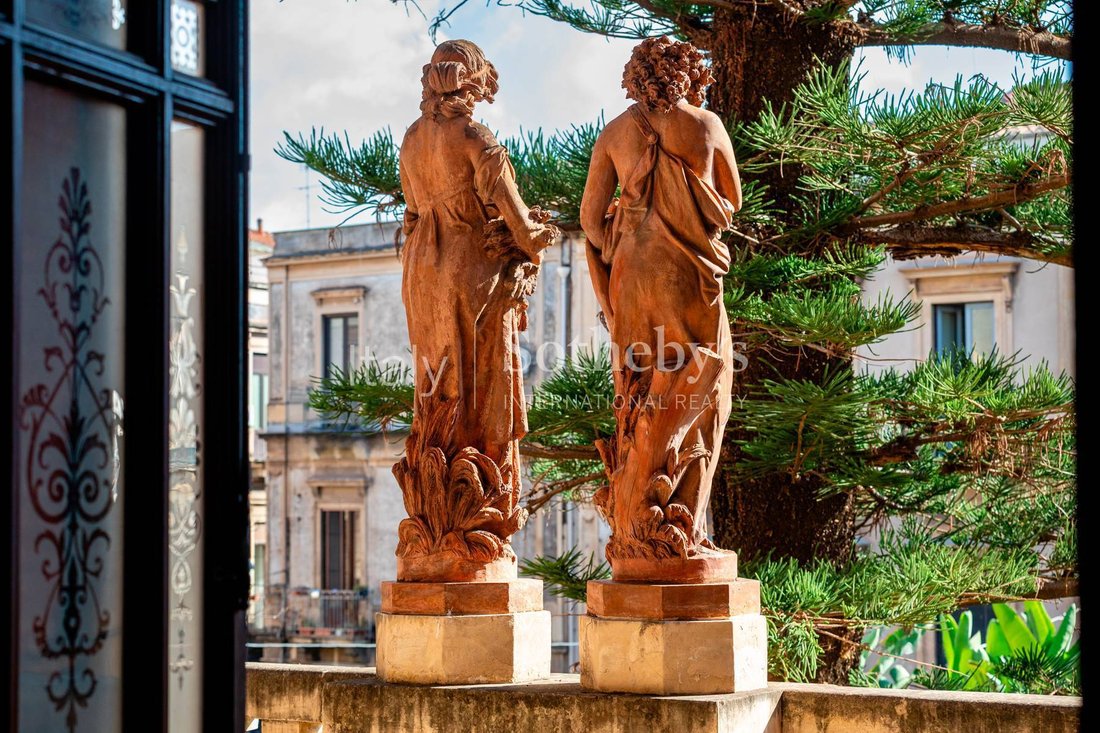
Au coeur du centre historique de Catane, le long de la Via Etnea, se dresse un bâtiment d’exception rappelant le style de la Renaissance florentine. Commandé en 1875 par son premier propriétaire à l’architecte milanais Carlo Sada, l’édifice présente trois façades, dont la principale, donnant sur la Via Etnea, se distingue par ses statues, ses terrasses et un jardin enchanteur, tandis que la façade intérieure se caractérise par une loggia ornée de grandes arches.
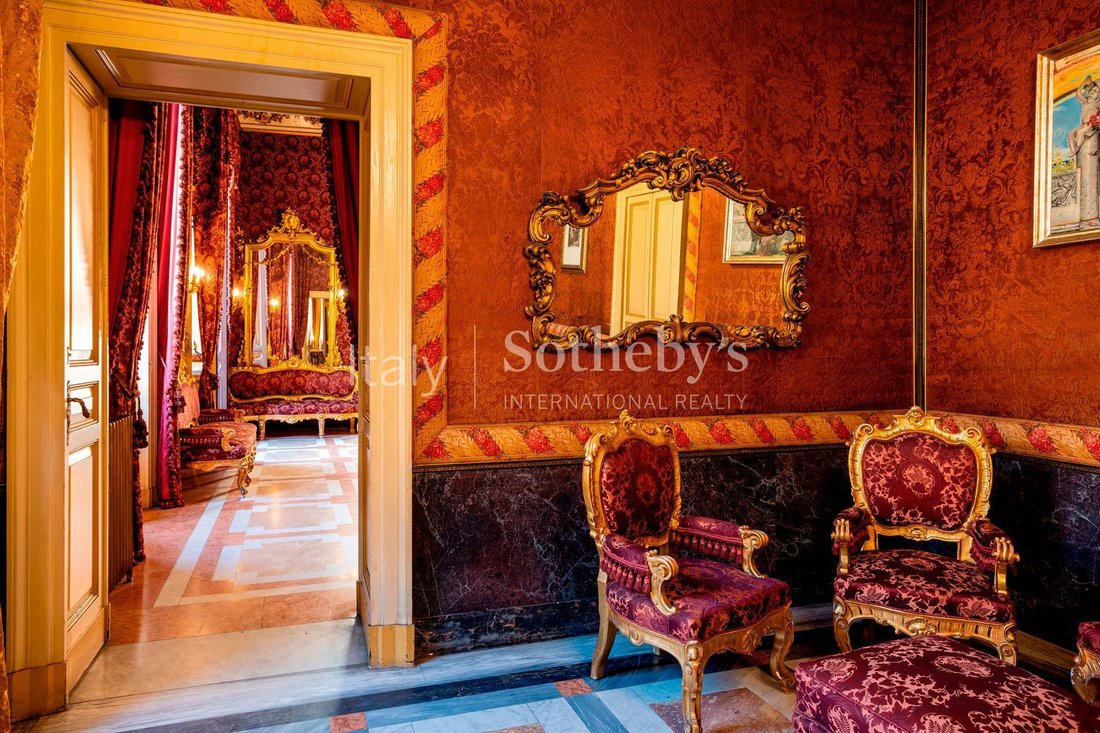
La façade principale se distingue par l’usage du bossage, qui confère à l’ensemble solennité et harmonie. À l’intérieur, l’étage noble a conservé sa disposition d’origine, avec ses fresques, stucs, dorures, tentures et meubles d’époque. Le bâtiment s’élève sur plusieurs niveaux reliés par un spectaculaire escalier à trois volées, richement décoré dans un style néoclassique-renaissance, conçu pour mettre en valeur la richesse de la famille et impressionner les invités.
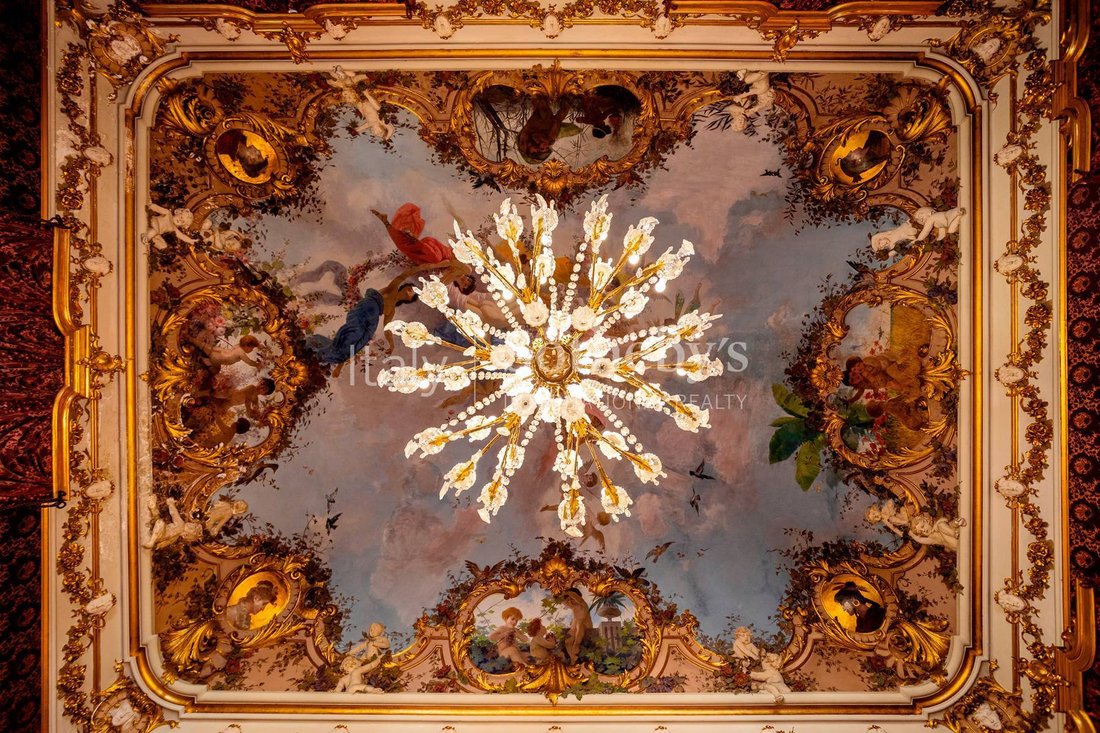
Les pièces comprennent de nombreuses chambres, des espaces de rangement, une cave et, à l’étage noble, quatre salons particulièrement prestigieux: la Salle des Miroirs ou Salle de Bal, décorée d’or pur et de paillettes, avec un plafond Art nouveau et des motifs rococo représentant la naissance et le triomphe de Vénus ou de Flore; la Salle des Arts; le Salon de Musique; et la Salle à Manger. Toutes sont décorées selon la même technique, mais avec des sujets différents inspirés de la mythologie classique. La chambre principale présente également une précieuse fresque au plafond représentant l’allégorie du sommeil.
L’étage noble a déjà été restauré et est prêt à être habité; le rez-de-chaussée nécessite seulement quelques travaux, tandis que le sous-sol et le deuxième étage demandent une rénovation plus importante, offrant la possibilité de transformer la propriété en un prestigieux établissement d’hébergement.
Luminosité, accès piéton et véhicule, ascenseur, places de stationnement et garage: autant d’atouts auxquels s’ajoute un emplacement stratégique, à seulement 15 minutes de l’aéroport de Catane et à environ 10 minutes des plages et de la côte.
La façade principale se distingue par l’usage du bossage, qui confère à l’ensemble solennité et harmonie. À l’intérieur, l’étage noble a conservé sa disposition d’origine, avec ses fresques, stucs, dorures, tentures et meubles d’époque. Le bâtiment s’élève sur plusieurs niveaux reliés par un spectaculaire escalier à trois volées, richement décoré dans un style néoclassique-renaissance, conçu pour mettre en valeur la richesse de la famille et impressionner les invités.
Les pièces comprennent de nombreuses chambres, des espaces de rangement, une cave et, à l’étage noble, quatre salons particulièrement prestigieux: la Salle des Miroirs ou Salle de Bal, décorée d’or pur et de paillettes, avec un plafond Art nouveau et des motifs rococo représentant la naissance et le triomphe de Vénus ou de Flore; la Salle des Arts; le Salon de Musique; et la Salle à Manger. Toutes sont décorées selon la même technique, mais avec des sujets différents inspirés de la mythologie classique. La chambre principale présente également une précieuse fresque au plafond représentant l’allégorie du sommeil.
L’étage noble a déjà été restauré et est prêt à être habité; le rez-de-chaussée nécessite seulement quelques travaux, tandis que le sous-sol et le deuxième étage demandent une rénovation plus importante, offrant la possibilité de transformer la propriété en un prestigieux établissement d’hébergement.
Luminosité, accès piéton et véhicule, ascenseur, places de stationnement et garage: autant d’atouts auxquels s’ajoute un emplacement stratégique, à seulement 15 minutes de l’aéroport de Catane et à environ 10 minutes des plages et de la côte.
In the heart of Catania’s historic centre, along Via Etnea, stands an exclusive building reminiscent of the Florentine Renaissance style. Commissioned in 1875 by the first owner to the Milanese architect Carlo Sada, the building has three façades, among which the main one stands out, overlooking Via Etnea and enriched with statues, terraces and an enchanting garden, and the internal one, characterised by a loggia with large arches.
The main façade is distinguished by the use of rustication, which lends solemnity and harmony to the façade. Inside, the main floor has retained its original layout, with frescoes, stuccoes, gilding, tapestries and period furnishings. The building is spread over several levels connected by a spectacular three-flight staircase, richly decorated in neoclassical-Renaissance style and designed to highlight the family’s wealth and impress guests. The rooms include numerous bedrooms, storage rooms, a cellar and, on the main floor, four particularly prestigious rooms: the Hall of Mirrors or Ballroom, with decorations in pure gold and glitter, an Art Nouveau ceiling and Rococo motifs depicting the birth and triumph of Venus or Flora; the Hall of Arts; the Music Room; and the Dining Room. All are decorated using the same technique, but with different subjects inspired by classical mythology. The bedroom also features a precious fresco on the ceiling depicting the allegory of sleep. The main floor has already been renovated and is ready to move into, the ground floor only needs some work, while the basement and second floor require more substantial work, offering the possibility of transforming the property into a prestigious accommodation facility.
Bright and with both pedestrian and vehicular access, the building has a lift, parking space and garage, and enjoys a strategic location just 15 minutes from Catania airport and about 10 minutes from the beaches and coast.
The main façade is distinguished by the use of rustication, which lends solemnity and harmony to the façade. Inside, the main floor has retained its original layout, with frescoes, stuccoes, gilding, tapestries and period furnishings. The building is spread over several levels connected by a spectacular three-flight staircase, richly decorated in neoclassical-Renaissance style and designed to highlight the family’s wealth and impress guests. The rooms include numerous bedrooms, storage rooms, a cellar and, on the main floor, four particularly prestigious rooms: the Hall of Mirrors or Ballroom, with decorations in pure gold and glitter, an Art Nouveau ceiling and Rococo motifs depicting the birth and triumph of Venus or Flora; the Hall of Arts; the Music Room; and the Dining Room. All are decorated using the same technique, but with different subjects inspired by classical mythology. The bedroom also features a precious fresco on the ceiling depicting the allegory of sleep. The main floor has already been renovated and is ready to move into, the ground floor only needs some work, while the basement and second floor require more substantial work, offering the possibility of transforming the property into a prestigious accommodation facility.
Bright and with both pedestrian and vehicular access, the building has a lift, parking space and garage, and enjoys a strategic location just 15 minutes from Catania airport and about 10 minutes from the beaches and coast.
-
Type de propriété
Maison
-
Prix/pied²
$213
Caractéristiques
Explorez le secteur
Via Etnea, Catania, CT 95100, Villa Bellini-Ospedale Garibaldi, Catane, Italie
Voir sur Google Maps
Prix par sqft
Faible
Élevé
Cette propriété luxueuse sur la Via Etnea bénéficie d’un emplacement de choix dans le centre culturel animé de Catane. À quelques minutes en voiture de l’aéroport de Catane-Fontanarossa et des gares centrales, elle offre une excellente accessibilité. À proximité, découvrez des attractions historiques comme le Teatro Massimo Bellini et savourez la cuisine sicilienne exquise. Avec l’Etna et la mer Ionienne à proximité, elle satisfait à la fois les amateurs d’urbain et de nature.
Voir à proximité
Attractions
Écoles
Aéroport de Catania Fontanarossa
Aéroport
13 min
Gare Centrale de Catania
Gare
9 min
Teatro Massimo Bellini
Culture et patrimoine
4 min
Parc de l'Etna
Nature & Plein air
45 min
École Internationale de Catane
École internationale
20 min

Inscrit il y a 6 ans
Vous vous êtes renseigné sur ce bien
L'agent vous contactera bientôt par
Publié par
18
Annonces
2024
Inscrit
Réserver une visite avec Silvia Gallo
Choisissez une date et si vous souhaitez une visite virtuelle ou en personne avec l’agent.
Date préférée
Type de visite

Italy Sotheby's International Realty
Piazza Municipio 4, 96017, Noto, Siracusa, Italy
Voir le profil de l’agence
Noto is a small gem of Sicilian Baroque architecture and, since 2002, has been
part of the UNESCO World Heritag
part of the UNESCO World Heritag
Noto is a small gem of Sicilian Baroque architecture and, since 2002, has been
part of the UNESCO World Heritage list along with eight other destinations on
the island. The extraordinary beauty of Noto characterizes the entire Val di
Noto and has made this city famous worldwide, attracting both Italian tourists
and international visitors. Italy Sotheby’s International Realty has opened its
tenth office here to further expand its presence in Italy and ensure
comprehensive coverage from north to south, reaching Sicily. This includes not
only major cities such as Catania, Taormina, and Syracuse but also the Val di
Noto with its Baroque towns of Ragusa, Modica, and Scicli.
part of the UNESCO World Heritage list along with eight other destinations on
the island. The extraordinary beauty of Noto characterizes the entire Val di
Noto and has made this city famous worldwide, attracting both Italian tourists
and international visitors. Italy Sotheby’s International Realty has opened its
tenth office here to further expand its presence in Italy and ensure
comprehensive coverage from north to south, reaching Sicily. This includes not
only major cities such as Catania, Taormina, and Syracuse but also the Val di
Noto with its Baroque towns of Ragusa, Modica, and Scicli.
Dernière mise à jour
Juin 20
Première mise en ligne
Oct 1, 2025
Lien de l’annonce
Référence de l’annonce
MS25QL
La confiance des plus grands courtiers du monde
Les agents des propriétés les plus exceptionnelles du monde publient sur JamesEdition.
- Des annonces de Sotheby's, Christie's, BARNES et Engel & Völkers
- Chaque annonce est vérifiée avant sa mise en ligne
- Contactez directement des agents vérifiés
En continuant, vous acceptez nos Conditions et notre Politique de confidentialité.