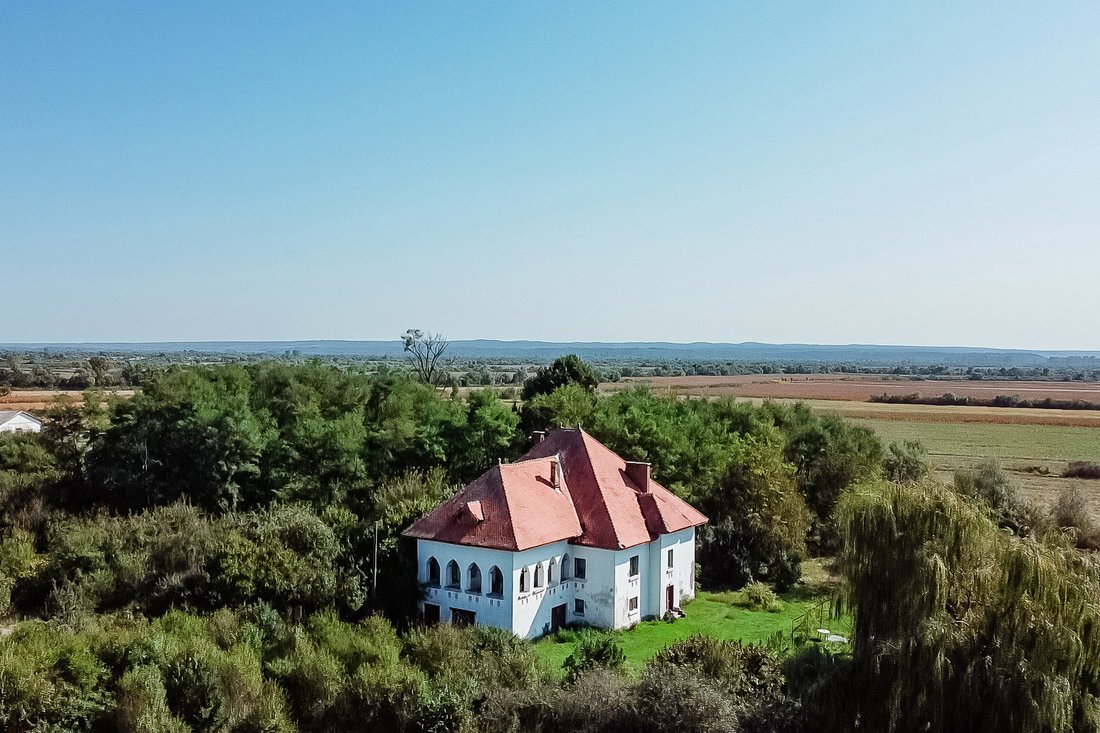
Cula Voiculescu, Rare Maison Forte Du XVII Ie Siècle
- 7 Chambres
- 2 SdB
- 7,557 Sqft
- 25.78 Ac lot
- 16
À propos de la propriété
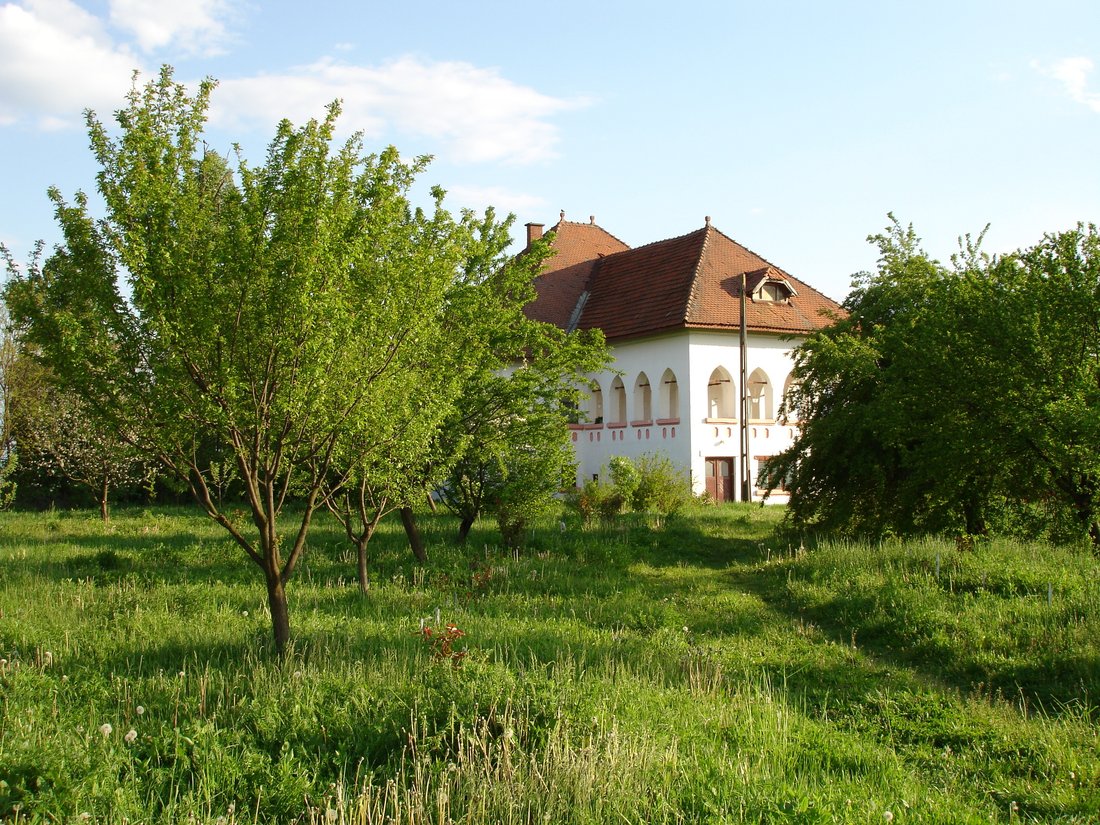
Surrounded by abundant vegetation, the tower lifts its tiled roof to survey the distance. Times are quiet now, but at the end of the 18th century when it was built, Pazvantoglu, the pasa from Vidin known to the residents as Pazvante Chioru, used to raid the area. The Phanariot lordships did not have the ability to ensure the protection of the territories far from the capital, that is why the Ol
Le mot cula vient du turc, où kule signifie tour, et désigne ce type de maison à un étage que l’on trouve ici dans le sud du pays, mais aussi au sud du Danube, en Bulgarie, en Albanie, en Grèce, en Serbie, en Bosnie-Herzégovine, en Macédoine du Nord, au Monténégro, dans la région du Kosovo.
La maison de la famille Voiculescu suit la ligne architecturale classique, avec des volumes compacts et solides, bien placée sur le sol, située dans un endroit isolé, entourée de campagne et de paix, avec une bonne visibilité sur la région. Avec des murs épais, des escaliers intérieurs entre les étages, des portes blindées, des cachettes, des fenêtres et des trappes étroites, les cles sont aujourd’hui des résidences privées ou des unités touristiques appréciées et appréciées. La loggia d’inspiration brancovénienne est un endroit merveilleux pour éviter les étés trop chauds, et la cave à vin peut servir d’abri hivernal devant une cheminée et du vin chaud.
Cula est devenue la propriété de la famille actuelle en 1915, après avoir été achetée par Ion V. Voiculescu, propriétaire, fils du professeur Vasile Voiculescu et petit-fils du député paysan Ioan Voicu (lescu), qui a représenté Gorj aux côtés des célèbres Gheorghe Magheru et Christian Tell (les moments historiques ont été immortalisés à Bucarest par le photographe Carol Popp de Szathmary - voir photo).
Bien que issu d’une famille peu riche, Ion V. Voiculescu possédait encore quelques terres qui ont attiré l’attention des rebelles lors de la rébellion paysanne de 1907 et s’est ensuite autorisé à acheter 250 ha à Dimitrie I. Mongescu. Cula est située sur ces terres récemment acquises. La famille Mongescu entretenait des liens étroits avec Tudor Vladimirescu et le mouvement révolutionnaire dirigé par lui. Son arrière-grand-père, Vasile Moanga (Mongescu), était un bon ami de Tudor Vladimirescu et le trésorier de son mouvement révolutionnaire de 1821. L’histoire raconte qu’avant de lire la déclaration à Pades, Tudor Vladimirescu et ses hommes ont passé la nuit dans la cula de Copaceni (l’actuelle cula Voiculescu à Cornesti), qui appartenait à l’époque à Barbu Viisoreanu, un administrateur influent du comté et député de Gorj pendant la réglementation organique. L’histoire plus récente montre qu’Ion Voiculescu a fait don de la maison et des 10,5 hectares qui l’entouraient à son fils, Vasile Voiculescu, qui a ensuite été expulsé de force de la maison par les communistes en pleine nuit ; sa fortune a été expropriée, l’ancien noble a été assigné à résidence dans une chambre à Targu Jiu et a été contraint de travailler comme portier à la gare de la ville pour décharger des wagons de marchandises. L’État a négligé la cula ; entre 1947 et 1997, elle a été transformée en I.A.S., avec des journaliers séjournant au rez-de-chaussée, des poulets élevés dans les couloirs et des moutons abrités dans le grenier en hiver. Les descendants du boyard exproprié par les communistes sont aujourd’hui propriétaires du bâtiment ainsi que des 10,5 hectares de terrain.
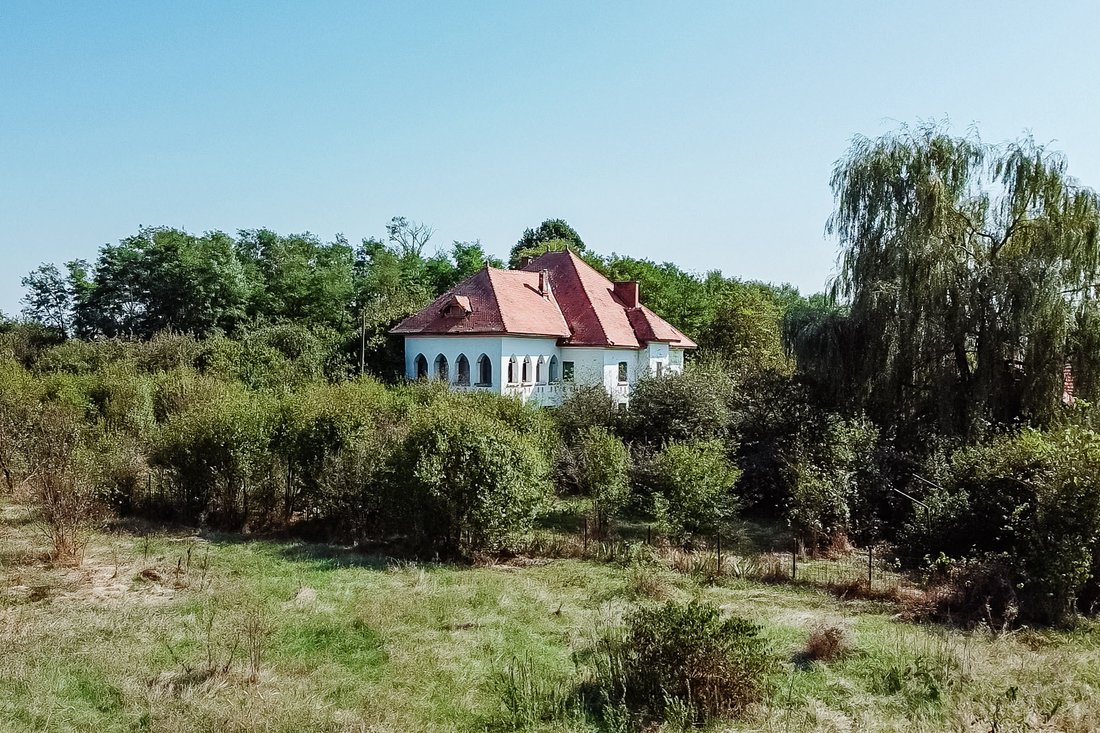
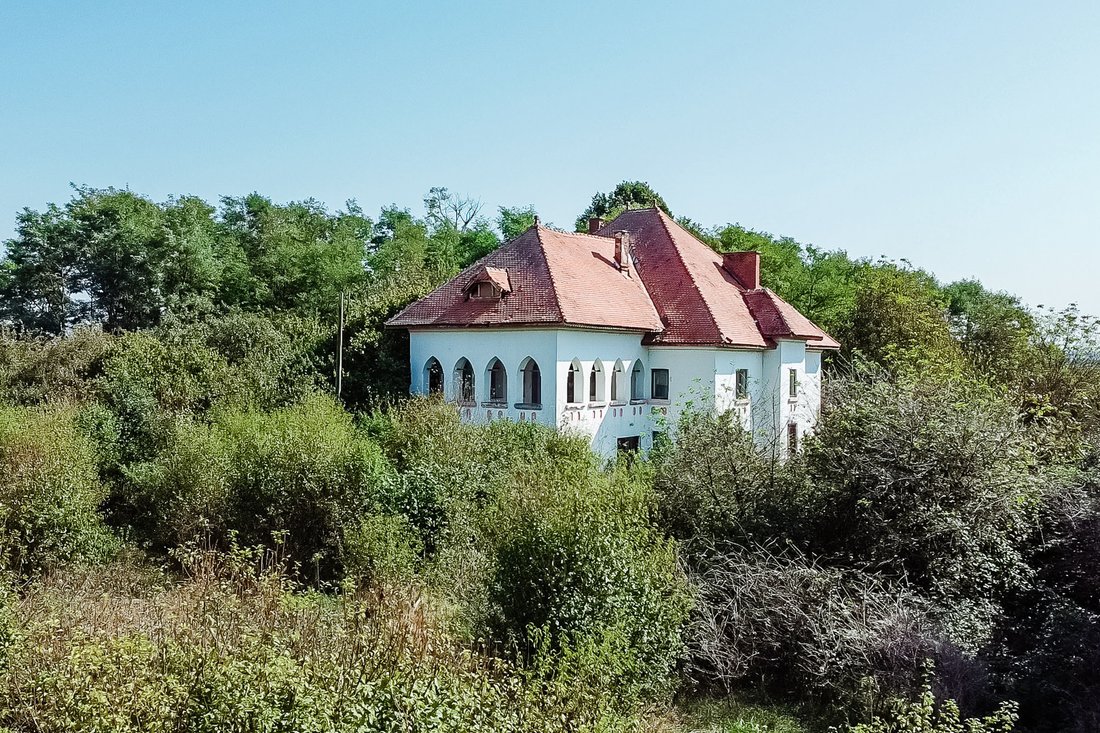
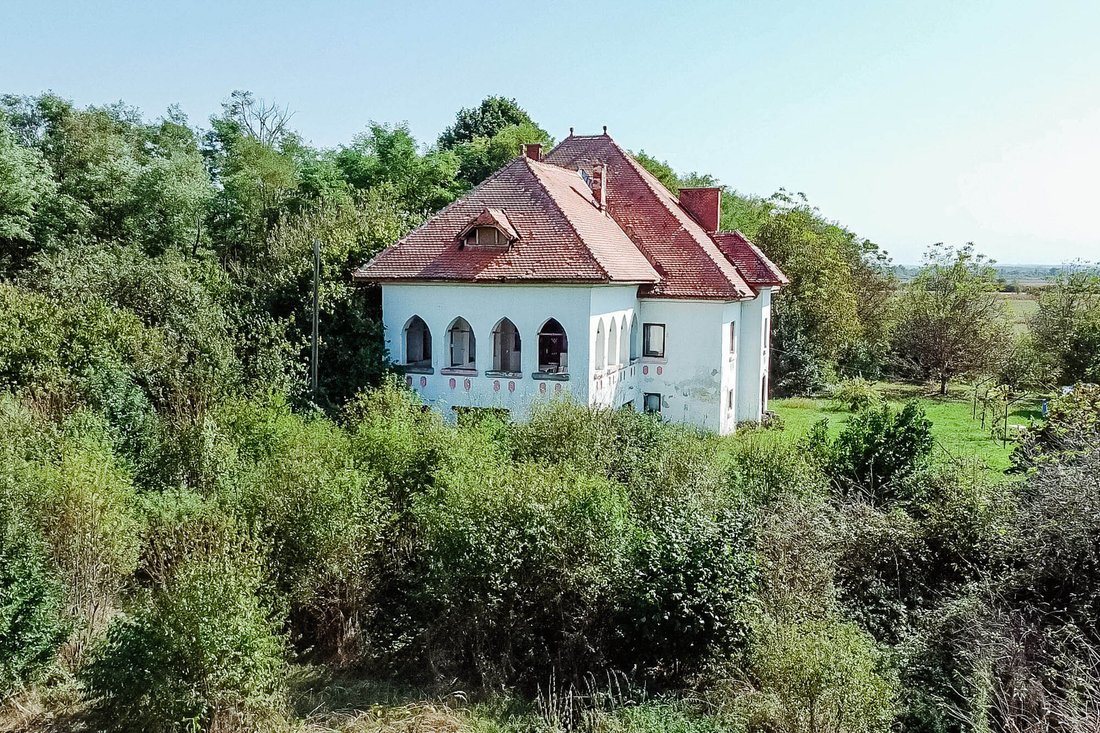
Surrounded by abundant vegetation, the tower lifts its tiled roof to survey the distance. Times are quiet now, but at the end of the 18th century when it was built, Pazvantoglu, the pasa from Vidin known to the residents as Pazvante Chioru, used to raid the area. The Phanariot lordships did not have the ability to ensure the protection of the territories far from the capital, that is why the Oltenian boyars built forts, fortified houses meant to protect their wealth in case of attack. It is interesting to note the uniqueness of this type of construction, which was no longer built after 1821 because the attacks stopped after Tudor Vladimirescu’s revolution, therefore their construction no longer made sense. The rarity makes the appearance of such a house on the real estate market an event, an opportunity.
The word cula comes from the Turkish, where kule means tower, and names this type of one-story house that can be found here in the south of the country, but also south of the Danube, in Bulgaria, Albania, Greece, Serbia, Bosnia and Herzegovina, Macedonia from North, Montenegro, Kosovo Region.
The house of the Voiculescu family follows the classical architectural line, having compact, solid volumes, well placed on the ground, located in an isolated place, surrounded by countryside and peace, with good visibility over the area. With thick walls, internal stairs between floors, reinforced doors, hiding places, narrow windows and hatches, today the cule are private homes or appreciated and loved tourist units. The Brancoveneanu-inspired loggia is a wonderful place to avoid too hot summers, and the wine cellar has potential for winter shelter in front of a fireplace and mulled wine.
Cula became the property of the current family in 1915, having been bought by Ion . V Voiculescu, landlord, son of the teacher Vasile Voiculescu and grandson of the peasant-deputy Ioan Voicu(lescu), who represented Gorj alongside the famous Gheorghe Magheru and Christian Tell (the historical moments were immortalized in Bucharest by the photographer Carol Popp de Szathmary - see photo).
Although coming from a not very rich family, Ion V. Voiculescu still had some land that attracted the attention of the rebels during the 1907 peasant rebellion and later allowed himself to buy 250 ha from Dimitrie I. Mongescu. Cula is located on these newly acquired lands. The Mongescu family had close ties with Tudor Vladimirescu and the revolutionary movement led by him, one great-grandfather, Vasile Moanga (Mongescu), being a good friend of Tudor Vladimirescu and the treasurer of his revolutionary 1821 movement. History says that before reading the declaration in Pades, Tudor Vladimirescu and his people spent the night in the cula of Copaceni (the current Voiculescu cula in Cornesti), which at that time supposedly belonged to Barbu Viisoreanu, an influential administrator in the county and deputy of Gorj during the Organic Regulation. More recent history shows that Ion Voiculescu donated the house and the 10.5 ha that surrounded it to his son, Vasile Voiculescu, who later, in 1949, was forcibly removed from the house by communists in the middle of the night; his wealth was expropriated, the former nobleman receiving mandatory residence in a room in Targu Jiu and being forced to work as a porter in the city station, unloading freight wagons. The state neglected the cula; between 1947-1997 it was transformed into an I. A. S., with day laborers staying on the ground floor, chickens raised in the hallways and sheep sheltered in the attic in winter. The descendants of the boyar expropriated by the communists today own the building together with the 10.5 ha of land.
-
Type de propriété
Autres
-
Prix/pied²
$163
Caractéristiques
- Cheminée
- Cave à vins
Explorez le secteur
L'agent vous contactera bientôt par
Publié par
Réserver une visite avec Cristian Soaită
Choisissez une date et si vous souhaitez une visite virtuelle ou en personne avec l’agent.

La confiance des plus grands courtiers du monde
Les agents des propriétés les plus exceptionnelles du monde publient sur JamesEdition.
- Des annonces de Sotheby's, Christie's, BARNES et Engel & Völkers
- Chaque annonce est vérifiée avant sa mise en ligne
- Contactez directement des agents vérifiés
En continuant, vous acceptez nos Conditions et notre Politique de confidentialité.