Prix sur demande
Un Château Intemporel Au Cœur Des Dolomites
- 8 Chambres
- 12 SdB
- 22,282 Sqft
- 62
À propos de la propriété
La description a été traduite automatiquement.
La description est affichée dans la langue d'origine.
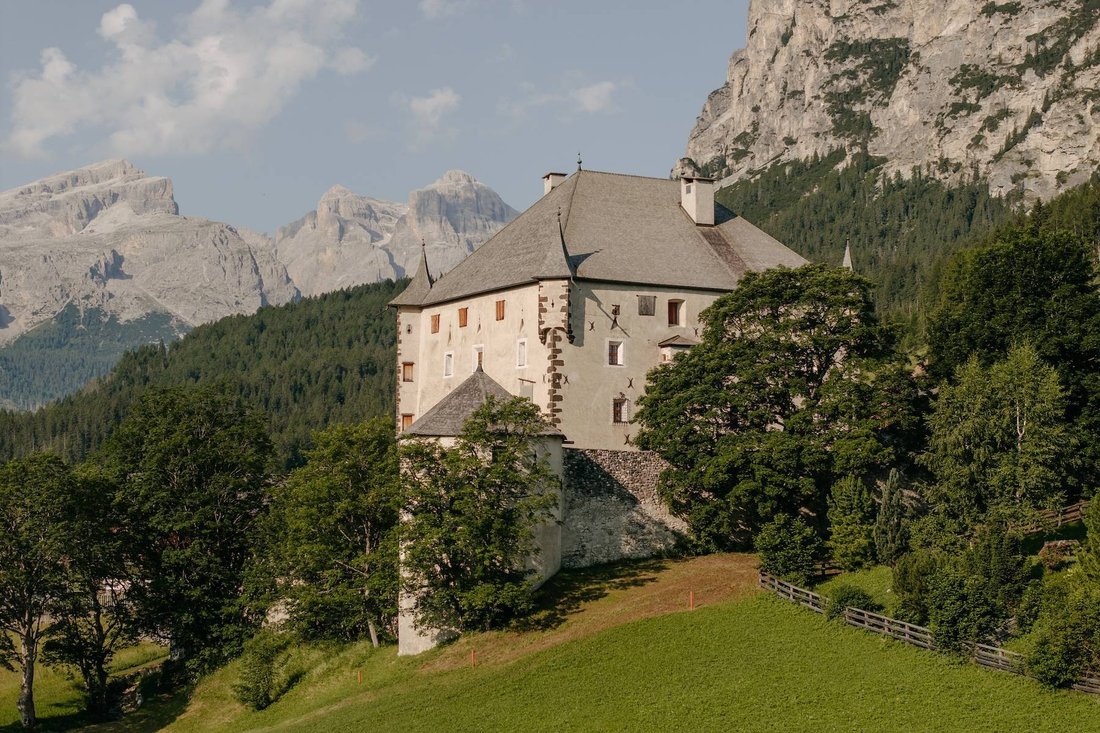
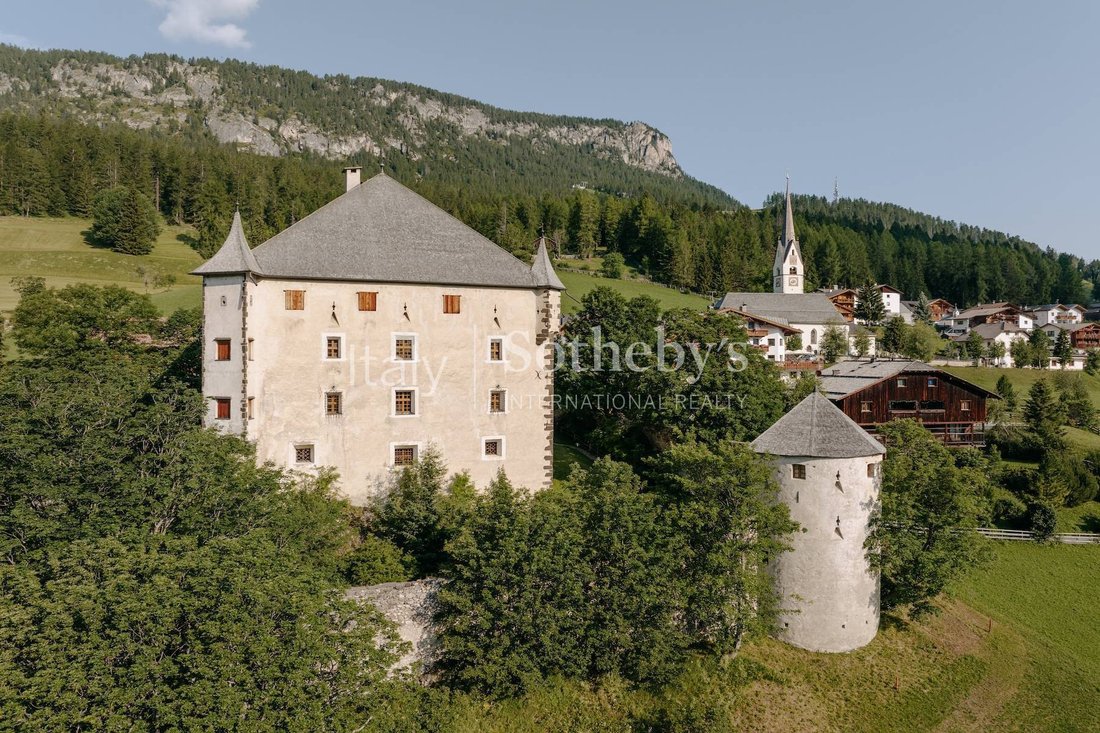
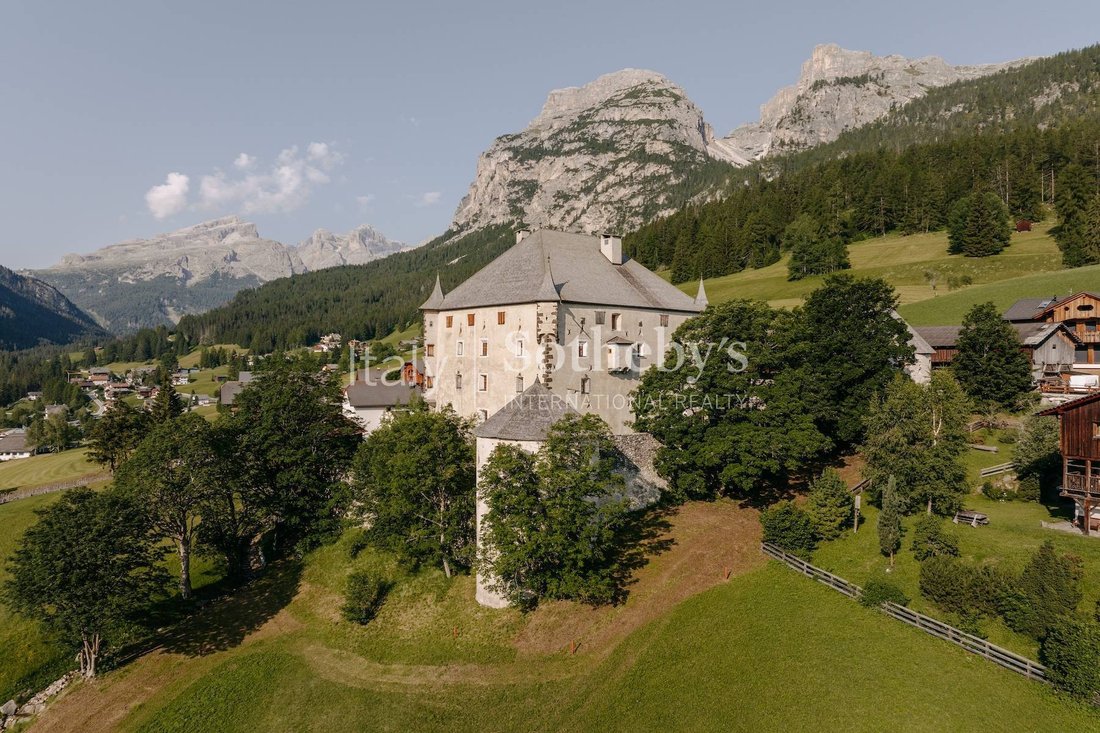
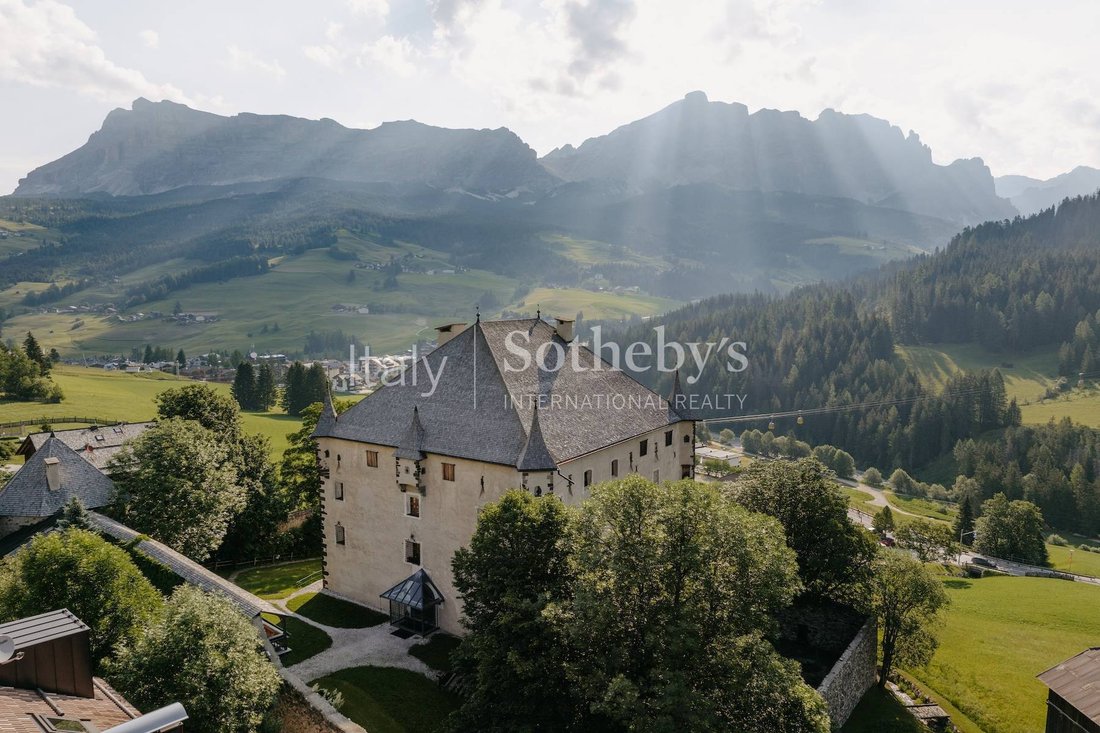
Au coeur de l’Alta Badia, perché sur un éperon rocheux dolomitique, se dresse le Castel Colz, un joyau architectural du XVIᵉ siècle et un rare exemple de résidence noble de style gothique-renaissance dans les Dolomites italiennes.
Commandé en 1536 par Hans von Rubatsch avec l’approbation de l’empereur Ferdinand Iᵉʳ, le château fut achevé en seulement douze mois, avant de passer entre les
Commandé en 1536 par Hans von Rubatsch avec l’approbation de l’empereur Ferdinand Iᵉʳ, le château fut achevé en seulement douze mois, avant de passer entre les
In the heart of Alta Badia, perched on a rocky dolomitic outcrop, stands Castel Colz - a 16th-century architectural gem and a rare example of noble Gothic-Renaissance residence in the Italian Dolomites.
Commissioned in 1536 by Hans von Rubatsch with the approval of Emperor Ferdinand I, the castle was completed in just twelve months and later passed to the Colz family, from whom it takes
Commissioned in 1536 by Hans von Rubatsch with the approval of Emperor Ferdinand I, the castle was completed in just twelve months and later passed to the Colz family, from whom it takes
Au coeur de l’Alta Badia, perché sur un éperon rocheux dolomitique, se dresse le Castel Colz, un joyau architectural du XVIᵉ siècle et un rare exemple de résidence noble de style gothique-renaissance dans les Dolomites italiennes.
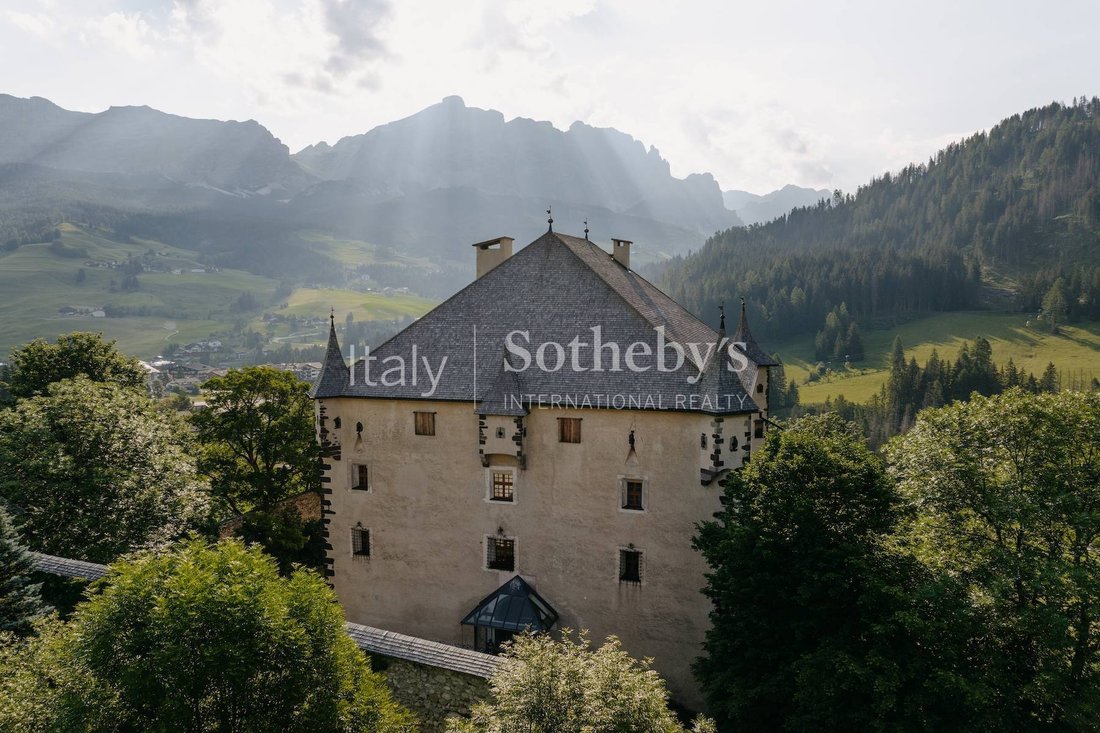
Commandé en 1536 par Hans von Rubatsch avec l’approbation de l’empereur Ferdinand Iᵉʳ, le château fut achevé en seulement douze mois, avant de passer entre les mains de la famille Colz, dont il porte aujourd’hui le nom. Sa structure imposante mais harmonieuse, ponctuée de tours et de volumes compacts, s’intègre parfaitement au paysage dolomitique environnant.
Les intérieurs conservent tout le charme originel du château, avec des plafonds voûtés, des boiseries anciennes, un mobilier d’époque et des détails décoratifs qui évoquent la noble tradition alpine. Chaque pièce raconte une histoire, offrant un équilibre raffiné entre authenticité historique et hospitalité intemporelle.
Connu dans la langue ladine locale sous le nom de Gran Ciasa, le château constitue depuis longtemps un repère culturel et symbolique de la vallée, un lieu empreint d’histoire, d’élégance et de beauté naturelle. Aujourd’hui, grâce à une restauration conservatrice minutieuse, la propriété offre une occasion rare à ceux qui souhaitent habiter ou valoriser un patrimoine architectural véritablement unique, au cœur de l’authenticité des Dolomites classées au patrimoine mondial de l’UNESCO.
Commandé en 1536 par Hans von Rubatsch avec l’approbation de l’empereur Ferdinand Iᵉʳ, le château fut achevé en seulement douze mois, avant de passer entre les mains de la famille Colz, dont il porte aujourd’hui le nom. Sa structure imposante mais harmonieuse, ponctuée de tours et de volumes compacts, s’intègre parfaitement au paysage dolomitique environnant.
Les intérieurs conservent tout le charme originel du château, avec des plafonds voûtés, des boiseries anciennes, un mobilier d’époque et des détails décoratifs qui évoquent la noble tradition alpine. Chaque pièce raconte une histoire, offrant un équilibre raffiné entre authenticité historique et hospitalité intemporelle.
Connu dans la langue ladine locale sous le nom de Gran Ciasa, le château constitue depuis longtemps un repère culturel et symbolique de la vallée, un lieu empreint d’histoire, d’élégance et de beauté naturelle. Aujourd’hui, grâce à une restauration conservatrice minutieuse, la propriété offre une occasion rare à ceux qui souhaitent habiter ou valoriser un patrimoine architectural véritablement unique, au cœur de l’authenticité des Dolomites classées au patrimoine mondial de l’UNESCO.
In the heart of Alta Badia, perched on a rocky dolomitic outcrop, stands Castel Colz - a 16th-century architectural gem and a rare example of noble Gothic-Renaissance residence in the Italian Dolomites.
Commissioned in 1536 by Hans von Rubatsch with the approval of Emperor Ferdinand I, the castle was completed in just twelve months and later passed to the Colz family, from whom it takes its name. It’s imposing yet harmonious structure, punctuated by towers and compact volumes, blends seamlessly into the surrounding Dolomite landscape.
The interiors preserve the original charm of the castle, with vaulted ceilings, antique wood paneling, period furnishings and decorative details that echo the noble Alpine tradition. Each room tells a story, offering a refined balance between historical authenticity and timeless hospitality.
Known in the local Ladin language as Gran Ciasa, the castle has long been a cultural and symbolic landmark of the valley - a place steeped in history, elegance and natural beauty. Today, thanks to a careful conservative restoration, the property offers a rare opportunity for those wishing to inhabit or enhance a truly unique architectural heritage, immersed in the authenticity of the UNESCO-listed Dolomites.
Commissioned in 1536 by Hans von Rubatsch with the approval of Emperor Ferdinand I, the castle was completed in just twelve months and later passed to the Colz family, from whom it takes its name. It’s imposing yet harmonious structure, punctuated by towers and compact volumes, blends seamlessly into the surrounding Dolomite landscape.
The interiors preserve the original charm of the castle, with vaulted ceilings, antique wood paneling, period furnishings and decorative details that echo the noble Alpine tradition. Each room tells a story, offering a refined balance between historical authenticity and timeless hospitality.
Known in the local Ladin language as Gran Ciasa, the castle has long been a cultural and symbolic landmark of the valley - a place steeped in history, elegance and natural beauty. Today, thanks to a careful conservative restoration, the property offers a rare opportunity for those wishing to inhabit or enhance a truly unique architectural heritage, immersed in the authenticity of the UNESCO-listed Dolomites.
-
Type de propriété
Autres
-
Année de construction
1536
Caractéristiques
- Jardin
- Terrasse
- Cheminée
- Vue sur la montagne
- Cave à vins
- Jacuzzi
- Centre de remise en forme / Fitness
- Buanderie
- Vie privée
Caractéristiques
Lot
- Vue sur la montagne
- Vie privée
Intérieur
- Haut plafond
- Cheminée
- Jacuzzi
- Buanderie
- Cave à vins
- Centre de remise en forme / Fitness
Outdoor
- Terrasse
- Balcon
- Jardin
Explorez le secteur
Str. Marin, La Villa BZ, Badia - Abtei, BZ 39030, Badia - Abbaye, Trentin-Haut-Adige, Italie
Voir sur Google Maps
Prix par sqft
Faible
Élevé
Nichée dans le village pittoresque de La Villa, Badia, cette situation est idéale pour les amateurs de nature et de luxe. Entourée des magnifiques Dolomites, la région offre un accès immédiat aux stations de ski, sentiers de randonnée, et paysages époustouflants. Avec des options gastronomiques et des retraites bien-être à proximité, les résidents peuvent profiter de l’aventure et de la détente. L’aéroport international le plus proche est à environ 2 heures en voiture.
Voir à proximité
Attractions
Écoles
Aéroport de Bolzano
Aéroport
92 min
Station de ski Alta Badia
Nature & Plein air
8 min
Sassongher
Nature & Plein air
20 min
École Internationale de Bolzano
École internationale
95 min

Inscrit il y a 2 ans
Vous vous êtes renseigné sur ce bien
L'agent vous contactera bientôt par
Publié par
4
Annonces
2024
Inscrit
Réserver une visite avec Davide Borgo
Choisissez une date et si vous souhaitez une visite virtuelle ou en personne avec l’agent.
Date préférée
Type de visite

Italy Sotheby's International Realty
Corso Castelvecchio, 25, 37122, Verona, Verona, Italy
Voir le profil de l’agence
With the opening of the Verona office, inside Palazzo Castellani di Sermeti, one of the most iconic cities not only
With the opening of the Verona office, inside Palazzo Castellani di Sermeti, one of the most iconic cities not only of Veneto but of the whole of Italy, we aim to consolidate our presence in the North-East, to assist an international clientele that is increasingly interested in the city. The historic center is undoubtedly full of characteristic places that are worth visiting, at any time of the year, first of all Piazza Bra: here it is possible to see the ancient walls of the Verona Arena, symbol of the city and headquarters of one of the most famous opera festivals in Europe, and the Portoni della Bra. This position allows our experts to develop areas of great appeal such as Lake Garda, the cities of Padua and Treviso, passing through the prestigious area of the ”Venetian Villas” and the Prosecco Hills, up to the Dolomites.
Dernière mise à jour
Hier
Première mise en ligne
Novembre 7, 2025
Lien de l’annonce
Référence de l’annonce
CLG5XP
La confiance des plus grands courtiers du monde
Les agents des propriétés les plus exceptionnelles du monde publient sur JamesEdition.
- Des annonces de Sotheby's, Christie's, BARNES et Engel & Völkers
- Chaque annonce est vérifiée avant sa mise en ligne
- Contactez directement des agents vérifiés
En continuant, vous acceptez nos Conditions et notre Politique de confidentialité.