$572,412
Volterra Italy
- 1,292 Sqft
- Actualizado: Enero 19
-
2
Vistas de los últimos 30 días
- 3
Sobre la propiedad
La descripción se tradujo automáticamente.
La descripción se muestra en el idioma original.
GENERAL DESCRIPTION
Ancient church transformed into a work of art by Renée Fabbiocchi, in the heart of Volterra
In the center of Volterra, a picturesque and renowned Tuscan city, rich in history and with deep Etruscan roots, stands this extraordinary property: a former church purchased in a state of ruin and completely renovated by the artist Renée Fabbiocchi.
The recove
Ancient church transformed into a work of art by Renée Fabbiocchi, in the heart of Volterra
In the center of Volterra, a picturesque and renowned Tuscan city, rich in history and with deep Etruscan roots, stands this extraordinary property: a former church purchased in a state of ruin and completely renovated by the artist Renée Fabbiocchi.
The recove
GENERAL DESCRIPTION
Ancient church transformed into a work of art by Renée Fabbiocchi, in the heart of Volterra
In the center of Volterra, a picturesque and renowned Tuscan city, rich in history and with deep Etruscan roots, stands this extraordinary property: a former church purchased in a state of ruin and completely renovated by the artist Renée Fabbiocchi.
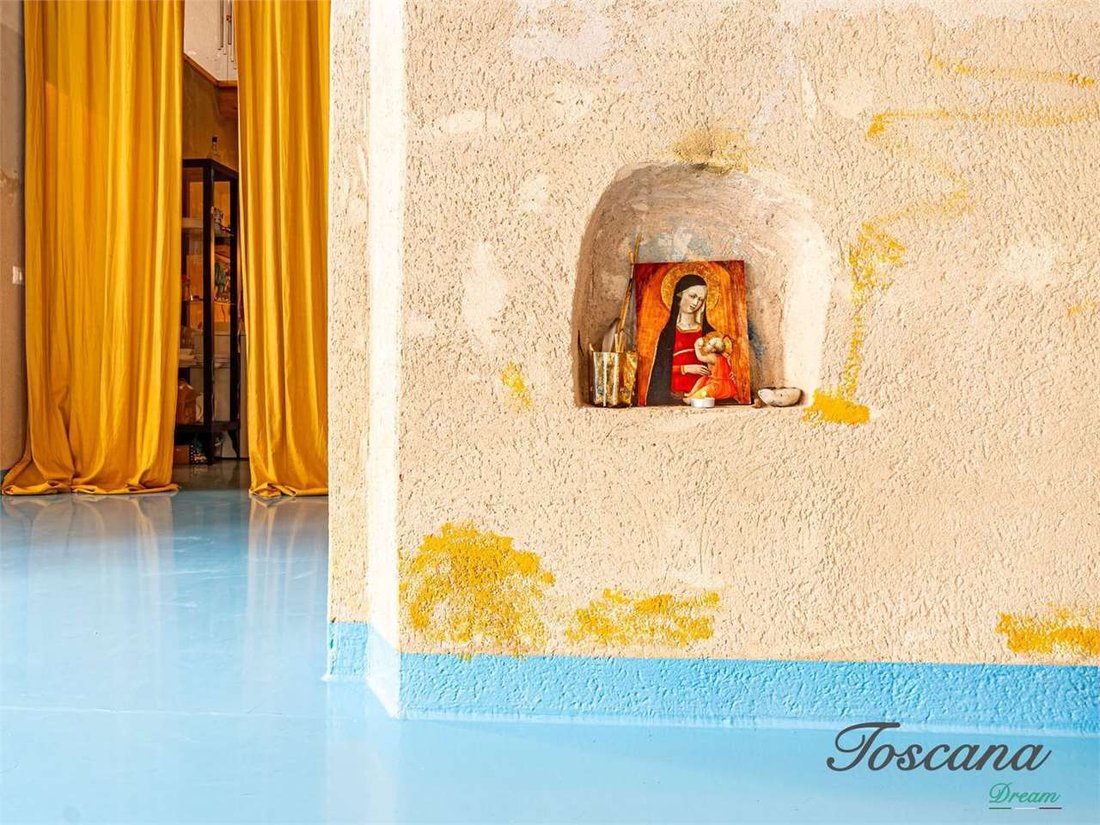
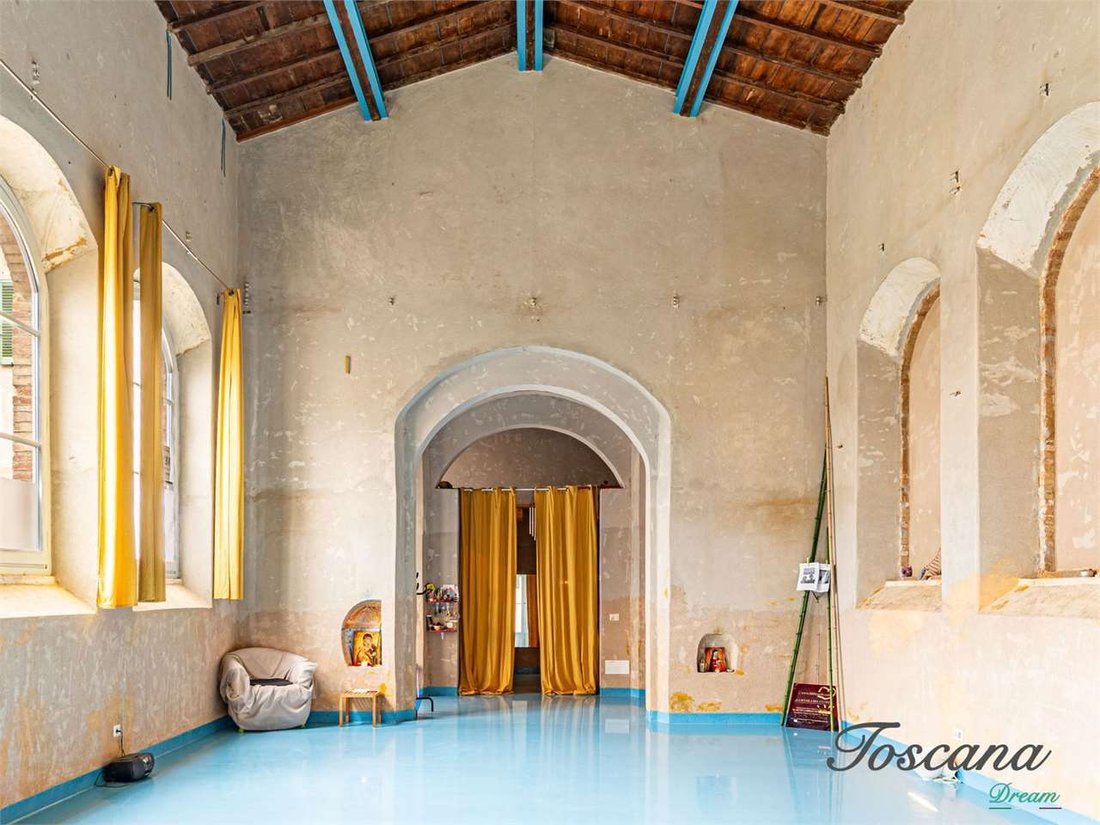
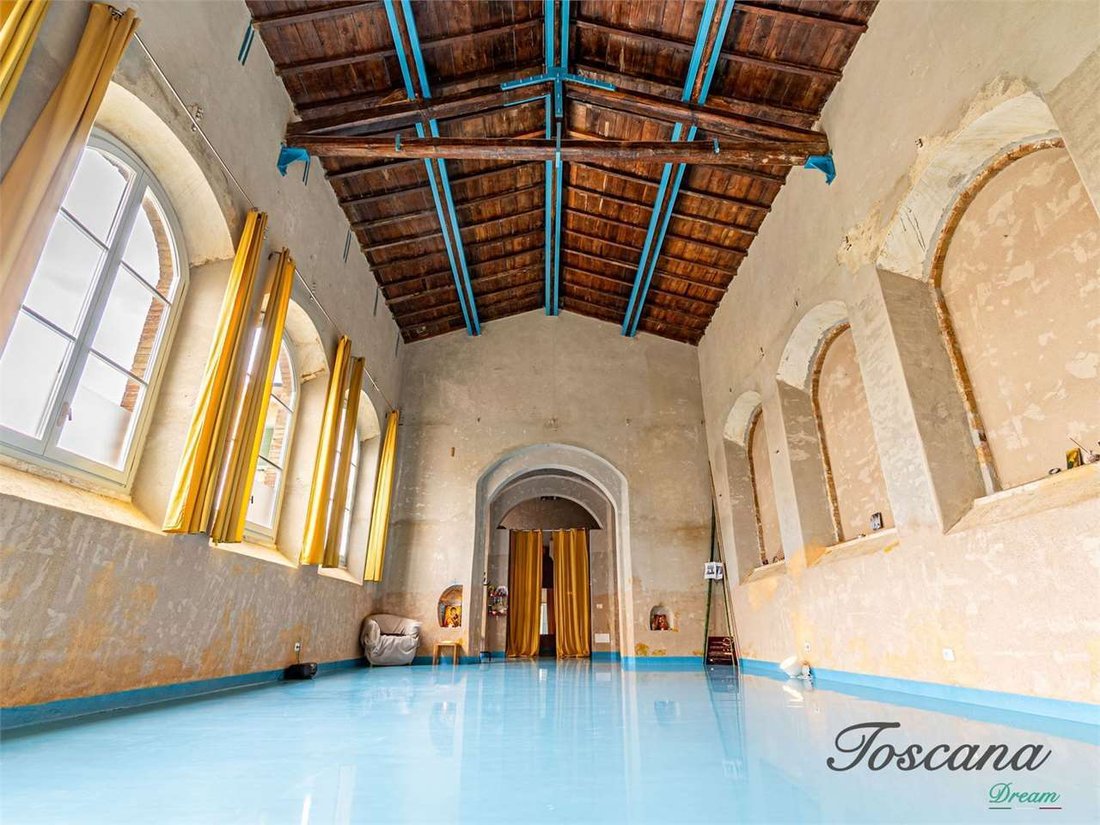
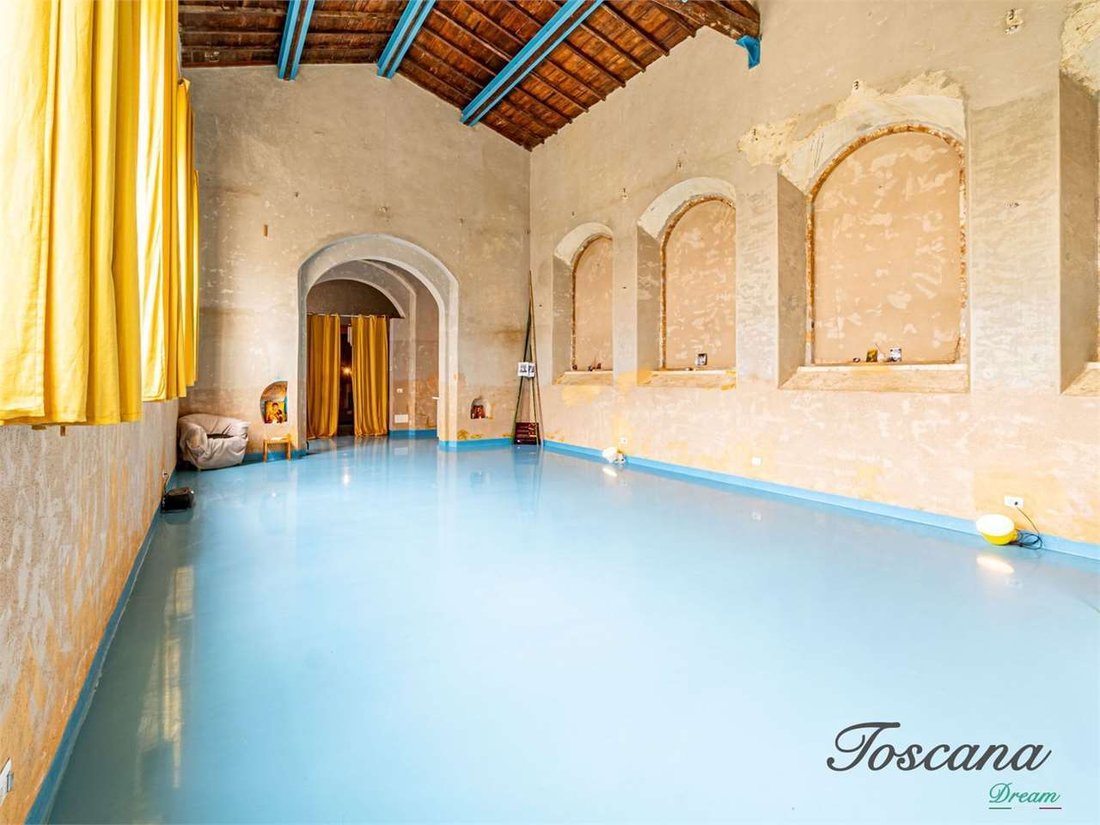
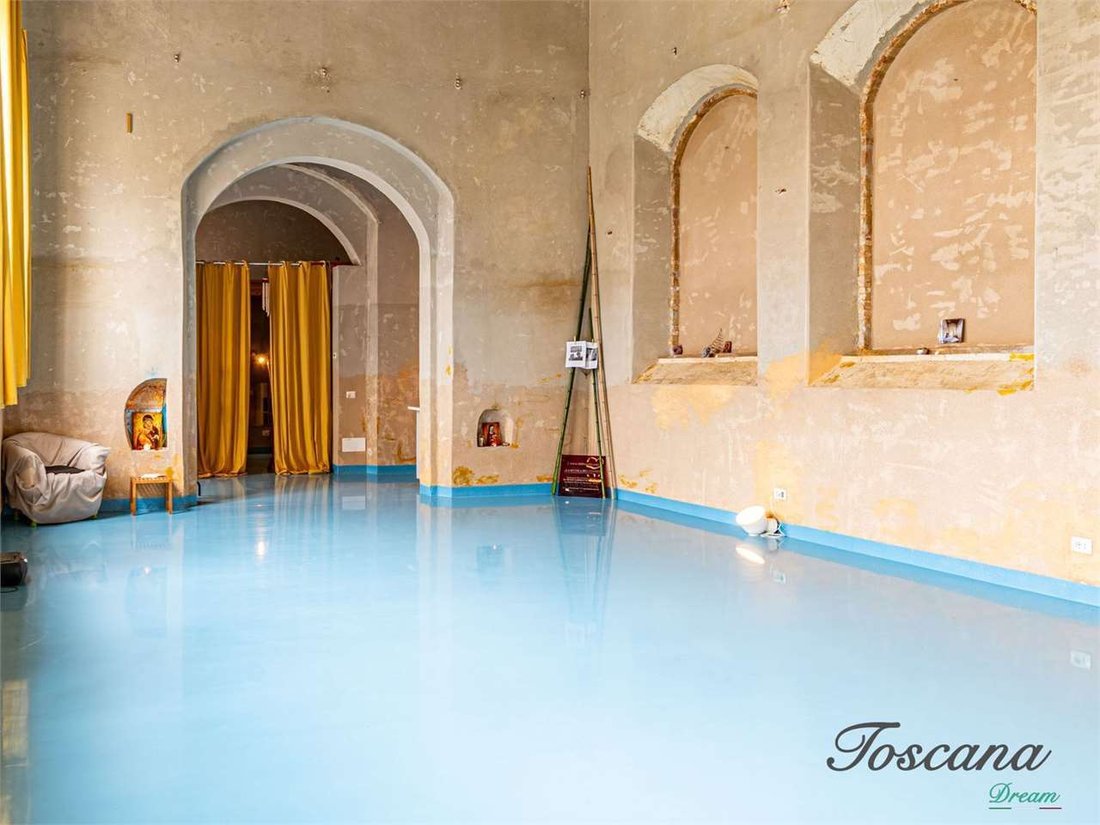
The recovery project was carried out with great sensitivity and respect for the original soul of the building. The walls have been left raw, the ceilings retain the original chestnut beams, the ancient niches and even the vintage porcelain insulators have been enhanced. Every detail tells the authentic story of this unique place, visible in 360 degrees.
The floor is made of resin, an ideal choice for practices such as yoga. The color – a blue inspired by Etruscan art – is a tribute to the land in which the building stands.
The environment evokes the atmosphere of New York lofts, but with a soul deeply rooted in history, and a sense of well-being that envelops every corner of this fascinating and unrepeatable space.
Despite its historical character, the property is equipped with all the latest generation plant technologies, including an autoclave of over 5,000 liters and a methane boiler.
Private parking space included.
DESCRIPTION OF SPACES
Ground floor: Large room, kitchenette, room, storage room, bathroom with shower.
First floor: mezzanine
THE VILLAGE
Volterra is one of the most fascinating cities in Tuscany, located on a panoramic hill between the Pisan hills, halfway between Pisa and Siena. With over 3,000 years of history, it is famous for its Etruscan origins, its rich Roman heritage and its well-preserved medieval imprint.
Brief history
Etruscans: Founded between the 8th and 6th centuries BC, Volterra was one of the 12 city-states of the Etruscan Dodecapolis. Traces of the cyclopean walls and the Porta all’Arco, dating back to the 4th century BC, are still visible today.
Romans: Conquered by Rome, it was an important municipality; the Roman amphitheater, the thermal baths and other archaeological remains remain.
Middle Ages and Renaissance: Under the control of the Bishop Counts, then contested between Florence and Pisa, it experienced a long period of artistic and architectural wealth.
Things to do and see in Volterra
Medieval historic center: Stroll through the stone alleys, towers, squares and artisan shops.
Roman theater: One of the best preserved in Italy, dating back to the 1st century BC.
Guarnacci Etruscan Museum: It houses one of the largest Etruscan collections in Europe, including the famous urn of the spouses and the statuette ”the Shadow of the Evening”.
Palazzo dei Priori: The oldest municipal palace in Tuscany, which dominates the central Piazza dei Priori.
Volterra Cathedral: Splendid Romanesque-Pisan church with Baroque interiors.
Etruscan walls and Porta all’Arco: Still imposing today, they testify to the ancient splendor of the city.
Alabaster: Volterra has been famous for the craftsmanship of this material for centuries. It is worth visiting the workshops or the Alabaster Museum.
Activities
Historical and archaeological guided tours
Tasting of typical Tuscan products
Panoramic trekking routes around the walls and in the Volterra countryside
Cultural events such as the medieval re-enactment “Volterra A.D. 1398” in summer
Volterra is a place where time seems to have stopped, perfect for those who love history, art and the most authentic Tuscany.
DESCRIZIONE GENERALE
Antica chiesa trasformata in un’opera d’arte da Renée Fabbiocchi, nel cuore di Volterra
Nel centro di Volterra, città pittoresca e rinomata della Toscana, ricca di storia e dalle profonde radici etrusche, sorge questa straordinaria proprietà: un’ex chiesa acquistata allo stato di rudere e completamente ristrutturata dall’artista Renée Fabbiocchi.
Il progetto di recupero è stato eseguito con grande sensibilità e rispetto per l’anima originaria dell’edificio. Le pareti sono state lasciate a grezzo, i soffitti conservano i travi originali in castagno, le antiche nicchie e persino gli isolatori in porcellana d’epoca sono stati valorizzati. Ogni dettaglio racconta la storia autentica di questo luogo unico, visibile a 360 gradi.
Il pavimento è stato realizzato in resina, una scelta ideale per pratiche come lo yoga. Il colore – un azzurro ispirato all’arte etrusca – è un omaggio alla terra in cui sorge l’edificio.
L’ambiente evoca l’atmosfera dei loft newyorkesi, ma con un’anima profondamente radicata nella storia, e un senso di benessere che avvolge ogni angolo di questo spazio affascinante e irripetibile.
Nonostante il carattere storico, l’immobile è dotato di tutte le tecnologie impiantistiche di ultima generazione, compresi un’autoclave da oltre 5.000 litri e una caldaia a metano.
Posto auto di proprietà incluso.
DESCRIZIONE DEGLI SPAZI
Piano terra: Ampia stanza, angolo cottura, stanza, ripostiglio, bagno con doccia.
Primo piano: sopplaco
IL BORGO
Volterra è una delle città più affascinanti della Toscana, situata su un’altura panoramica tra le colline pisane, a metà strada tra Pisa e Siena. Con oltre 3.000 anni di storia, è celebre per le sue origini etrusche, il ricco patrimonio romano e l’impronta medievale ben conservata.
Breve storia
Etruschi: Fondata tra l’VIII e il VI secolo a.C., Volterra fu una delle 12 città-stato della Dodecapoli etrusca. Ancora oggi sono visibili tratti delle mura ciclopiche e la Porta all’Arco, risalente al IV secolo a.C.
Romani: Conquistata da Roma, fu importante municipio; restano l’anfiteatro romano, le terme e altri resti archeologici.
Medioevo e Rinascimento: Sotto il controllo dei Vescovi Conti, poi contesa tra Firenze e Pisa, visse un lungo periodo di ricchezza artistica e architettonica.
Cosa fare e vedere a Volterra
Centro storico medievale: Passeggiare tra i vicoli in pietra, le torri, le piazze e le botteghe artigiane.
Teatro romano: Uno dei meglio conservati in Italia, risalente al I secolo a.C.
Museo Etrusco Guarnacci: Ospita una delle più grandi collezioni etrusche d’Europa, tra cui la famosa urna degli sposi e la statuetta ”l’Ombra della Sera”.
Palazzo dei Priori: Il più antico palazzo comunale toscano, che domina la centrale Piazza dei Priori.
Duomo di Volterra: Splendida chiesa romanico-pisana con interni barocchi.
Mura etrusche e Porta all’Arco: Ancora oggi imponenti, testimoniano l’antico splendore della città.
Alabastro: Volterra è famosa per la lavorazione artigianale di questo materiale da secoli. Vale la pena visitare le botteghe o il Museo dell’Alabastro.
Attività
Visite guidate storiche e archeologiche
Degustazioni di prodotti tipici toscani
Percorsi trekking panoramici intorno alle mura e nella campagna volterrana
Eventi culturali come la rievocazione medievale “Volterra A.D. 1398” in estate
Volterra è un luogo dove il tempo sembra essersi fermato, perfetto per chi ama la storia, l’arte e la Toscana più autentica.
ALLGEMEINE BESCHREIBUNG
Eine alte Kirche, die von René Fabbiocchi in ein Kunstwerk verwandelt wurde, im Herzen von Volterra.
Im Zentrum von Volterra, einer malerischen und renommierten Stadt in der Toskana, reich an Geschichte und mit tiefen etruskischen Wurzeln, befindet sich dieses außergewöhnliche Anwesen: eine ehemalige Kirche, die als Ruine gekauft und von der Künstlerin René Fabbiocchi komplett renoviert wurde.
Das Sanierungsprojekt wurde mit großer Sensibilität und Respekt für die ursprüngliche Seele des Gebäudes durchgeführt. Die Wände wurden roh belassen, die Decken bewahren die originalen Kastanienholzbalken, die alten Nischen und sogar die Porzellanisolatoren aus der Zeit wurden hervorgehoben. Jedes Detail erzählt die authentische Geschichte dieses einzigartigen Ortes, der rundum sichtbar ist.
Der Boden wurde aus Harz gefertigt, eine ideale Wahl für Praktiken wie Yoga. Die Farbe – ein von der etruskischen Kunst inspiriertes Blau – ist eine Hommage an das Land, in dem das Gebäude steht.
Die Umgebung erinnert an die Atmosphäre von New Yorker Lofts, aber mit einer Seele, die tief in der Geschichte verwurzelt ist, und einem Gefühl des Wohlbefindens, das jeden Winkel dieses faszinierenden und einzigartigen Raumes umgibt.
Trotz des historischen Charakters ist das Anwesen mit allen Anlagentechnologien der neuesten Generation ausgestattet, darunter ein Autoklav mit über 5.000 Litern und eine Methangasheizung.
Ein eigener Parkplatz ist inklusive.
BESCHREIBUNG DER RÄUME
Erdgeschoss: Großes Zimmer, Kochnische, Zimmer, Abstellraum, Badezimmer mit Dusche.
Erster Stock: Zwischengeschoss
DIE STADT
Volterra ist eine der faszinierendsten Städte der Toskana, gelegen auf einer Panoramaanhöhe zwischen den pisanischen Hügeln, auf halbem Weg zwischen Pisa und Siena. Mit über 3.000 Jahren Geschichte ist sie berühmt für ihre etruskischen Ursprünge, das reiche römische Erbe und den gut erhaltenen mittelalterlichen Charakter.
Kurze Geschichte
Etrusker: Volterra wurde zwischen dem 8. und 6. Jahrhundert v. Chr. gegründet und war eine der 12 Stadtstaaten der etruskischen Dodekapolis. Noch heute sind Teile der zyklopischen Mauern und die Porta all’Arco aus dem 4. Jahrhundert v. Chr. sichtbar.
Römer: Von Rom erobert, war es eine wichtige Gemeinde; das römische Amphitheater, die Thermen und andere archäologische Überreste sind erhalten geblieben.
Mittelalter und Renaissance: Unter der Kontrolle der Bischöfe, dann umstritten zwischen Florenz und Pisa, erlebte es eine lange Periode des künstlerischen und architektonischen Reichtums.
Was man in Volterra tun und sehen kann
Mittelalterliches historisches Zentrum: Spazieren Sie durch die Steingassen, Türme, Plätze und Handwerksbetriebe.
Römisches Theater: Eines der am besten erhaltenen in Italien, aus dem 1. Jahrhundert v. Chr.
Etruskisches Museum Guarnacci: Beherbergt eine der größten etruskischen Sammlungen Europas, darunter die berühmte Urne der Eheleute und die Statuette ”Der Schatten des Abends”.
Palazzo dei Priori: Der älteste toskanische Gemeinde Palast, der den zentralen Piazza dei Priori dominiert.
Dom von Volterra: Wunderschöne romanisch-pisanische Kirche mit barocker Innenausstattung.
Etruskische Mauern und Porta all’Arco: Noch heute imposant, zeugen sie von der alten Pracht der Stadt.
Alabaster: Volterra ist seit Jahrhunderten berühmt für die handwerkliche Verarbeitung dieses Materials. Es lohnt sich, die Werkstätten oder das Alabastermuseum zu besuchen.
Aktivitäten
Historische und archäologische Führungen
Verkostungen typisch toskanischer Produkte
Panoramawanderwege rund um die Mauern und in der Landschaft von Volterra
Kulturelle Veranstaltungen wie die mittelalterliche Nachstellung ”Volterra A.D. 1398” im Sommer
Volterra ist ein Ort, an dem die Zeit stehen geblieben zu sein scheint, perfekt für alle, die Geschichte, Kunst und die authentischste Toskana lieben.
DESCRIPTION GÉNÉRALE
Ancienne église transformée en œuvre d’art par René Fabbiocchi, au cœur de Volterra.
Au centre de Volterra, ville pittoresque et renommée de Toscane, riche en histoire et aux profondes racines étrusques, se dresse cette propriété extraordinaire: une ancienne église achetée à l’état de ruine et entièrement rénovée par l’artiste René Fabbiocchi.
Le projet de restauration a été réalisé avec une grande sensibilité et un grand respect pour l’âme originelle du bâtiment. Les murs ont été laissés bruts, les plafonds conservent les poutres originales en châtaignier, les anciennes niches et même les isolateurs en porcelaine d’époque ont été mis en valeur. Chaque détail raconte l’histoire authentique de ce lieu unique, visible à 360 degrés.
Le sol a été réalisé en résine, un choix idéal pour des pratiques comme le yoga. La couleur – un bleu inspiré de l’art étrusque – est un hommage à la terre où se dresse le bâtiment.
L’environnement évoque l’atmosphère des lofts new-yorkais, mais avec une âme profondément enracinée dans l’histoire, et un sentiment de bien-être qui enveloppe chaque coin de cet espace fascinant et irremplaçable.
Malgré son caractère historique, l’immeuble est équipé de toutes les technologies d’installation de dernière génération, y compris un autoclave de plus de 5 000 litres et une chaudière à méthane.
Place de parking privée incluse.
DESCRIPTION DES ESPACES
Rez-de-chaussée: Grande pièce, coin cuisine, pièce, débarras, salle de bain avec douche.
Premier étage: mezzanine
LE BOURG
Volterra est l’une des villes les plus fascinantes de Toscane, située sur une hauteur panoramique entre les collines pisanes, à mi-chemin entre Pise et Sienne. Avec plus de 3 000 ans d’histoire, elle est célèbre pour ses origines étrusques, son riche patrimoine romain et son empreinte médiévale bien conservée.
Brève histoire
Étrusques: Fondée entre le VIIIe et le VIe siècle avant J.-C., Volterra fut l’une des 12 cités-états de la Dodecapole étrusque. On peut encore voir des portions des murs cyclopéens et la Porta all’Arco, datant du IVe siècle avant J.-C.
Romains: Conquise par Rome, elle fut une importante municipalité; il reste l’amphithéâtre romain, les thermes et d’autres vestiges archéologiques.
Moyen Âge et Renaissance: Sous le contrôle des Évêques Comtes, puis disputée entre Florence et Pise, elle vécut une longue période de richesse artistique et architecturale.
Que faire et voir à Volterra
Centre historique médiéval: Se promener dans les ruelles en pierre, les tours, les places et les boutiques artisanales.
Théâtre romain: L’un des mieux conservés d’Italie, datant du Ier siècle avant J.-C.
Musée Étrusque Guarnacci: Il abrite l’une des plus grandes collections étrusques d’Europe, dont la célèbre urne des époux et la statuette ”l’Ombre du Soir”.
Palais des Prieurs: Le plus ancien palais communal toscan, qui domine la Piazza dei Priori centrale.
Cathédrale de Volterra: Splendide église romane-pisane avec des intérieurs baroques.
Murs étrusques et Porta all’Arco: Encore aujourd’hui imposants, ils témoignent de l’ancienne splendeur de la ville.
Albâtre: Volterra est célèbre pour le travail artisanal de ce matériau depuis des siècles. Il vaut la peine de visiter les boutiques ou le Musée de l’Albâtre.
Activités
Visites guidées historiques et archéologiques
Dégustations de produits typiques toscans
Parcours de randonnée panoramiques autour des murs et dans la campagne volterrienne
Événements culturels comme la reconstitution médiévale ”Volterra A.D. 1398” en été
Volterra est un lieu où le temps semble s’être arrêté, parfait pour ceux qui aiment l’histoire, l’art et la Toscane la plus authentique.
Ancient church transformed into a work of art by Renée Fabbiocchi, in the heart of Volterra
In the center of Volterra, a picturesque and renowned Tuscan city, rich in history and with deep Etruscan roots, stands this extraordinary property: a former church purchased in a state of ruin and completely renovated by the artist Renée Fabbiocchi.
The recovery project was carried out with great sensitivity and respect for the original soul of the building. The walls have been left raw, the ceilings retain the original chestnut beams, the ancient niches and even the vintage porcelain insulators have been enhanced. Every detail tells the authentic story of this unique place, visible in 360 degrees.
The floor is made of resin, an ideal choice for practices such as yoga. The color – a blue inspired by Etruscan art – is a tribute to the land in which the building stands.
The environment evokes the atmosphere of New York lofts, but with a soul deeply rooted in history, and a sense of well-being that envelops every corner of this fascinating and unrepeatable space.
Despite its historical character, the property is equipped with all the latest generation plant technologies, including an autoclave of over 5,000 liters and a methane boiler.
Private parking space included.
DESCRIPTION OF SPACES
Ground floor: Large room, kitchenette, room, storage room, bathroom with shower.
First floor: mezzanine
THE VILLAGE
Volterra is one of the most fascinating cities in Tuscany, located on a panoramic hill between the Pisan hills, halfway between Pisa and Siena. With over 3,000 years of history, it is famous for its Etruscan origins, its rich Roman heritage and its well-preserved medieval imprint.
Brief history
Etruscans: Founded between the 8th and 6th centuries BC, Volterra was one of the 12 city-states of the Etruscan Dodecapolis. Traces of the cyclopean walls and the Porta all’Arco, dating back to the 4th century BC, are still visible today.
Romans: Conquered by Rome, it was an important municipality; the Roman amphitheater, the thermal baths and other archaeological remains remain.
Middle Ages and Renaissance: Under the control of the Bishop Counts, then contested between Florence and Pisa, it experienced a long period of artistic and architectural wealth.
Things to do and see in Volterra
Medieval historic center: Stroll through the stone alleys, towers, squares and artisan shops.
Roman theater: One of the best preserved in Italy, dating back to the 1st century BC.
Guarnacci Etruscan Museum: It houses one of the largest Etruscan collections in Europe, including the famous urn of the spouses and the statuette ”the Shadow of the Evening”.
Palazzo dei Priori: The oldest municipal palace in Tuscany, which dominates the central Piazza dei Priori.
Volterra Cathedral: Splendid Romanesque-Pisan church with Baroque interiors.
Etruscan walls and Porta all’Arco: Still imposing today, they testify to the ancient splendor of the city.
Alabaster: Volterra has been famous for the craftsmanship of this material for centuries. It is worth visiting the workshops or the Alabaster Museum.
Activities
Historical and archaeological guided tours
Tasting of typical Tuscan products
Panoramic trekking routes around the walls and in the Volterra countryside
Cultural events such as the medieval re-enactment “Volterra A.D. 1398” in summer
Volterra is a place where time seems to have stopped, perfect for those who love history, art and the most authentic Tuscany.
DESCRIZIONE GENERALE
Antica chiesa trasformata in un’opera d’arte da Renée Fabbiocchi, nel cuore di Volterra
Nel centro di Volterra, città pittoresca e rinomata della Toscana, ricca di storia e dalle profonde radici etrusche, sorge questa straordinaria proprietà: un’ex chiesa acquistata allo stato di rudere e completamente ristrutturata dall’artista Renée Fabbiocchi.
Il progetto di recupero è stato eseguito con grande sensibilità e rispetto per l’anima originaria dell’edificio. Le pareti sono state lasciate a grezzo, i soffitti conservano i travi originali in castagno, le antiche nicchie e persino gli isolatori in porcellana d’epoca sono stati valorizzati. Ogni dettaglio racconta la storia autentica di questo luogo unico, visibile a 360 gradi.
Il pavimento è stato realizzato in resina, una scelta ideale per pratiche come lo yoga. Il colore – un azzurro ispirato all’arte etrusca – è un omaggio alla terra in cui sorge l’edificio.
L’ambiente evoca l’atmosfera dei loft newyorkesi, ma con un’anima profondamente radicata nella storia, e un senso di benessere che avvolge ogni angolo di questo spazio affascinante e irripetibile.
Nonostante il carattere storico, l’immobile è dotato di tutte le tecnologie impiantistiche di ultima generazione, compresi un’autoclave da oltre 5.000 litri e una caldaia a metano.
Posto auto di proprietà incluso.
DESCRIZIONE DEGLI SPAZI
Piano terra: Ampia stanza, angolo cottura, stanza, ripostiglio, bagno con doccia.
Primo piano: sopplaco
IL BORGO
Volterra è una delle città più affascinanti della Toscana, situata su un’altura panoramica tra le colline pisane, a metà strada tra Pisa e Siena. Con oltre 3.000 anni di storia, è celebre per le sue origini etrusche, il ricco patrimonio romano e l’impronta medievale ben conservata.
Breve storia
Etruschi: Fondata tra l’VIII e il VI secolo a.C., Volterra fu una delle 12 città-stato della Dodecapoli etrusca. Ancora oggi sono visibili tratti delle mura ciclopiche e la Porta all’Arco, risalente al IV secolo a.C.
Romani: Conquistata da Roma, fu importante municipio; restano l’anfiteatro romano, le terme e altri resti archeologici.
Medioevo e Rinascimento: Sotto il controllo dei Vescovi Conti, poi contesa tra Firenze e Pisa, visse un lungo periodo di ricchezza artistica e architettonica.
Cosa fare e vedere a Volterra
Centro storico medievale: Passeggiare tra i vicoli in pietra, le torri, le piazze e le botteghe artigiane.
Teatro romano: Uno dei meglio conservati in Italia, risalente al I secolo a.C.
Museo Etrusco Guarnacci: Ospita una delle più grandi collezioni etrusche d’Europa, tra cui la famosa urna degli sposi e la statuetta ”l’Ombra della Sera”.
Palazzo dei Priori: Il più antico palazzo comunale toscano, che domina la centrale Piazza dei Priori.
Duomo di Volterra: Splendida chiesa romanico-pisana con interni barocchi.
Mura etrusche e Porta all’Arco: Ancora oggi imponenti, testimoniano l’antico splendore della città.
Alabastro: Volterra è famosa per la lavorazione artigianale di questo materiale da secoli. Vale la pena visitare le botteghe o il Museo dell’Alabastro.
Attività
Visite guidate storiche e archeologiche
Degustazioni di prodotti tipici toscani
Percorsi trekking panoramici intorno alle mura e nella campagna volterrana
Eventi culturali come la rievocazione medievale “Volterra A.D. 1398” in estate
Volterra è un luogo dove il tempo sembra essersi fermato, perfetto per chi ama la storia, l’arte e la Toscana più autentica.
ALLGEMEINE BESCHREIBUNG
Eine alte Kirche, die von René Fabbiocchi in ein Kunstwerk verwandelt wurde, im Herzen von Volterra.
Im Zentrum von Volterra, einer malerischen und renommierten Stadt in der Toskana, reich an Geschichte und mit tiefen etruskischen Wurzeln, befindet sich dieses außergewöhnliche Anwesen: eine ehemalige Kirche, die als Ruine gekauft und von der Künstlerin René Fabbiocchi komplett renoviert wurde.
Das Sanierungsprojekt wurde mit großer Sensibilität und Respekt für die ursprüngliche Seele des Gebäudes durchgeführt. Die Wände wurden roh belassen, die Decken bewahren die originalen Kastanienholzbalken, die alten Nischen und sogar die Porzellanisolatoren aus der Zeit wurden hervorgehoben. Jedes Detail erzählt die authentische Geschichte dieses einzigartigen Ortes, der rundum sichtbar ist.
Der Boden wurde aus Harz gefertigt, eine ideale Wahl für Praktiken wie Yoga. Die Farbe – ein von der etruskischen Kunst inspiriertes Blau – ist eine Hommage an das Land, in dem das Gebäude steht.
Die Umgebung erinnert an die Atmosphäre von New Yorker Lofts, aber mit einer Seele, die tief in der Geschichte verwurzelt ist, und einem Gefühl des Wohlbefindens, das jeden Winkel dieses faszinierenden und einzigartigen Raumes umgibt.
Trotz des historischen Charakters ist das Anwesen mit allen Anlagentechnologien der neuesten Generation ausgestattet, darunter ein Autoklav mit über 5.000 Litern und eine Methangasheizung.
Ein eigener Parkplatz ist inklusive.
BESCHREIBUNG DER RÄUME
Erdgeschoss: Großes Zimmer, Kochnische, Zimmer, Abstellraum, Badezimmer mit Dusche.
Erster Stock: Zwischengeschoss
DIE STADT
Volterra ist eine der faszinierendsten Städte der Toskana, gelegen auf einer Panoramaanhöhe zwischen den pisanischen Hügeln, auf halbem Weg zwischen Pisa und Siena. Mit über 3.000 Jahren Geschichte ist sie berühmt für ihre etruskischen Ursprünge, das reiche römische Erbe und den gut erhaltenen mittelalterlichen Charakter.
Kurze Geschichte
Etrusker: Volterra wurde zwischen dem 8. und 6. Jahrhundert v. Chr. gegründet und war eine der 12 Stadtstaaten der etruskischen Dodekapolis. Noch heute sind Teile der zyklopischen Mauern und die Porta all’Arco aus dem 4. Jahrhundert v. Chr. sichtbar.
Römer: Von Rom erobert, war es eine wichtige Gemeinde; das römische Amphitheater, die Thermen und andere archäologische Überreste sind erhalten geblieben.
Mittelalter und Renaissance: Unter der Kontrolle der Bischöfe, dann umstritten zwischen Florenz und Pisa, erlebte es eine lange Periode des künstlerischen und architektonischen Reichtums.
Was man in Volterra tun und sehen kann
Mittelalterliches historisches Zentrum: Spazieren Sie durch die Steingassen, Türme, Plätze und Handwerksbetriebe.
Römisches Theater: Eines der am besten erhaltenen in Italien, aus dem 1. Jahrhundert v. Chr.
Etruskisches Museum Guarnacci: Beherbergt eine der größten etruskischen Sammlungen Europas, darunter die berühmte Urne der Eheleute und die Statuette ”Der Schatten des Abends”.
Palazzo dei Priori: Der älteste toskanische Gemeinde Palast, der den zentralen Piazza dei Priori dominiert.
Dom von Volterra: Wunderschöne romanisch-pisanische Kirche mit barocker Innenausstattung.
Etruskische Mauern und Porta all’Arco: Noch heute imposant, zeugen sie von der alten Pracht der Stadt.
Alabaster: Volterra ist seit Jahrhunderten berühmt für die handwerkliche Verarbeitung dieses Materials. Es lohnt sich, die Werkstätten oder das Alabastermuseum zu besuchen.
Aktivitäten
Historische und archäologische Führungen
Verkostungen typisch toskanischer Produkte
Panoramawanderwege rund um die Mauern und in der Landschaft von Volterra
Kulturelle Veranstaltungen wie die mittelalterliche Nachstellung ”Volterra A.D. 1398” im Sommer
Volterra ist ein Ort, an dem die Zeit stehen geblieben zu sein scheint, perfekt für alle, die Geschichte, Kunst und die authentischste Toskana lieben.
DESCRIPTION GÉNÉRALE
Ancienne église transformée en œuvre d’art par René Fabbiocchi, au cœur de Volterra.
Au centre de Volterra, ville pittoresque et renommée de Toscane, riche en histoire et aux profondes racines étrusques, se dresse cette propriété extraordinaire: une ancienne église achetée à l’état de ruine et entièrement rénovée par l’artiste René Fabbiocchi.
Le projet de restauration a été réalisé avec une grande sensibilité et un grand respect pour l’âme originelle du bâtiment. Les murs ont été laissés bruts, les plafonds conservent les poutres originales en châtaignier, les anciennes niches et même les isolateurs en porcelaine d’époque ont été mis en valeur. Chaque détail raconte l’histoire authentique de ce lieu unique, visible à 360 degrés.
Le sol a été réalisé en résine, un choix idéal pour des pratiques comme le yoga. La couleur – un bleu inspiré de l’art étrusque – est un hommage à la terre où se dresse le bâtiment.
L’environnement évoque l’atmosphère des lofts new-yorkais, mais avec une âme profondément enracinée dans l’histoire, et un sentiment de bien-être qui enveloppe chaque coin de cet espace fascinant et irremplaçable.
Malgré son caractère historique, l’immeuble est équipé de toutes les technologies d’installation de dernière génération, y compris un autoclave de plus de 5 000 litres et une chaudière à méthane.
Place de parking privée incluse.
DESCRIPTION DES ESPACES
Rez-de-chaussée: Grande pièce, coin cuisine, pièce, débarras, salle de bain avec douche.
Premier étage: mezzanine
LE BOURG
Volterra est l’une des villes les plus fascinantes de Toscane, située sur une hauteur panoramique entre les collines pisanes, à mi-chemin entre Pise et Sienne. Avec plus de 3 000 ans d’histoire, elle est célèbre pour ses origines étrusques, son riche patrimoine romain et son empreinte médiévale bien conservée.
Brève histoire
Étrusques: Fondée entre le VIIIe et le VIe siècle avant J.-C., Volterra fut l’une des 12 cités-états de la Dodecapole étrusque. On peut encore voir des portions des murs cyclopéens et la Porta all’Arco, datant du IVe siècle avant J.-C.
Romains: Conquise par Rome, elle fut une importante municipalité; il reste l’amphithéâtre romain, les thermes et d’autres vestiges archéologiques.
Moyen Âge et Renaissance: Sous le contrôle des Évêques Comtes, puis disputée entre Florence et Pise, elle vécut une longue période de richesse artistique et architecturale.
Que faire et voir à Volterra
Centre historique médiéval: Se promener dans les ruelles en pierre, les tours, les places et les boutiques artisanales.
Théâtre romain: L’un des mieux conservés d’Italie, datant du Ier siècle avant J.-C.
Musée Étrusque Guarnacci: Il abrite l’une des plus grandes collections étrusques d’Europe, dont la célèbre urne des époux et la statuette ”l’Ombre du Soir”.
Palais des Prieurs: Le plus ancien palais communal toscan, qui domine la Piazza dei Priori centrale.
Cathédrale de Volterra: Splendide église romane-pisane avec des intérieurs baroques.
Murs étrusques et Porta all’Arco: Encore aujourd’hui imposants, ils témoignent de l’ancienne splendeur de la ville.
Albâtre: Volterra est célèbre pour le travail artisanal de ce matériau depuis des siècles. Il vaut la peine de visiter les boutiques ou le Musée de l’Albâtre.
Activités
Visites guidées historiques et archéologiques
Dégustations de produits typiques toscans
Parcours de randonnée panoramiques autour des murs et dans la campagne volterrienne
Événements culturels comme la reconstitution médiévale ”Volterra A.D. 1398” en été
Volterra est un lieu où le temps semble s’être arrêté, parfait pour ceux qui aiment l’histoire, l’art et la Toscane la plus authentique.
-
Tipo de propiedad
Casa
-
Pisos
2
-
Año de construcción
1110
-
Precio/pie²
$443
Características
- Piscina
- Jacuzzi
- Plano de planta 2D
- Renovado
- Lavadora Secadora
- Techo alto
- Bar
- Aparcamiento
Explorar la zona
Orti di Sant'Agostino, 10, Volterra, Toscana, Italia
Ver en Google Maps
Precio por sqft
Bajo
Alto
Ubicada en la ciudad serena e histórica de Volterra, esta propiedad ofrece una experiencia de estilo de vida italiana excepcional. A solo 8 minutos del centro de la ciudad, los residentes disfrutan de un fácil acceso a encantadores cafés y restaurantes que ofrecen cocina toscana local. El Aeropuerto Internacional de Pisa está a 64 minutos, facilitando los viajes internacionales. El pintoresco paisaje toscano proporciona un escenario perfecto para los amantes de la naturaleza y un refugio del bullicio urbano.
Ver lugares cercanos
Atracciones
Escuelas
Aeropuerto Internacional de Pisa
Aeropuerto
64 min
El teatro romano de Volterra
Cultura & Patrimonio
5 min
Museo etrusco Guarnacci
Cultura & Patrimonio
7 min
Escuela Normale Superiore
Universidad / Educación Superior
60 min
Se unió hace 9 meses
Usted ha preguntado por esta propiedad
El agente se comunicará con usted pronto por
Publicado por
24
Anuncios
2025
Se unió
Reserva una visita con the agent
Elija una fecha y si prefiere una visita virtual o presencial con el agente.
Fecha preferida
Tipo de tour
Última actualización
Enero 19
Primera publicación
Nov 20, 2025
Referencia del anuncio
28671_1_11_32831888
Propiedades similares cercanas
Nuevos anuncios en Volterra






Explorar más viviendas en venta
Volterra, Toscana, Italia tipos de propiedad
Volterra, Toscana, Italia búsquedas populares
Guías e historias relacionadas
La confianza de los mejores brokers del mundo
Los agentes tras las propiedades más excepcionales del mundo publican en JamesEdition.
- Anuncios de Sotheby's, Christie's, BARNES y Engel & Völkers
- Cada anuncio se revisa antes de publicarse
- Conecte directamente con agentes verificados
Al continuar, acepta nuestros Términos y la Política de Privacidad.