$586,005
Locale Commerciale in Vendita a Viterbo, Bagnaia
- 8,612 Sqft
- Actualizado: Ayer
Sobre la propiedad
La descripción se tradujo automáticamente.
La descripción se muestra en el idioma original.
THE CARDINAL SUBTERRANEANS OF PALAZZO DELLA LOGGIA
A place of history, architecture, and memory of the cardinal residence
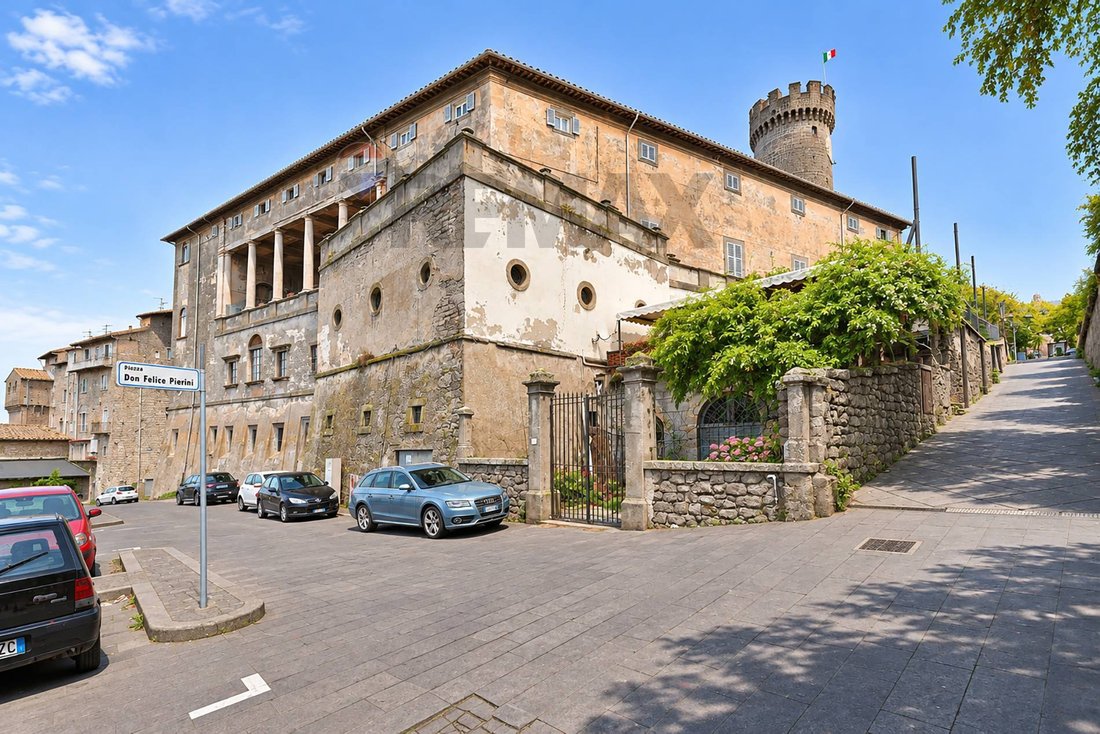
In the heart of the historic village of Bagnaia, near Viterbo, Palazzo della Loggia preserves the
memory of a long history deeply rooted in the ancient medieval castle, which over the centuries
was transformed into a prestigious cardinal residence.
Among the
THE CARDINAL SUBTERRANEANS OF PALAZZO DELLA LOGGIA
A place of history, architecture, and memory of the cardinal residence
In the heart of the historic village of Bagnaia, near Viterbo, Palazzo della Loggia preserves the
memory of a long history deeply rooted in the ancient medieval castle, which over the centuries
was transformed into a prestigious cardinal residence.
Among the figures who marked its history, notable mention goes to Cardinal Raffaele Riario,
belonging to an important family of the Roman Renaissance nobility, and Cardinal Niccol
Ridolfi, a representative of the noble Florentine Ridolfi family, tied to the Medici. The latter,
during his presence in Bagnaia from 1532 to 1550, promoted significant transformations of the
Palazzo, contributing to the creation of the grand Loggia and the Porta del Borgo.
Upon Ridolfi’s death, the history of Bagnaia continued through prominent ecclesiastical figures:
first Baldovino del Monte, brother of Pope Julius III, and subsequently Cardinal Giovan Francesco
Gambara. Upon the latters death in 1587, the complex returned to the assets of the Reverenda
Camera Apostolica. It was then entrusted to Cardinal Alessandro Damasceni Peretti, known as
Montalto, who contributed to the completion of the Villa, later known as Villa Lante. Grants to
Antonio Barberini and Federico Sforza followed until 1656, when Pope Alexander VII granted the
territory to Ippolito Lante della Rovere, who had already acquired the fiefdom of Bomarzo in
1645, thus linking two important centers of Tuscia to the history of his family.
A hidden heritage beneath the Palazzo
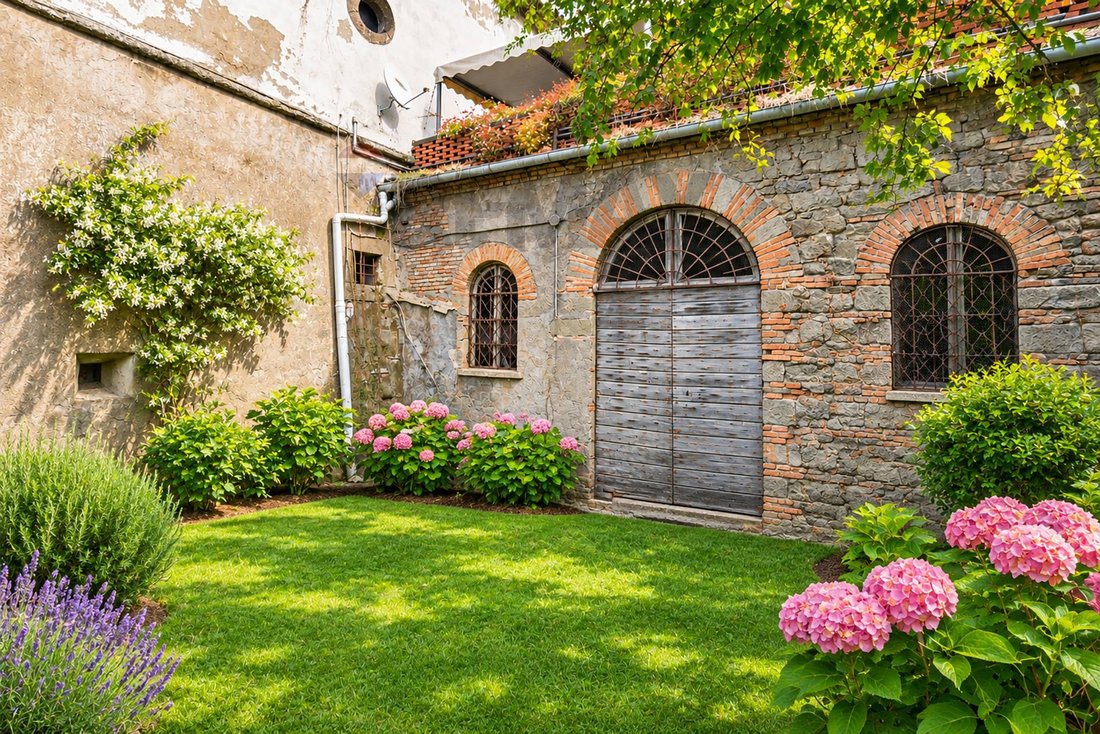
To complete the cardinal residence, an extensive complex of spaces develops over a surface
area of approximately 800 m2, complemented by a garden of around 60 m2.
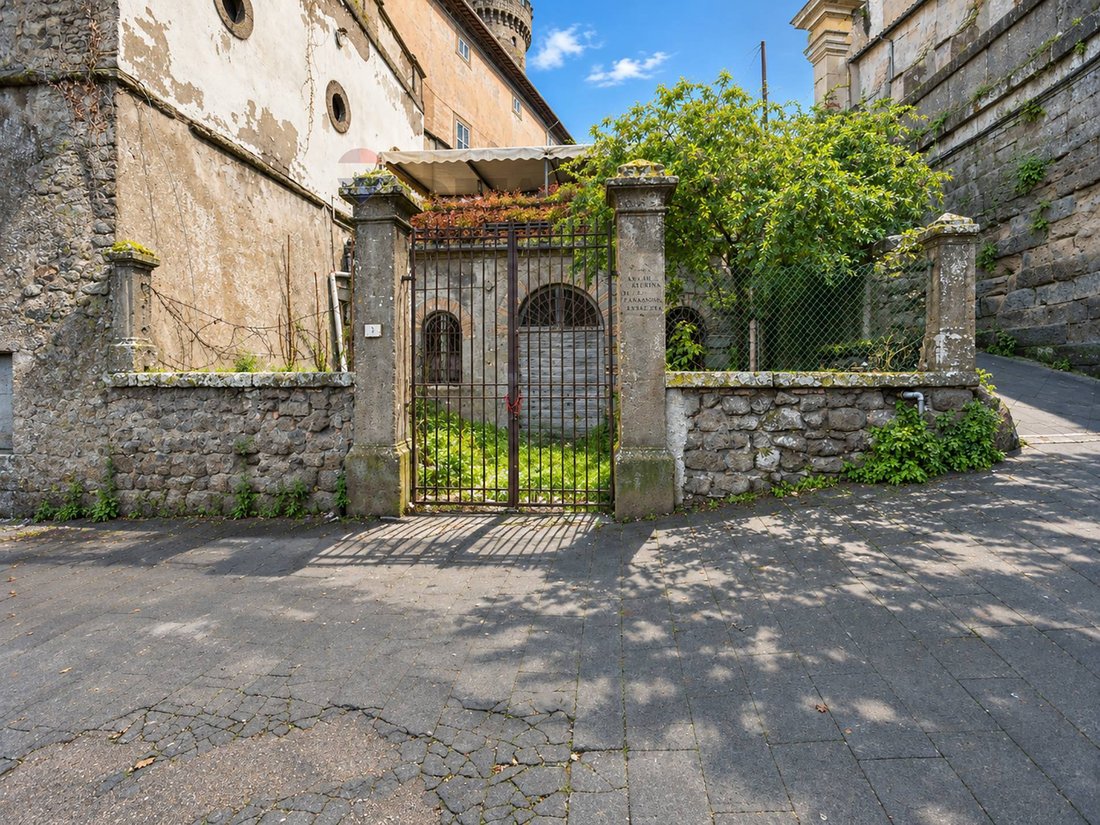
The property features three entrances: one via a grand internal staircase, connecting it directly
to the entrance hall of Palazzo della Loggia, and two independent entrances from the Bagnaia
parking area.
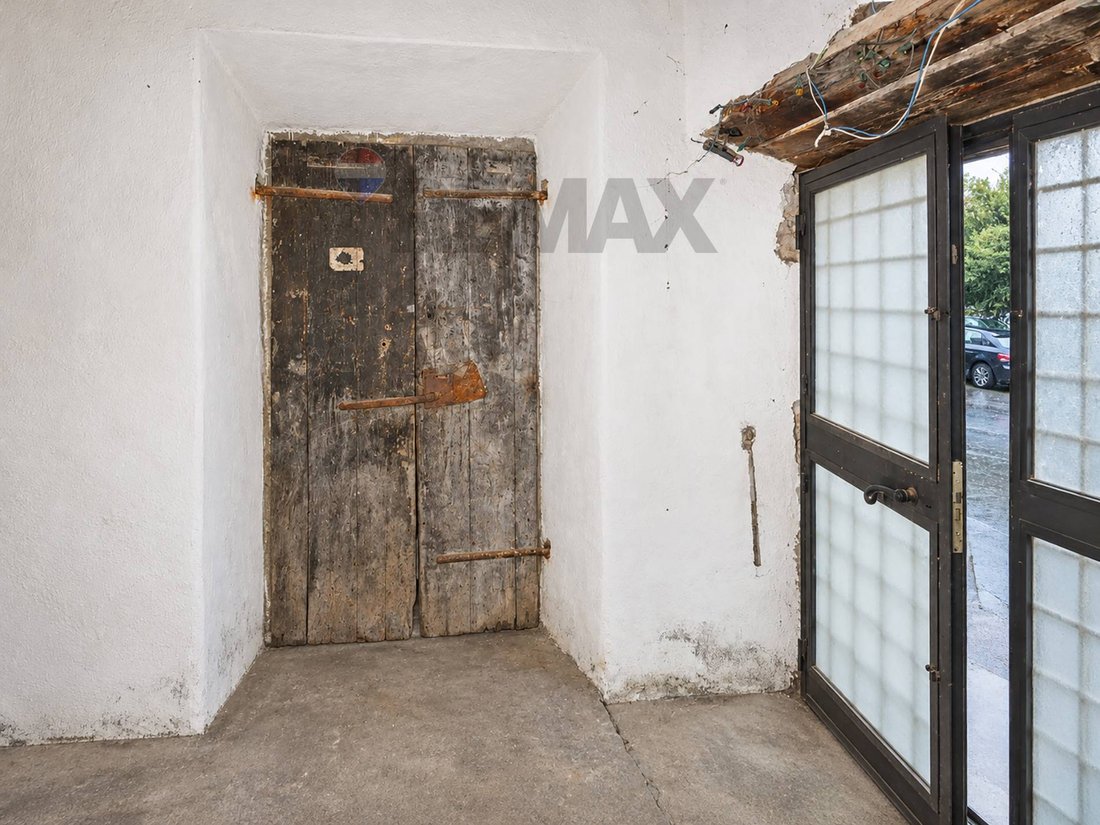
The complex comprises numerous rooms of various shapes and sizes. A feature of particular
interest is represented by the spaces adjacent to the parking lot, equipped with windows that
allow natural light to enter, making the spaces bright and pleasant to live inan uncommon
characteristic for rooms of this typology.
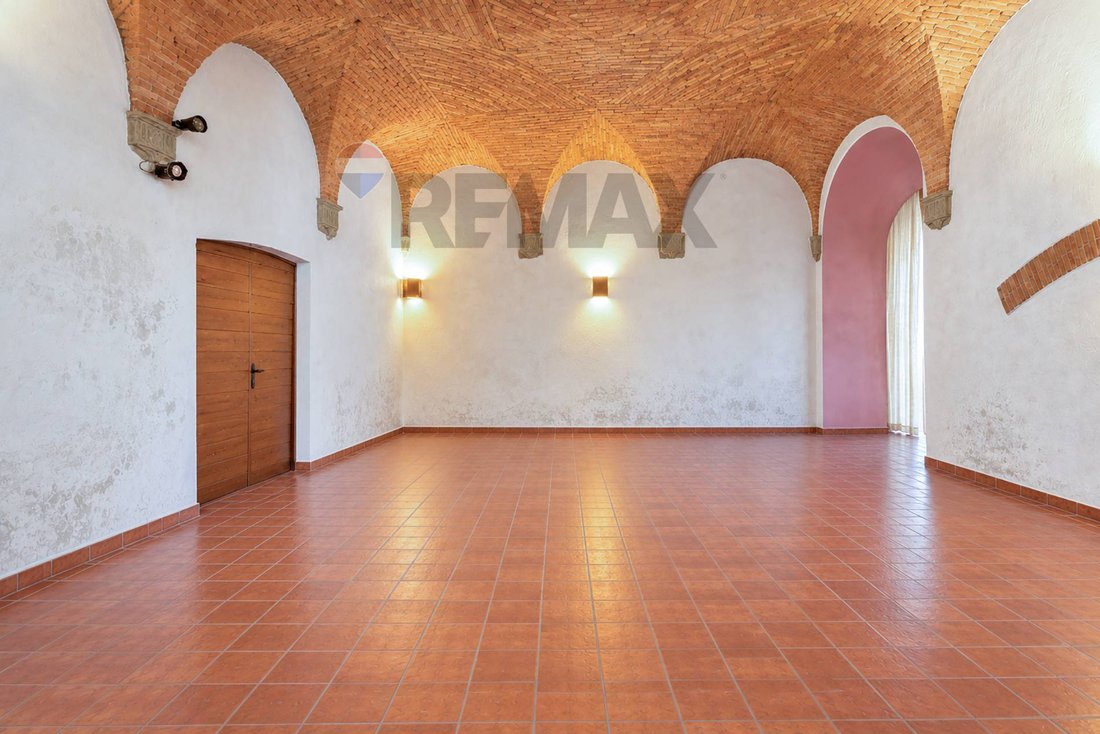
Among these, the room of the historic grand oven stands out, illuminated by natural light and
connected to a space of notable value with a brick cross vault, embellished with architectural
corbels displaying the coat of arms of Cardinal Riario.
Another space of interest is the one hosting the grand internal staircase connecting to the
entrance hall of the Palazzo, also characterized by the presence of natural light. Furthermore,
the property includes an additional windowed room, equipped with a second independent
access from the garden, creating a pleasant continuity between the internal spaces and the
outdoors.
Alongside these spaces are the hypogeum rooms, carved directly into the peperino stone, where
traces of the tools used to work the stone are still visible. On the surfaces of the vaults,
impressions of the reeds used in ancient construction techniques are preservedprecious
testimonies of the craftsmen who contributed to the realization of the complex.
The ancient Lante Wineries (Cantine Lante)
Among the most suggestive elements, the majestic subterranean vats stand out, built into the
walls and featuring facades that compose a true architectural structure. The internal surfaces,
lined with glossy green-blue ceramic tiles, bear witness to particular attention to functionality
and construction quality.
The containers preserve the characteristic seal Cantine Lante, tracing back to the noble family
and the winemaking tradition tied to the complex. Based on construction type and materials,
they could date back to the final decades of the 19th century, representing evidence of the
subsequent evolution...
-
Tipo de propiedad
Otros
-
Precio/pie²
$68
-
Emisiones
G
-
Consumo
G
Explorar la zona
Piazza Don Felice Pierini 1, Bagnaia - La Quercia, Viterbo, Lacio
Ver en Google Maps
Precio por sqft
Bajo
Alto
Ubicada en la histórica Viterbo, Piazza Don Felice Pierini ofrece fácil acceso al centro medieval y sitios culturales. A 90 minutos en coche del Aeropuerto Internacional de Roma-Fiumicino y cercana a la estación Viterbo Porta Romana. Cerca hay restaurantes de alta gama, parques naturales y prestigiosos clubes de golf, ideal para un estilo de vida equilibrado y refinado.
Ver lugares cercanos
Atracciones
Escuelas
Aeropuerto Internacional de Roma-Fiumicino
Aeropuerto
90 min
Estación Viterbo Porta Romana
Estación
10 min
Puerto de Civitavecchia
Puerto / Marina
60 min
Golf Nazionale
Golf y Clubes Campestres
20 min
Parque de los Monstruos de Bomarzo
Exterior y Naturaleza
25 min
Terme dei Papi
Bienestar de lujo y spas
10 min
Centro histórico de Viterbo
Cultura y Patrimonio
5 min
Escuela Internacional de Viterbo
Escuela Internacional
7 min
Liceo Científico A. Roiti
Escuela Pública
6 min
Se unió hace 11 meses
Usted ha preguntado por esta propiedad
El agente se comunicará con usted pronto por
Publicado por
12
Anuncios
2025
Se unió
Reserva una visita con the agent
Elija una fecha y si prefiere una visita virtual o presencial con el agente.
Fecha preferida
Tipo de tour
Última actualización
Ayer
Primera publicación
Noviembre 13
Referencia del anuncio
37261067-16
La confianza de los mejores brokers del mundo
Los agentes tras las propiedades más excepcionales del mundo publican en JamesEdition.
- Anuncios de Sotheby's, Christie's, BARNES y Engel & Völkers
- Cada anuncio se revisa antes de publicarse
- Conecte directamente con agentes verificados
Al continuar, acepta nuestros Términos y la Política de Privacidad.