Ca' Darío
- 10,764 Sqft
- Actualizado: Junio 18
- 69
Sobre la propiedad
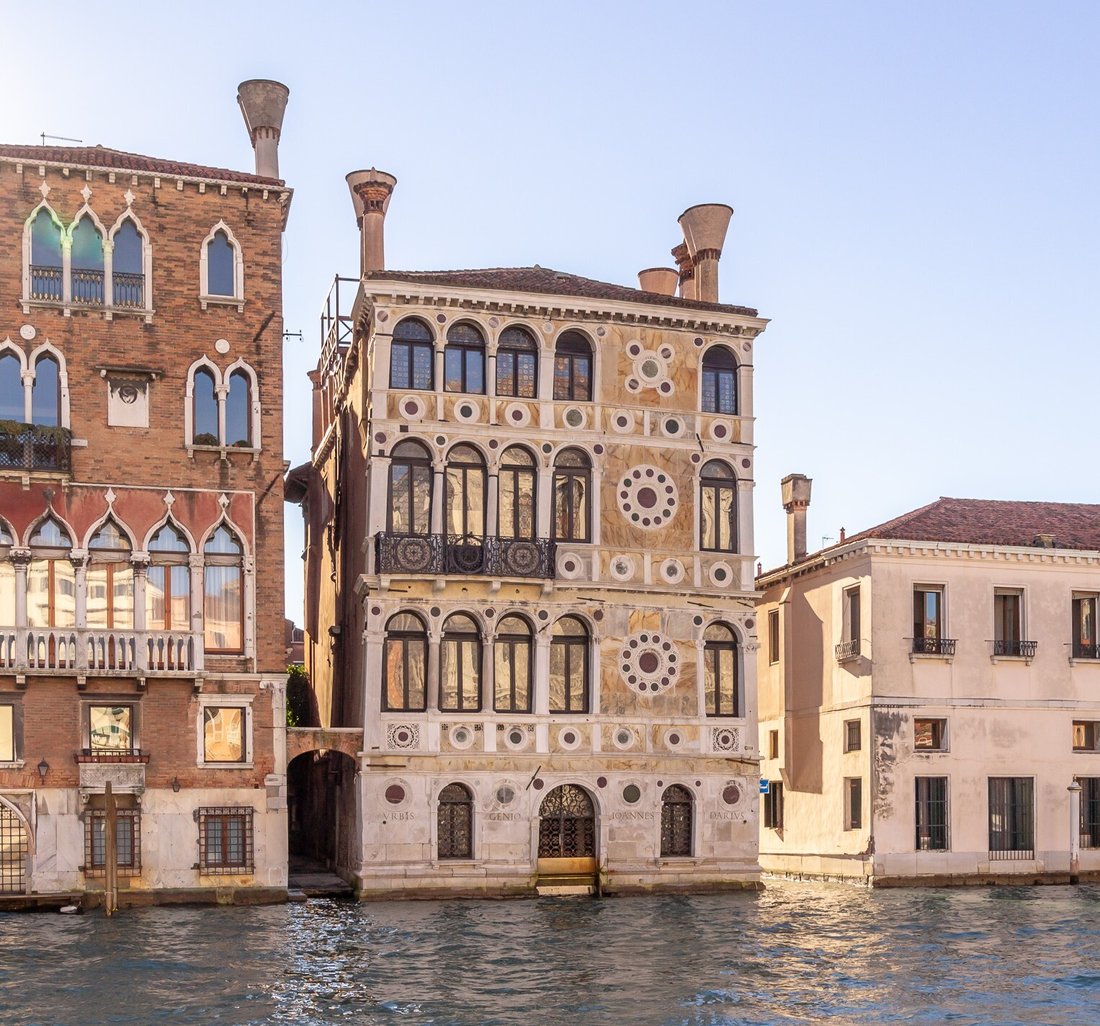
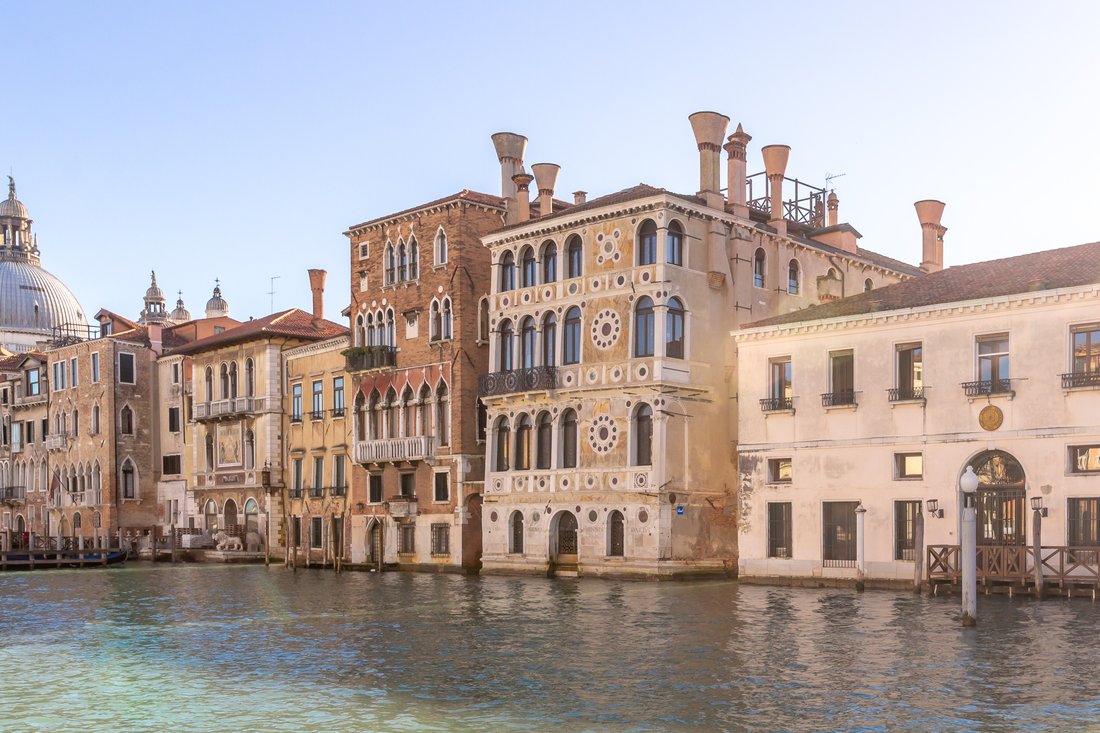
El Palazzo Darío es una joya arquitectónica en la parte más prestigiosa del Gran Canal, que se extiende desde el Puente de la Academia hasta la Iglesia de la Salute y el Bacino di San Marco.
A finales del siglo XV, el palacio fue remodelado por Pietro Lombardo para el patricio Giovanni Darío, secretario del Senado veneciano, diplomático y comerciante, quien logró negociar un acuerdo
Palazzo Dario is an architectural gem on the most prestigious part of the Grand Canal stretching from the Accademia Bridge to the Salute Church and the Bacino di San Marco.
At the end of the 15th century the palace was remodelled by Pietro Lombardo for the patrician Giovanni Dario, Secretary to the Venetian Senate, diplomat, and merchant, who managed to negotiate a very convenie
El Palazzo Darío es una joya arquitectónica en la parte más prestigiosa del Gran Canal, que se extiende desde el Puente de la Academia hasta la Iglesia de la Salute y el Bacino di San Marco.
A finales del siglo XV, el palacio fue remodelado por Pietro Lombardo para el patricio Giovanni Darío, secretario del Senado veneciano, diplomático y comerciante, quien logró negociar un acuerdo de paz muy conveniente con los otomanos (turcos). Por estas tareas, la Serenísima había dado
a Darío una gran suma de dinero como recompensa,y encargó la construcción de una casa sobre un palacio gótico preexistente.
La magnífica fachada, decorada con incrustaciones circulares de mármol policromado, está hecha de Pietra d’Istria y refleja la influencia oriental, adquirida por Darío durante sus largos viajes por Egipto y Oriente Medio, y luego traducida al gusto del Véneto con la ayuda del arquitecto.
A diferencia de la fachada renacentista del Gran Canal, la fachada trasera del palacio en el Campiello Barbaro tiene arcos góticos en forma de trébol, chimeneas y terraza con galería.
En 2025 se llevó a cabo una pericia completa en la propiedad y el Palacio se vendió con un certificado de cumplimiento completo.
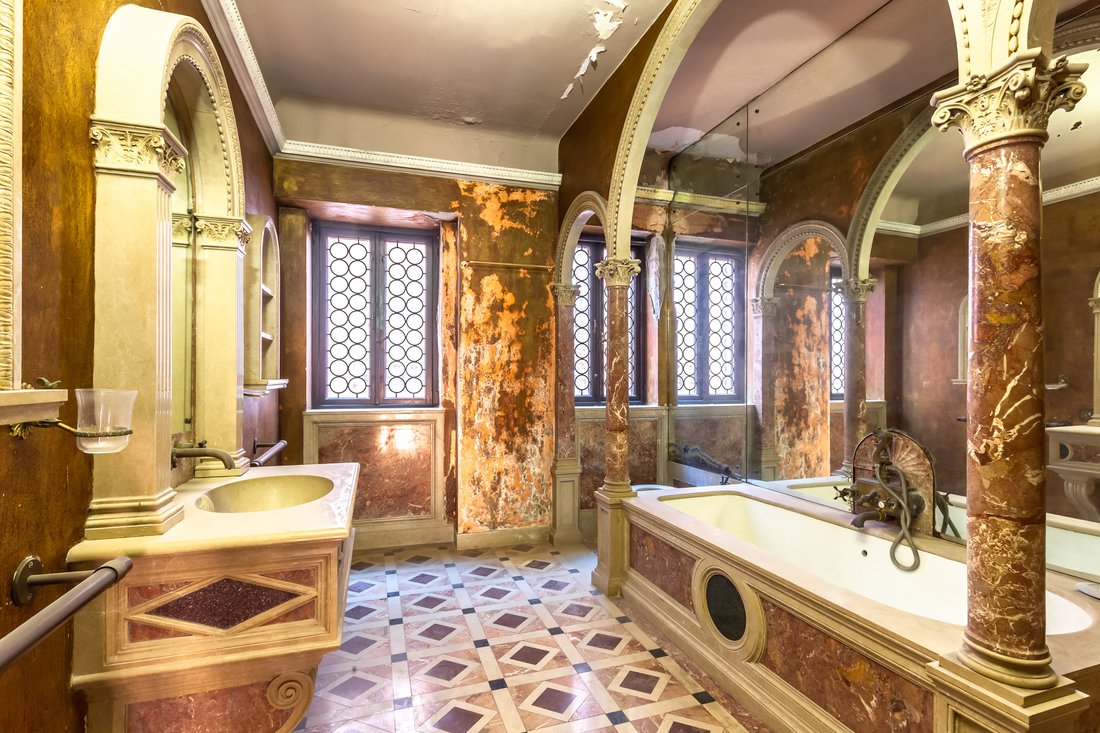
A finales del siglo XIX se llevó a cabo un gran proyecto de renovación, que no cambió la fachada, sino que renovó por completo el interior con un gusto renacentista.
El palacio se divide en cuatro plantas con una planta baja, dos pisos nobles y un tercero con dormitorios.
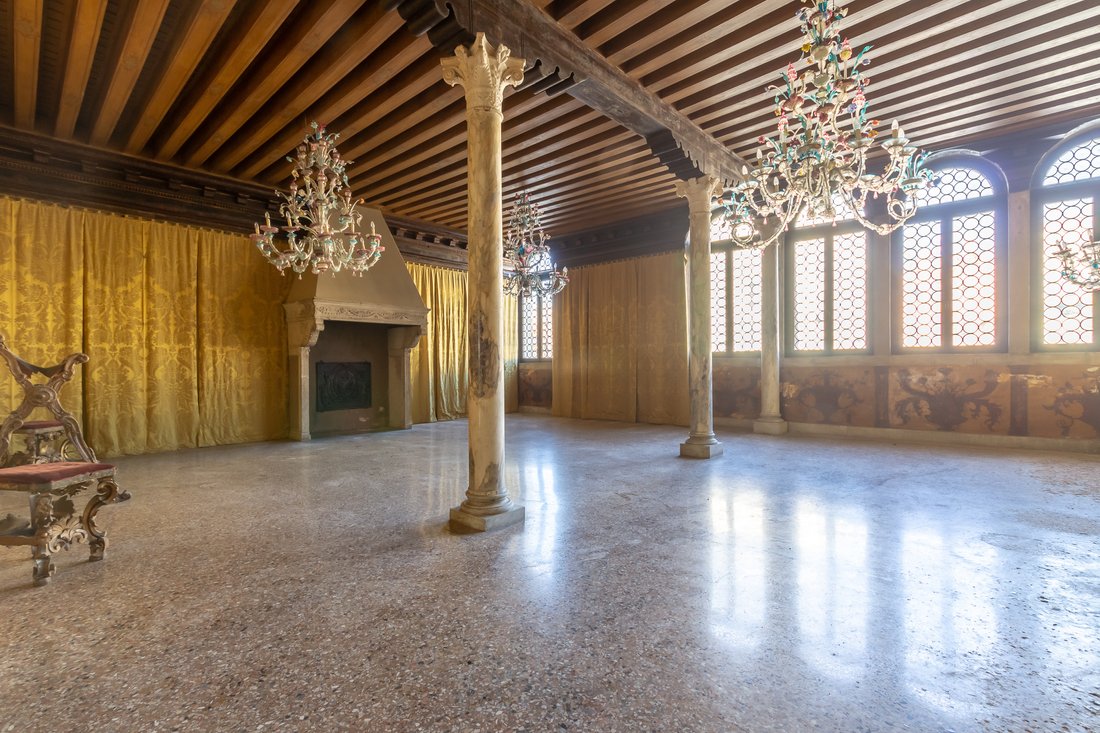
La planta baja, con acceso tanto desde el Gran Canal como desde la calle, en la parte trasera se abre al jardín y tiene un gran salón con columnas con un pozo de mármol rojo, una gran chimenea y una elegante escalera de mármol que conduce al primer piso noble con una fuente morisca instalada por Darío.
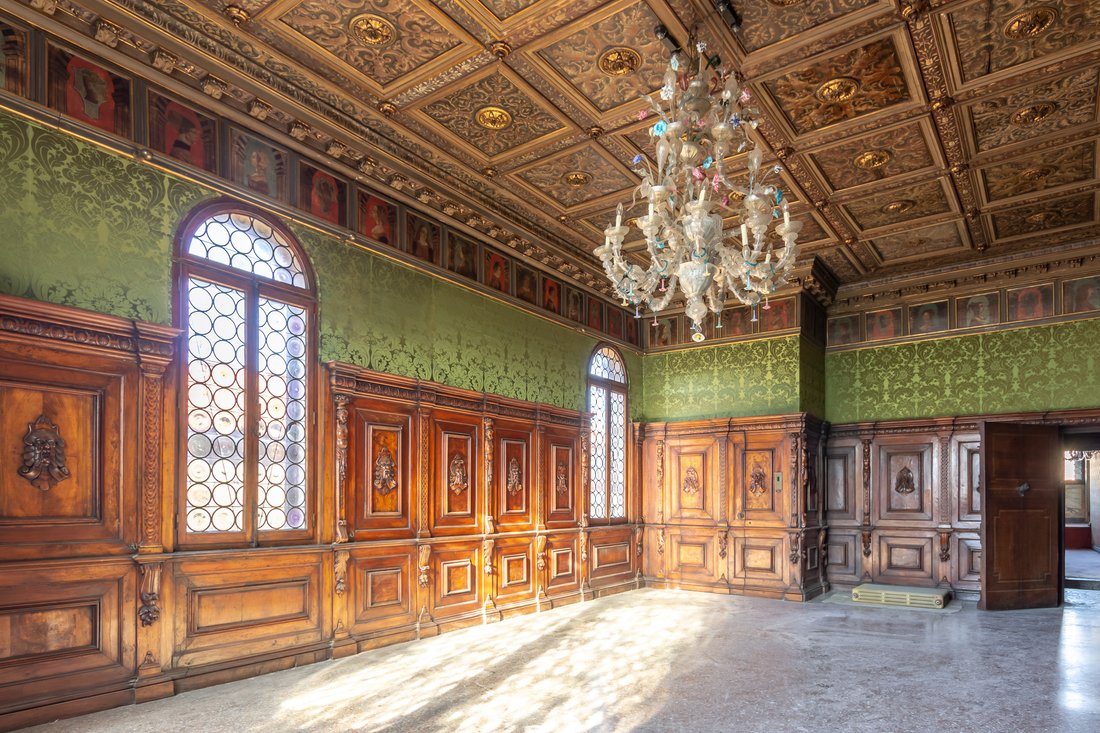
El segundo piso noble cuenta con elegantes salas con telas de Bevilacqua y candelabros antiguos de Murano.
En el tercer piso se encuentran los dormitorios enriquecidos con revestimientos de madera y una maravillosa terraza con galería que disfruta de la encantadora vista del jardín.
En 1494, el palacio pasó a manos de la hija de Darío, y sus propietarios lo decoraron con telas y alfombras preciosas y lo reformaron durante ese tiempo.
El crítico de arte inglés John Ruskin, gran amigo de uno de los propietarios anteriores, quedó particularmente fascinado con los óculos góticos incrustados en mármol del palacio y escribió sobre ellos. El palacio también perteneció a una condesa que tuvo el placer de rodearse de escritores franceses y venecianos, entre los que se encontraba Henri de Régnier.
Un gran proyecto de renovación a finales del siglo XIX incluyó la escalera, las chimeneas exteriores, las estufas de mayólica y las finas tallas del comedor del segundo piano nobile, así como una gran estabilización y sustitución del mármol en la fachada.
El palacio se encuentra en un barrio residencial veneciano refinado y tranquilo, entre la iglesia de la Salute y la colección Peggy Guggenheim, y cerca del Museo de Arte Contemporáneo Punta Della Dogana de Francois Pinault y del paseo marítimo de Zattere. Está cerca de las paradas de vaporetto de Accademia, Salute y Zattere Spirito Santo, así como de numerosas tiendas y restaurantes de alta calidad.
Palazzo Dario is an architectural gem on the most prestigious part of the Grand Canal stretching from the Accademia Bridge to the Salute Church and the Bacino di San Marco.
At the end of the 15th century the palace was remodelled by Pietro Lombardo for the patrician Giovanni Dario, Secretary to the Venetian Senate, diplomat, and merchant, who managed to negotiate a very convenient peace agreement with the Ottomans (Turks). For these tasks the Serenissima had given Dario a large sum of money as a reward,
and he commissioned a house to be built on a pre-existing gothic palace.
The magnificent façade, decorated with circular polychrome marbles inlays, is made of Pietra d’Istria, and reflects the oriental influence, acquired by Dario during his long travels in Egypt and Middle East, then translated in the Veneto taste with the help of the architect.
Differently from the Renaissance façade on the Grand Canal, the rear facade of the palace on the Campiello Barbaro has Gothic trefoil arches, chimneys, and loggia terrace.
In 2025 a full expertise on the property has been carried out and the Palace is sold with a full certificate of compliance.
A large project of renovation was undertaken at the end of the 19th century, and it didn’t change the façade but completely renewed the interior with a renaissance taste.
The Palace splits over four floors with a ground floor, two noble floors and a third one with bedrooms.
The ground floor, with access both from the Grand Canal and the street, on the rear is opened onto the garden, and has a large hall with columns featuring a red marble well, a large fireplace and an elegant marble staircase that leads to the first noble floor boasting a Moorish fountain installed by Dario.
The second noble floor features elegant halls with Bevilacqua fabrics and antique Murano chandeliers.
On the third floor there are the bedrooms enriched with wainscoting and a wonderful loggia terrace enjoying the charming view of the garden.
In 1494, the palace passed to Dario’s daughter, and it was decorated with precious fabrics and carpets and refurbished during the time by its owners.
The English art critic John Ruskin, great friend of one of the previous owners, was particularly entranced with and wrote about the palace’s Gothic marble-encrusted oculi. The palace belonged also to a Countess who was pleased to surround herself with French and Venetian writers, one of whom — Henri de Régnier.
A large project of renovation at the end of the 19th century included; the staircase, the external chimneys, the majolica stoves, and the fine carvings in the dining room on the second piano nobile, as well as a great deal of stabilization and replacement of marble on the facade.
The Palace is in a refined and peaceful residential Venetian neighbourhood between the Salute Church and the Peggy Guggenheim Collection, and close to Francois Pinault’s Punta Della Dogana Museum of Contemporary Art and the Zattere waterfront. Close to the vaporetto stops of Accademia, Salute and Zattere Spirito Santo, to a number of shops, and the high-quality restaurants.
-
Tipo de propiedad
Villa
-
Pisos
4
Características
Explorar la zona

El agente se comunicará con usted pronto por
Publicado por
Reserva una visita con Arnaldo Fusello
Elija una fecha y si prefiere una visita virtual o presencial con el agente.

Leading the way to your dream property in Venice Dimora Italia Real Estate is a leading real estate agent based
Leading the way to your dream property in Venice Dimora Italia Real Estate is a leading real estate agent based at Palazzo Querini alla Carità beside the Accademia Bridge in Venice, in the sestiere of Dorsoduro.
The sestiere of Dorsoduro is a delightful area in the southern part of Venice, favoured by many artist, writer, academic drawn and Venice-lower drawn to the world-famous museums (Punta Della Dogana, the Accademia Galleries, Peggy Guggenheim Collection…), fine restaurants and quintessentially Venetian scenes which characterize this much-loved part of the city. Home to a number of University departments along with the popular Campo San Barnaba and Campo Santa Margherita, the sestiere also encompasses the island of Giudecca seen from the ‘Zattere’ - the wide promenade on Dorsoduro’s southern embankment offering exceptional views across the boat-filled waters of the Giudecca Canal.
The area is close to many of the city’s major attractions and only a short walk to the district of San Marco via the Accademia Bridge with its spectacular views of the Grand Canal.
Their knowledgeable and multilingual Venice-born team are skilled at assisting and guiding clients throughout the sales and purchasing processes and will be delighted to supervise and coordinate the professional, efficient and reliable network of lawyers, notaries and bankers they’ve established in order to make your property sale or purchase go smoothly. Over the years, they have completed a great many successful property transactions involving overseas buyers and sellers from most of continental Europe, the UK, the US, Australia and Russia thanks to their in-depth knowledge of the city and the process of buying and selling in Italy. Notable sales have covered both residential and commercial properties.
Dimora Italia Real Estate’s reliable after-sales services include guidance and assistance with property restoration issues such as obtaining approvals and permissions and the engagement of architects, building contractors, interior designers and decorators, while their optional management, maintenance and concierge services are an invaluable resource to second/third home-owners and those purchasing property as a buy-to-let investment.
Propiedades similares cercanas
Nuevos anuncios en Dorsoduro





Explorar más viviendas en venta
Dorsoduro, Venecia, Italia tipos de propiedad
Dorsoduro, Venecia, Italia búsquedas populares
- Propiedades Vista Panorámica en Dorsoduro, Venecia, Italia
- Propiedades con Terraza en Dorsoduro, Venecia, Italia
- Propiedades con Bar en Dorsoduro, Venecia, Italia
- Propiedades con Oficina en Dorsoduro, Venecia, Italia
- Propiedades Vista al Río en Dorsoduro, Venecia, Italia
- Propiedades con Ascensor en Dorsoduro, Venecia, Italia
- Propiedades Vista de la ciudad en Dorsoduro, Venecia, Italia
- Propiedades con Jardín en Dorsoduro, Venecia, Italia
- Propiedades Duplex en Dorsoduro, Venecia, Italia
- Propiedades Frente al Agua en Dorsoduro, Venecia, Italia
- Propiedades Propiedad de Inversión en Dorsoduro, Venecia, Italia
- Propiedades Moderno en Dorsoduro, Venecia, Italia
- Propiedades con Biblioteca en Dorsoduro, Venecia, Italia
- Propiedades con Aire Acondicionado en Dorsoduro, Venecia, Italia
- Propiedades con Chimenea en Dorsoduro, Venecia, Italia
- Propiedades con Piscina en Dorsoduro, Venecia, Italia
- Propiedades con Balcón en Dorsoduro, Venecia, Italia
- Propiedades Mansión en Dorsoduro, Venecia, Italia
- Propiedades con Cocina abierta en Dorsoduro, Venecia, Italia
- Propiedades Renovado en Dorsoduro, Venecia, Italia
- Propiedades Vista al Agua en Dorsoduro, Venecia, Italia
Guías e historias relacionadas
La confianza de los mejores brokers del mundo
Los agentes tras las propiedades más excepcionales del mundo publican en JamesEdition.
- Anuncios de Sotheby's, Christie's, BARNES y Engel & Völkers
- Cada anuncio se revisa antes de publicarse
- Conecte directamente con agentes verificados
Al continuar, acepta nuestros Términos y la Política de Privacidad.