
$23,834,714
The Mount, Londres
- 6 Hab.
- 4 Baños
- 6,559 Sqft
- Actualizado: Septiembre 15
- 191
Sobre la propiedad
La descripción se tradujo automáticamente.
La descripción se muestra en el idioma original.
UNA MAGNÍFICA CASA DE LA REINA ANA, CATALOGADA DE GRADO II*, EN UNA POSICIÓN ELEVADA RODEADA DE EXCEPCIONALES JARDINES AMURALLADOS EN EL CORAZÓN DEL PUEBLO DE HAMPSTEAD
Cloth Hill data de finales del siglo XVII y se cree que es la segunda residencia más antigua de Hampstead, después de la cercana Fenton House (National Trust). En 1694, el Sr. William Beech, un comerciante cuáquero de tela
Cloth Hill data de finales del siglo XVII y se cree que es la segunda residencia más antigua de Hampstead, después de la cercana Fenton House (National Trust). En 1694, el Sr. William Beech, un comerciante cuáquero de tela
A MAGNIFICENT QUEEN ANNE HOUSE, LISTED GRADE II*, IN AN ELEVATED POSITION SET IN EXCEPTIONAL WALLED GARDENS WITHIN THE HEART OF HAMPSTEAD VILLAGE.
Cloth Hill dates from the late 17th century and is thought to be the second oldest residence in Hampstead, after nearby Fenton House (National Trust). In 1694 Mr William Beech, a Quaker cloth merchant of London, bought a house and some land ’at
Cloth Hill dates from the late 17th century and is thought to be the second oldest residence in Hampstead, after nearby Fenton House (National Trust). In 1694 Mr William Beech, a Quaker cloth merchant of London, bought a house and some land ’at
UNA MAGNÍFICA CASA DE LA REINA ANA, CATALOGADA DE GRADO II*, EN UNA POSICIÓN ELEVADA RODEADA DE EXCEPCIONALES JARDINES AMURALLADOS EN EL CORAZÓN DEL PUEBLO DE HAMPSTEAD
Cloth Hill data de finales del siglo XVII y se cree que es la segunda residencia más antigua de Hampstead, después de la cercana Fenton House (National Trust). En 1694, el Sr. William Beech, un comerciante cuáquero de telas de Londres, compró una casa y un terreno «en un lugar llamado Cloth Hill» (llamado así, según se dice, porque en la época de los Tudor las lavanderas de Hampstead, que lavaban con el agua limpia de manantial disponible en la zona, extendían allí la ropa para que se secara) y en 1699 compró otra casa y un terreno cerca. Muy poco después, incorporó partes de las dos casas más antiguas al
casa que ahora está en pie.
Cloth Hill figura en la lista II* y es de construcción tradicional de ladrillo. La casa está distribuida en planta baja, planta baja y dos plantas superiores con dependencias auxiliares y un garaje doble frente a The Mount. La propiedad se compone de una familia espaciosa
alojamiento en habitaciones bellamente proporcionadas. Cuenta con hermosas vistas uniformes desde sus numerosas ventanas sobre sus extensos jardines, Hampstead Village y el centro de Londres, desde su posición elevada muy cerca del punto más alto de la ciudad. La casa solo ha tenido tres propietarios en los últimos 140 años y, por lo tanto, ha tenido la suerte de conservar muchos elementos originales de la época, incluidas las dos escaleras, los paneles y las chimeneas originales, además de beneficiarse de una importante ampliación de la cocina de la planta baja en la parte trasera de la casa a mediados de la década de 1990. Los jardines amurallados y seguros, muy bien cuidados, casi rodean la casa con césped, paseos, un patio, una casa de verano y una fuente histórica, además de muchos árboles y arbustos maduros.
La casa tiene muchas asociaciones interesantes. Fue aquí donde Voltaire acudió en 1728 para conversar con el cuáquero Andrew Pitt (que se había casado con la hija de William Beech). En 1796, George compró la casa
Romney, el pintor, que cerca del final de su residencia, derribó los establos y la cochera y construyó en su lugar una casa con sala de pintura y galería, ahora conocida como «Romney’s House». Tras la muerte de Romney en 1802, la propiedad fue ocupada por miembros de la familia Rundell and Bridge, los orfebres de la corte. Fue entonces cuando Maria Rundell publicó en 1806 «Un nuevo sistema de cocina doméstica», un superventas precursor del famoso libro de cocina escrito por la Sra. Beeton (que tomó prestado mucho de la Sra. Rundell), que llegó a tener 67 ediciones y llevó a que se la conociera como «la diosa doméstica original». Durante el período 1852-1865, Ford Madox Brown pintó una de las obras maestras del arte victoriano, «Work», cuyo escenario es claramente reconocible como The Mount, con la puerta de Cloth Hill a la izquierda. La imagen incluye un letrero en la pared del jardín de Cloth Hill que anuncia el alquiler de «una elegante residencia familiar».
Cloth Hill data de finales del siglo XVII y se cree que es la segunda residencia más antigua de Hampstead, después de la cercana Fenton House (National Trust). En 1694, el Sr. William Beech, un comerciante cuáquero de telas de Londres, compró una casa y un terreno «en un lugar llamado Cloth Hill» (llamado así, según se dice, porque en la época de los Tudor las lavanderas de Hampstead, que lavaban con el agua limpia de manantial disponible en la zona, extendían allí la ropa para que se secara) y en 1699 compró otra casa y un terreno cerca. Muy poco después, incorporó partes de las dos casas más antiguas al
casa que ahora está en pie.
Cloth Hill figura en la lista II* y es de construcción tradicional de ladrillo. La casa está distribuida en planta baja, planta baja y dos plantas superiores con dependencias auxiliares y un garaje doble frente a The Mount. La propiedad se compone de una familia espaciosa
alojamiento en habitaciones bellamente proporcionadas. Cuenta con hermosas vistas uniformes desde sus numerosas ventanas sobre sus extensos jardines, Hampstead Village y el centro de Londres, desde su posición elevada muy cerca del punto más alto de la ciudad. La casa solo ha tenido tres propietarios en los últimos 140 años y, por lo tanto, ha tenido la suerte de conservar muchos elementos originales de la época, incluidas las dos escaleras, los paneles y las chimeneas originales, además de beneficiarse de una importante ampliación de la cocina de la planta baja en la parte trasera de la casa a mediados de la década de 1990. Los jardines amurallados y seguros, muy bien cuidados, casi rodean la casa con césped, paseos, un patio, una casa de verano y una fuente histórica, además de muchos árboles y arbustos maduros.
La casa tiene muchas asociaciones interesantes. Fue aquí donde Voltaire acudió en 1728 para conversar con el cuáquero Andrew Pitt (que se había casado con la hija de William Beech). En 1796, George compró la casa
Romney, el pintor, que cerca del final de su residencia, derribó los establos y la cochera y construyó en su lugar una casa con sala de pintura y galería, ahora conocida como «Romney’s House». Tras la muerte de Romney en 1802, la propiedad fue ocupada por miembros de la familia Rundell and Bridge, los orfebres de la corte. Fue entonces cuando Maria Rundell publicó en 1806 «Un nuevo sistema de cocina doméstica», un superventas precursor del famoso libro de cocina escrito por la Sra. Beeton (que tomó prestado mucho de la Sra. Rundell), que llegó a tener 67 ediciones y llevó a que se la conociera como «la diosa doméstica original». Durante el período 1852-1865, Ford Madox Brown pintó una de las obras maestras del arte victoriano, «Work», cuyo escenario es claramente reconocible como The Mount, con la puerta de Cloth Hill a la izquierda. La imagen incluye un letrero en la pared del jardín de Cloth Hill que anuncia el alquiler de «una elegante residencia familiar».
A MAGNIFICENT QUEEN ANNE HOUSE, LISTED GRADE II*, IN AN ELEVATED POSITION SET IN EXCEPTIONAL WALLED GARDENS WITHIN THE HEART OF HAMPSTEAD VILLAGE.
Cloth Hill dates from the late 17th century and is thought to be the second oldest residence in Hampstead, after nearby Fenton House (National Trust). In 1694 Mr William Beech, a Quaker cloth merchant of London, bought a house and some land ’at a place called Cloth Hill’ (so called, it is said, because in Tudor times Hampstead laundresses, who washed using the clean, spring-fed water available in the area, spread out their washing to dry there) and in 1699 bought another house and land close by. Very soon after this he incorporated parts of the two older houses into the house which now stands.
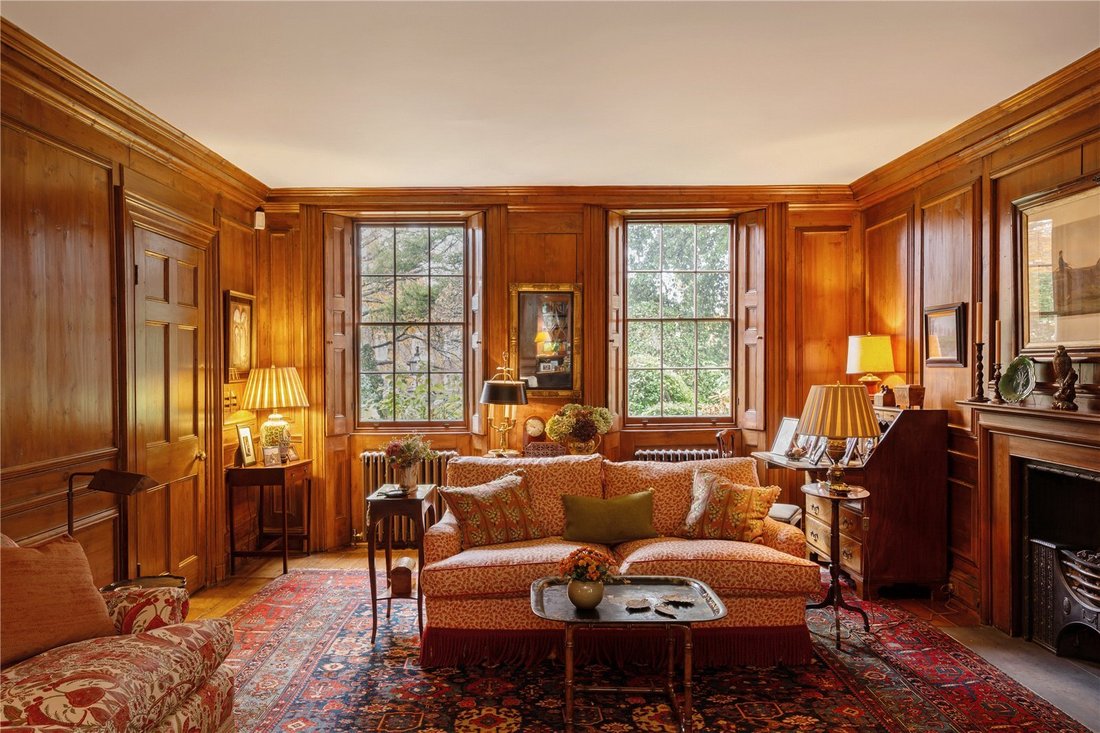
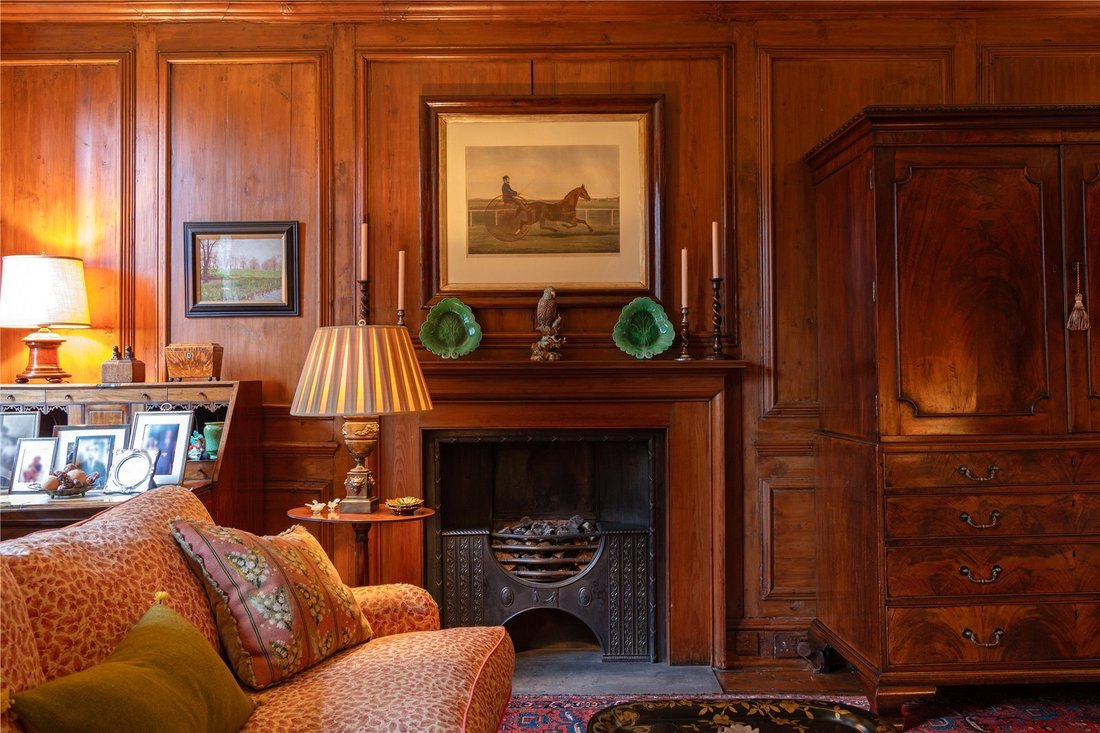
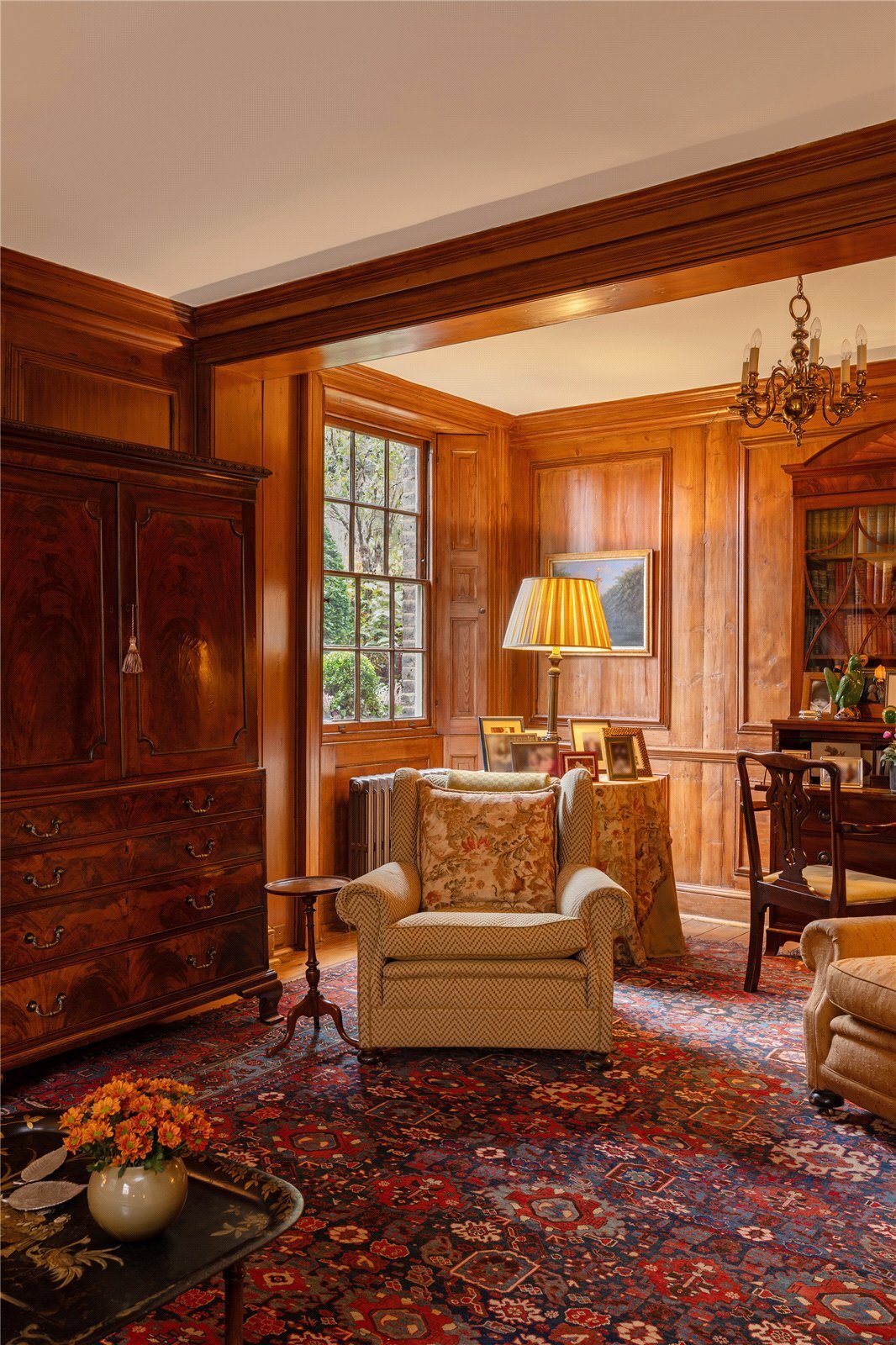
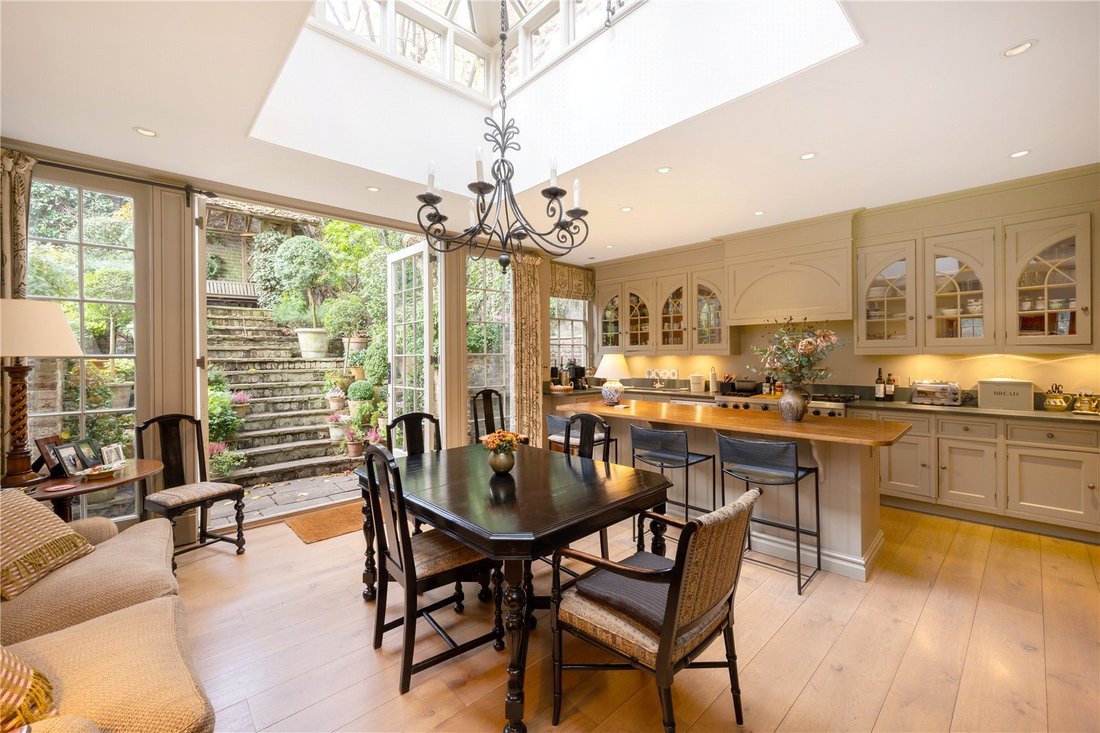
Cloth Hill is listed II* and is of traditional brick construction. The house is arranged over lower ground, ground and two upper storeys with ancillary outbuildings and a double garage fronting The Mount. The property comprises spacious family accommodation in beautifully proportioned rooms. It features uniformly lovely views from its many windows over its extensive gardens, Hampstead Village and central London, from its elevated position very near to the highest point in the city. The house has only had three owners in the last 140 years and has thus been fortunate in retaining many original period features including the two original staircases, panelling and fireplaces as well as benefiting from a substantial ground floor kitchen extension at the rear of the house in the mid 1990s. The beautifully maintained walled, secure gardens almost surround the house with lawns, walks, a patio, summer house and historic fountain, many mature trees and shrubs.
The house has many interesting associations. It was here that Voltaire came in 1728 for his conversations with the Quaker Andrew Pitt (who had married the daughter of William Beech). In 1796, the house was bought by George Romney, the painter, who near the end of his residency, took down the stables and coach-house and built in their place a house with painting room and gallery, now known as ’Romney’s House’. After Romney’s death in 1802, the property was occupied by members of the Rundell family of Rundell and Bridge, the court goldsmiths. It was then that Maria Rundell published in 1806 ’A New System of Domestic Cookery’, a best-selling precursor to the famous cookbook written by Mrs Beeton (who borrowed heavily from Mrs Rundell), which ran to 67 editions and led to her being referred to as ’the original domestic goddess.’ Over the period 1852-1865, Ford Madox Brown painted one of the masterpieces of Victorian art, ’Work’, the setting of which is clearly recognisable as The Mount with the gate of Cloth Hill on the left. The picture includes a sign on the garden wall of Cloth Hill advertising the letting of ’a genteel family residence.
Cloth Hill is located in the centre of Hampstead Village, on The Mount, a narrow single track road which runs at an incline from Heath Street to The Mount Square and ultimately Hampstead Grove.
The excellent shopping facilities of Hampstead Village are immediately to hand, as is Hampstead underground station (Northern Line). Hampstead Heath, with its open parkland of 800 acres and the Iveagh Bequest Kenwood House (English Heritage) are within easy walking distance of the property.
Kitchen with breakfast Room and Pantry
Guest Cloakroom
Principle Bedroom With En-Suite Dressing Room and Toilet
4 additional Bedrooms, one with an En-Suite
A Family Bathroom
Kids Play Room on the second floor
A Lower Ground Self Contained Guest / Staff Flat Comprising of a Double Bedroom, Bathroom, Kitchenette, Living / Games Room, Utility / Laundry Room, Wine Cellar, Garden Access, Secluded Patio and Double Garage
Cloth Hill dates from the late 17th century and is thought to be the second oldest residence in Hampstead, after nearby Fenton House (National Trust). In 1694 Mr William Beech, a Quaker cloth merchant of London, bought a house and some land ’at a place called Cloth Hill’ (so called, it is said, because in Tudor times Hampstead laundresses, who washed using the clean, spring-fed water available in the area, spread out their washing to dry there) and in 1699 bought another house and land close by. Very soon after this he incorporated parts of the two older houses into the house which now stands.
Cloth Hill is listed II* and is of traditional brick construction. The house is arranged over lower ground, ground and two upper storeys with ancillary outbuildings and a double garage fronting The Mount. The property comprises spacious family accommodation in beautifully proportioned rooms. It features uniformly lovely views from its many windows over its extensive gardens, Hampstead Village and central London, from its elevated position very near to the highest point in the city. The house has only had three owners in the last 140 years and has thus been fortunate in retaining many original period features including the two original staircases, panelling and fireplaces as well as benefiting from a substantial ground floor kitchen extension at the rear of the house in the mid 1990s. The beautifully maintained walled, secure gardens almost surround the house with lawns, walks, a patio, summer house and historic fountain, many mature trees and shrubs.
The house has many interesting associations. It was here that Voltaire came in 1728 for his conversations with the Quaker Andrew Pitt (who had married the daughter of William Beech). In 1796, the house was bought by George Romney, the painter, who near the end of his residency, took down the stables and coach-house and built in their place a house with painting room and gallery, now known as ’Romney’s House’. After Romney’s death in 1802, the property was occupied by members of the Rundell family of Rundell and Bridge, the court goldsmiths. It was then that Maria Rundell published in 1806 ’A New System of Domestic Cookery’, a best-selling precursor to the famous cookbook written by Mrs Beeton (who borrowed heavily from Mrs Rundell), which ran to 67 editions and led to her being referred to as ’the original domestic goddess.’ Over the period 1852-1865, Ford Madox Brown painted one of the masterpieces of Victorian art, ’Work’, the setting of which is clearly recognisable as The Mount with the gate of Cloth Hill on the left. The picture includes a sign on the garden wall of Cloth Hill advertising the letting of ’a genteel family residence.
Cloth Hill is located in the centre of Hampstead Village, on The Mount, a narrow single track road which runs at an incline from Heath Street to The Mount Square and ultimately Hampstead Grove.
The excellent shopping facilities of Hampstead Village are immediately to hand, as is Hampstead underground station (Northern Line). Hampstead Heath, with its open parkland of 800 acres and the Iveagh Bequest Kenwood House (English Heritage) are within easy walking distance of the property.
Kitchen with breakfast Room and Pantry
Guest Cloakroom
Principle Bedroom With En-Suite Dressing Room and Toilet
4 additional Bedrooms, one with an En-Suite
A Family Bathroom
Kids Play Room on the second floor
A Lower Ground Self Contained Guest / Staff Flat Comprising of a Double Bedroom, Bathroom, Kitchenette, Living / Games Room, Utility / Laundry Room, Wine Cellar, Garden Access, Secluded Patio and Double Garage
-
Tipo de propiedad
Casa
-
Precio/pie²
$3,633
-
Consumo
E
Explorar la zona
The Mount, London, Hampstead, Camden, Inglaterra
Ver en Google Maps
Precio por sqft
Bajo
Alto

Se unió hace 2 años
Usted ha preguntado por esta propiedad
El agente se comunicará con usted pronto por
Publicado por
31
Anuncios
2024
Se unió
Reserva una visita con Neir Gigi
Elija una fecha y si prefiere una visita virtual o presencial con el agente.
Fecha preferida
Tipo de tour

Savills - Hampstead
7 Perrin's Court, Hampstead, London, NW3 1QS, United Kingdom
Ver perfil de la agencia
Última actualización
Septiembre 15
Primera publicación
Enero 25, 2025
Referencia del anuncio
HAH240303
Propiedades similares cercanas
Nuevos anuncios en Hampstead


Explorar más viviendas en venta
Hampstead, Camden, Inglaterra tipos de propiedad
Hampstead, Camden, Inglaterra búsquedas populares
- Propiedades Vista Panorámica en Hampstead, Camden, Inglaterra
- Propiedades con Terraza en Hampstead, Camden, Inglaterra
- Propiedades con Bar en Hampstead, Camden, Inglaterra
- Propiedades con Sala de juegos en Hampstead, Camden, Inglaterra
- Propiedades con Oficina en Hampstead, Camden, Inglaterra
- Propiedades con Ascensor en Hampstead, Camden, Inglaterra
- Propiedades Vista de la ciudad en Hampstead, Camden, Inglaterra
- Propiedades Vista a la Montaña en Hampstead, Camden, Inglaterra
- Propiedades con Jardín en Hampstead, Camden, Inglaterra
- Propiedades con Cocina exterior en Hampstead, Camden, Inglaterra
- Propiedades Duplex en Hampstead, Camden, Inglaterra
- Propiedades Comunidad Cerrada en Hampstead, Camden, Inglaterra
- Propiedades Privacidad en Hampstead, Camden, Inglaterra
- Propiedades Cima de una colina en Hampstead, Camden, Inglaterra
- Propiedades Propiedad de Inversión en Hampstead, Camden, Inglaterra
- Propiedades Moderno en Hampstead, Camden, Inglaterra
- Propiedades Ecuestre en Hampstead, Camden, Inglaterra
- Propiedades Obras nuevas en Hampstead, Camden, Inglaterra
- Propiedades con Gimnasio en Hampstead, Camden, Inglaterra
- Propiedades con Sauna en Hampstead, Camden, Inglaterra
- Propiedades con Sauna en Hampstead, Camden, Inglaterra
- Propiedades con Biblioteca en Hampstead, Camden, Inglaterra
- Propiedades con Aire Acondicionado en Hampstead, Camden, Inglaterra
- Propiedades con Bodega en Hampstead, Camden, Inglaterra
- Propiedades con Jacuzzi en Hampstead, Camden, Inglaterra
- Propiedades con Chimenea en Hampstead, Camden, Inglaterra
- Propiedades con Piscina en Hampstead, Camden, Inglaterra
- Propiedades con Garaje en Hampstead, Camden, Inglaterra
- Propiedades con Balcón en Hampstead, Camden, Inglaterra
- Propiedades Mansión en Hampstead, Camden, Inglaterra
- Propiedades con Cocina abierta en Hampstead, Camden, Inglaterra
- Propiedades Renovado en Hampstead, Camden, Inglaterra
- Propiedades con Cine en Hampstead, Camden, Inglaterra
- Propiedades con Piscina cubierta en Hampstead, Camden, Inglaterra
- Propiedades Vista al Agua en Hampstead, Camden, Inglaterra
Guías e historias relacionadas
La confianza de los mejores brokers del mundo
Los agentes tras las propiedades más excepcionales del mundo publican en JamesEdition.
- Anuncios de Sotheby's, Christie's, BARNES y Engel & Völkers
- Cada anuncio se revisa antes de publicarse
- Conecte directamente con agentes verificados
Al continuar, acepta nuestros Términos y la Política de Privacidad.