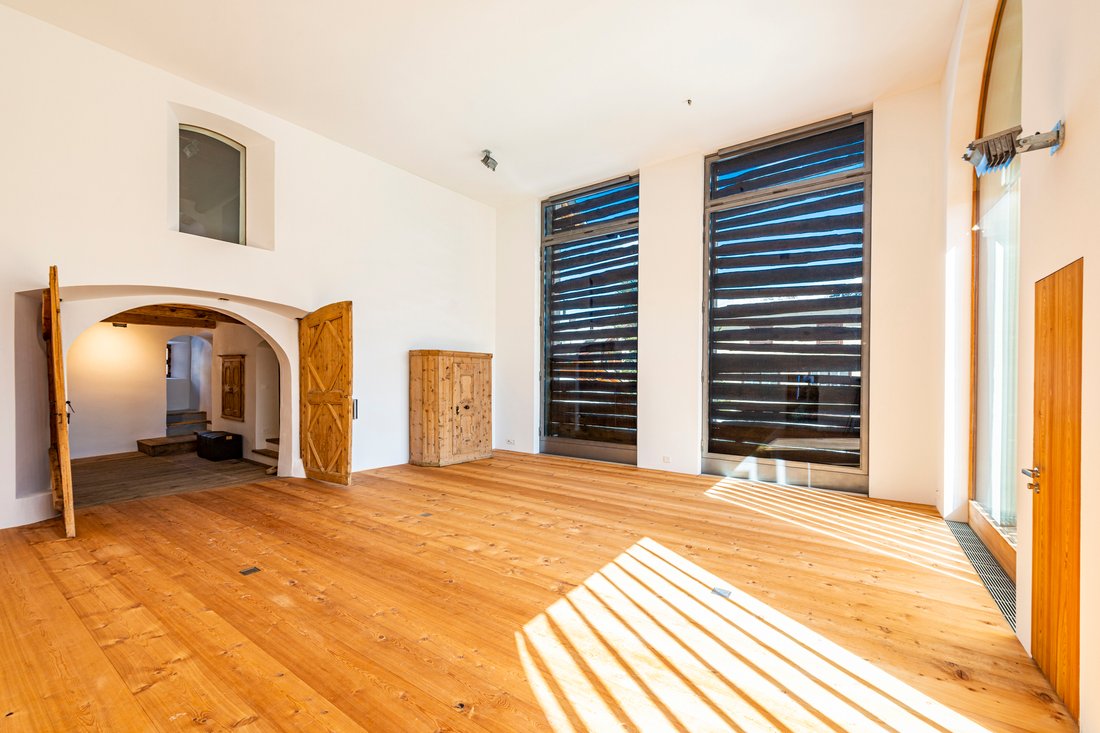
Esta histórica casa de Engadina, un verdadero símbolo de la tradición arquitectónica regional, fue completamente renovada entre 2012 y 2013 por el arquitecto Hans-Jörg Ruch. La renovación ha combinado hábilmente el encanto del pasado con los requisitos modernos. Algunos de los elementos arquitectónicos de la casa datan de los siglos XV, XVII y XVIII, y destacan su larga historia. El Sulèr (hall de
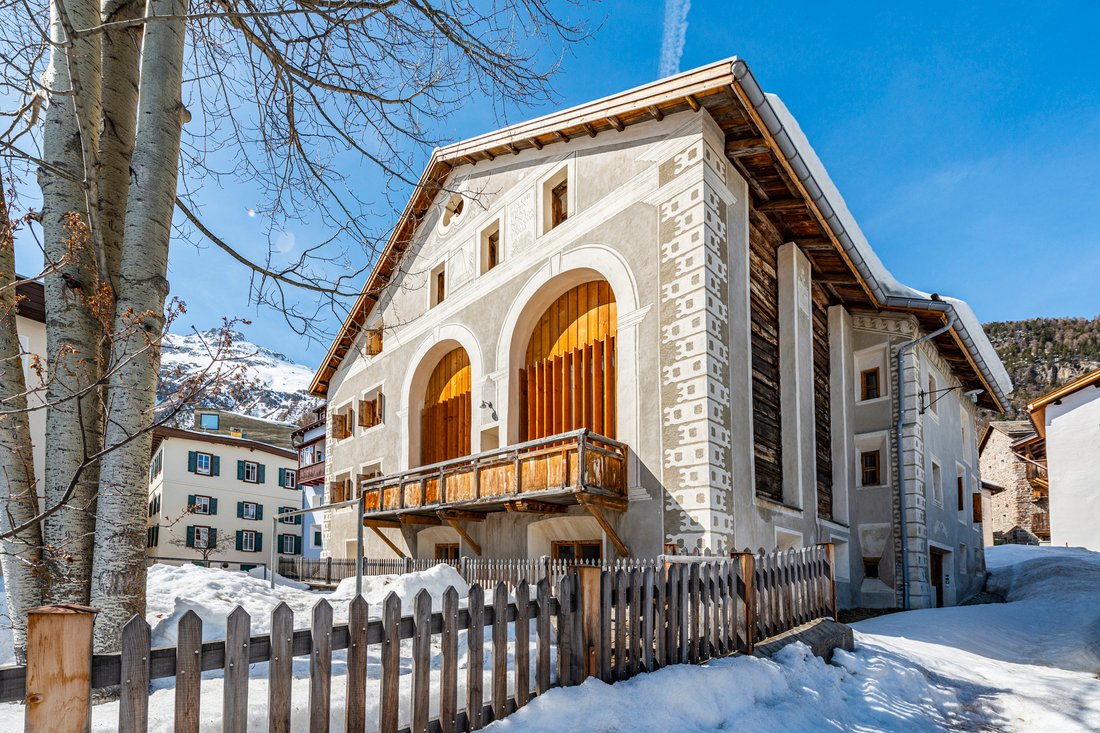
This historic Engadine house, a true symbol of regional architectural tradition, was fully renovated between 2012 and 2013 by architect Hans-Jörg Ruch. The renovation has skillfully combined the charm of the past with modern requirements. Some of the house’s architectural elements date back to the 15th, 17th, and 18th centuries, highlighting its long history.
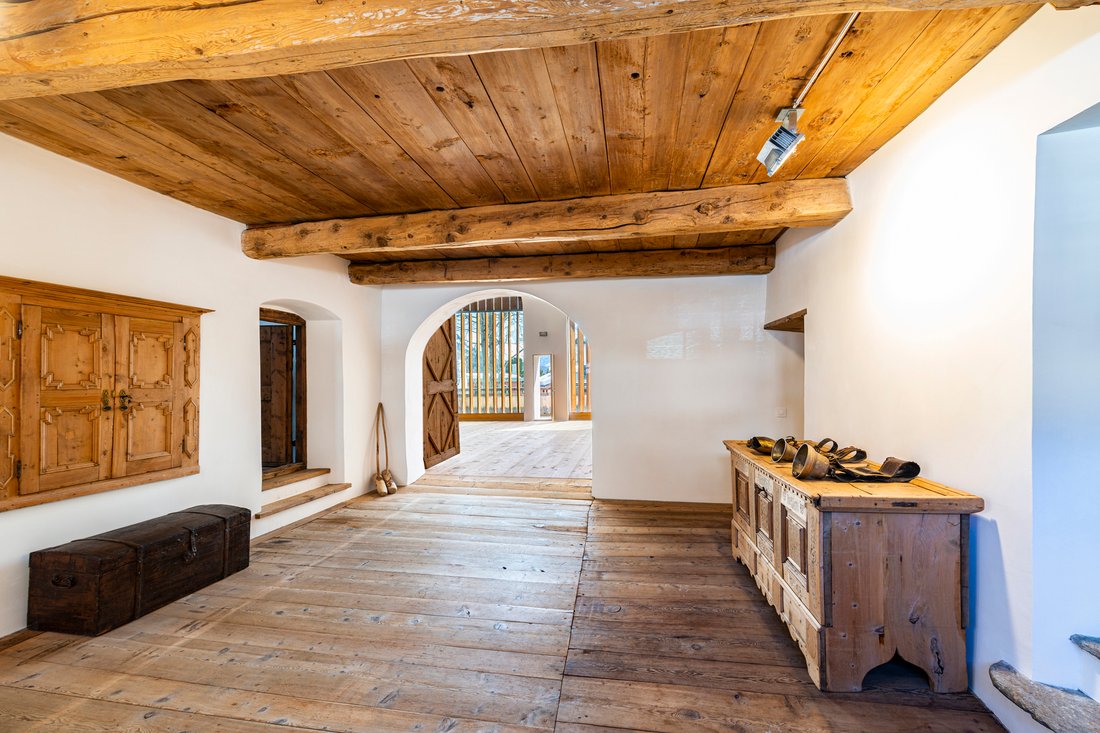
The Sulèr (entrance hall)
Esta histórica casa de Engadina, un verdadero símbolo de la tradición arquitectónica regional, fue completamente renovada entre 2012 y 2013 por el arquitecto Hans-Jörg Ruch. La renovación ha combinado hábilmente el encanto del pasado con los requisitos modernos. Algunos de los elementos arquitectónicos de la casa datan de los siglos XV, XVII y XVIII, y destacan su larga historia. El Sulèr (hall de entrada) y el Palantschin (ático) datan del siglo XVII. La casa probablemente tomó su forma actual en el siglo XVIII, cuando se añadió el granero, y el techo se hizo uniforme en toda la propiedad, dándole el volumen y la distribución actuales. En el interior, se ha tenido mucho cuidado para preservar la autenticidad histórica de la casa. Las murallas medievales y los elementos de los siglos XVII y XVIII se han limpiado o restaurado meticulosamente. Algunas habitaciones cuentan con madera de pino de Engadina y alerces suizos, mientras que todos los suelos de madera maciza están hechos de pino de Engadina, lo que añade una calidez natural a los interiores. La casa consta de 14 habitaciones, incluidas 3 stüvas originales (salas de estar tradicionales) y 8 dormitorios con 7 baños. Las stüvas ofrecen un espacio cálido y acogedor típico de la región. Las habitaciones son espaciosas y cada una tiene su propio baño en suite, lo que garantiza privacidad y comodidad. Los 7 baños están elegantemente diseñados con materiales de alta calidad. En el lateral de la casa, hay un jardín bien cuidado, ideal para disfrutar del paisaje circundante en paz, mientras que las plazas de aparcamiento están convenientemente ubicadas cerca. Esta propiedad es una combinación perfecta de encanto histórico y confort moderno, y ofrece un refugio exclusivo para aquellos que buscan un hogar con una rica historia y comodidades contemporáneas.
This historic Engadine house, a true symbol of regional architectural tradition, was fully renovated between 2012 and 2013 by architect Hans-Jörg Ruch. The renovation has skillfully combined the charm of the past with modern requirements. Some of the house’s architectural elements date back to the 15th, 17th, and 18th centuries, highlighting its long history.
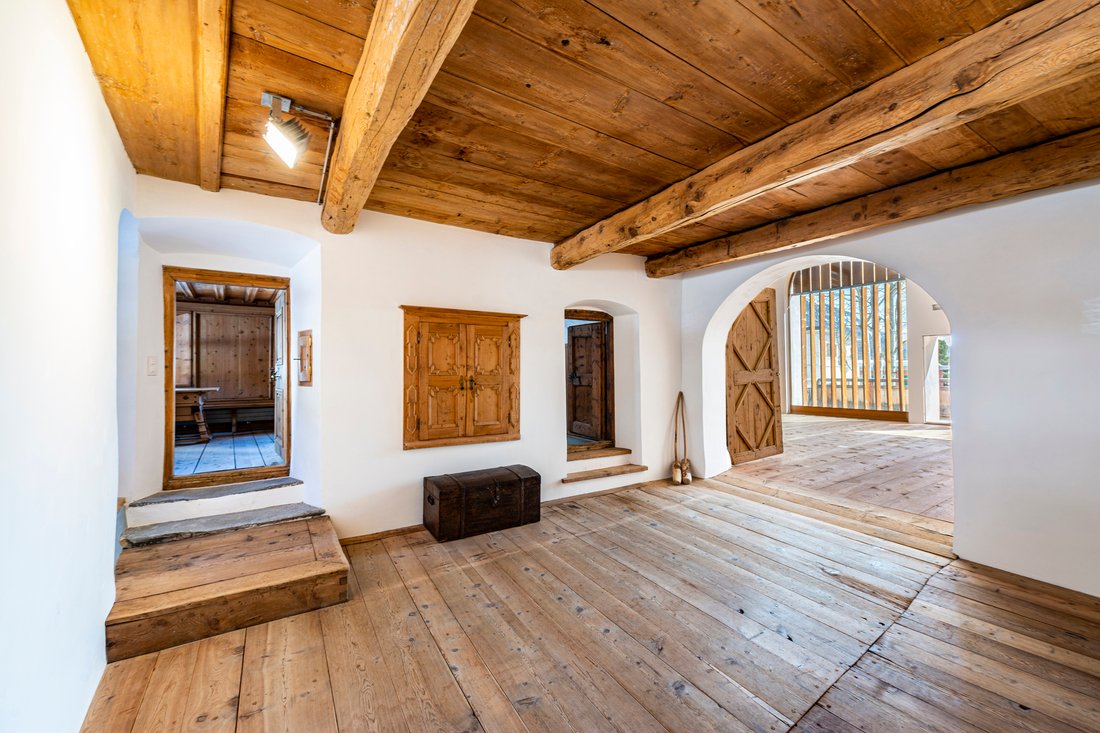
The Sulèr (entrance hall) and the Palantschin (attic) date back to the 17th century. The house likely took its present form in the 18th century when the barn was added, and the roof was made uniform across the entire property, giving it the current volume and layout.
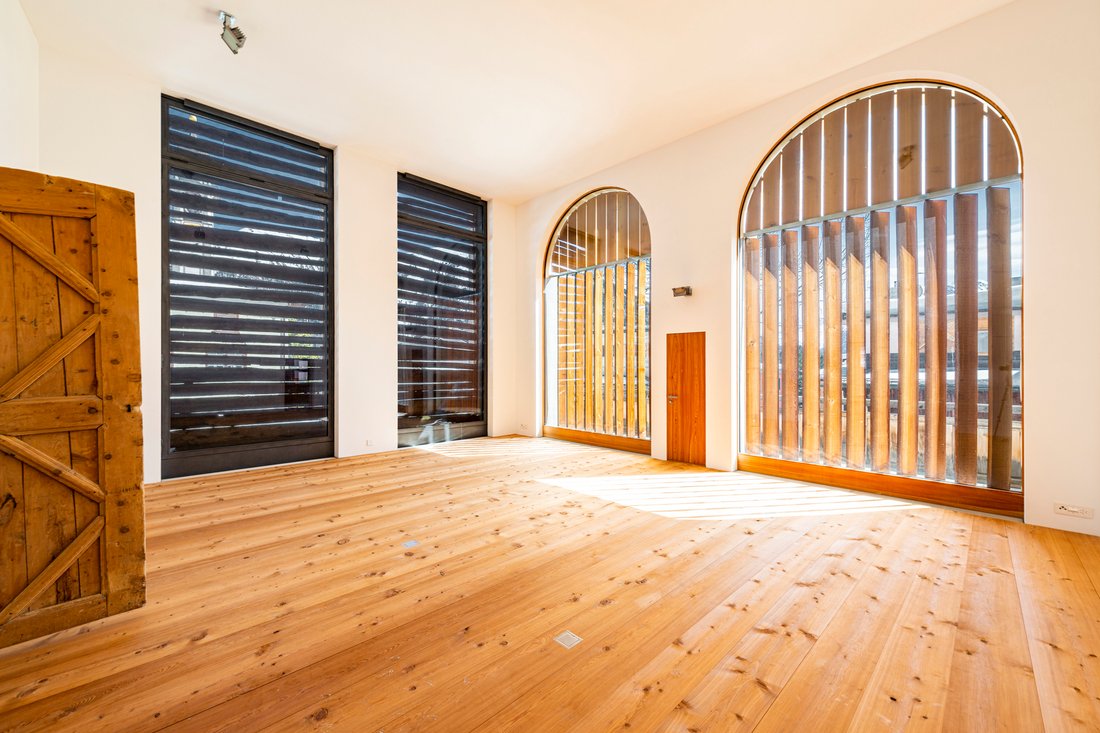
Inside, great care has been taken to preserve the historical authenticity of the house. The medieval walls and 17th and 18th-century features have been meticulously cleaned or restored. Some rooms feature wood from Engadine pines and Swiss larches, while the solid wood floors throughout are made from Engadine pine, adding a natural warmth to the interiors.
The house comprises 14 rooms, including 3 original Stüvas (traditional living rooms) and 8 bedrooms with 7 bathrooms. The Stüvas provide a warm and welcoming space typical of the region. The bedrooms are spacious and each has its own en-suite bathroom, ensuring privacy and comfort. The 7 bathrooms are elegantly designed with high-quality materials.
This property is a perfect blend of historical charm and modern comfort, offering an exclusive retreat for those seeking a home with a rich history and contemporary amenities.
St. Moritz is one of only three locations to host the Winter Olympics twice, in 1928 and 1948, and remains a destin
St. Moritz is one of only three locations to host the Winter Olympics twice, in 1928 and 1948, and remains a destination for world ski championships. Since the early 1950s, St. Moritz has been an important destination for many personalities from the world of entertainment, sports and politics. It is the perfect location for owners of chalets and apartments coming from all over the world to benefit from 300 days of sunshine, long summers and sporty winters. The St. Moritz luxury real estate market is one of the highest priced in the world, with the percentage of secondary residences very high and no existing major international real estate agency in the marketplace. St. Moritz Sotheby’s International Realty continues the brand’s expansion across Switzerland, our commitment to providing access to the brand’s network and exclusive real estate services in key countries around the world. This affiliation, which strengthens our presence in Europe, offers entrance into this famous and attractive lifestyle-focused Swiss market. We are very pleased that our global clientele now will have access to the brand’s services in this beautiful part of the world. Therefore, we believe this presents a great opportunity that will give us a strong position in the market.