$2,236,633
Fortaleza Normanda En El Mar De Calabria
- 6 Hab.
- 7 Baños
- 8,687 Sqft
- 2.48 Ac lot
- 49
Sobre la propiedad
La descripción se tradujo automáticamente.
La descripción se muestra en el idioma original.
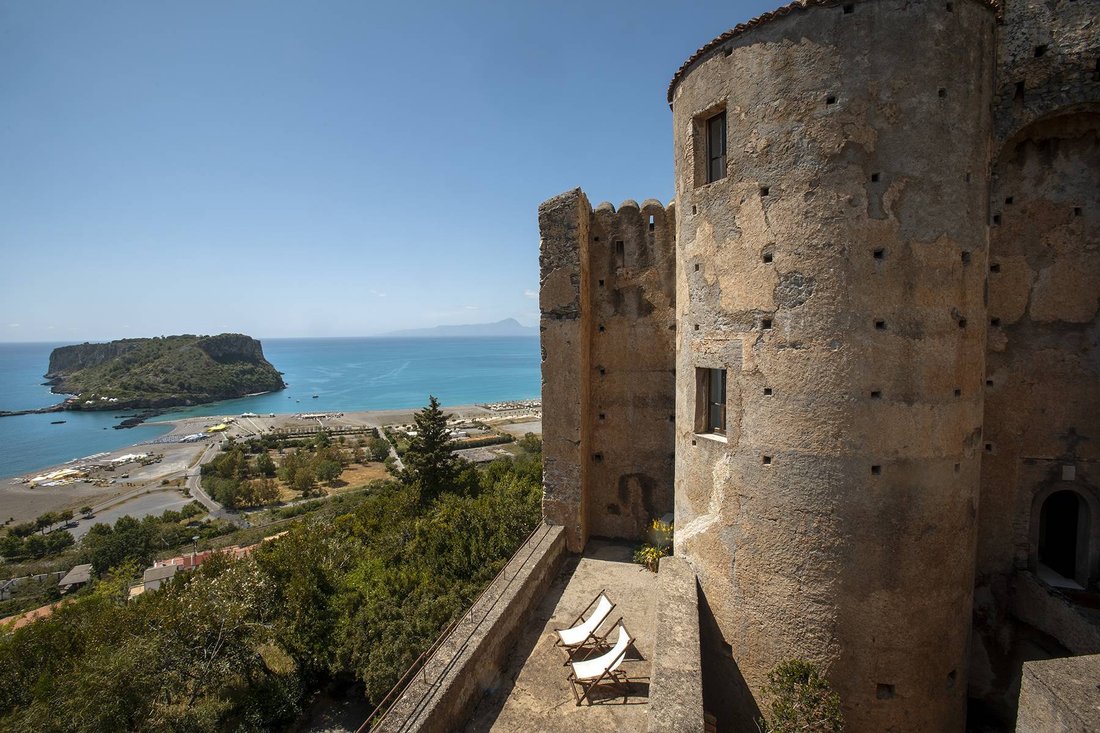
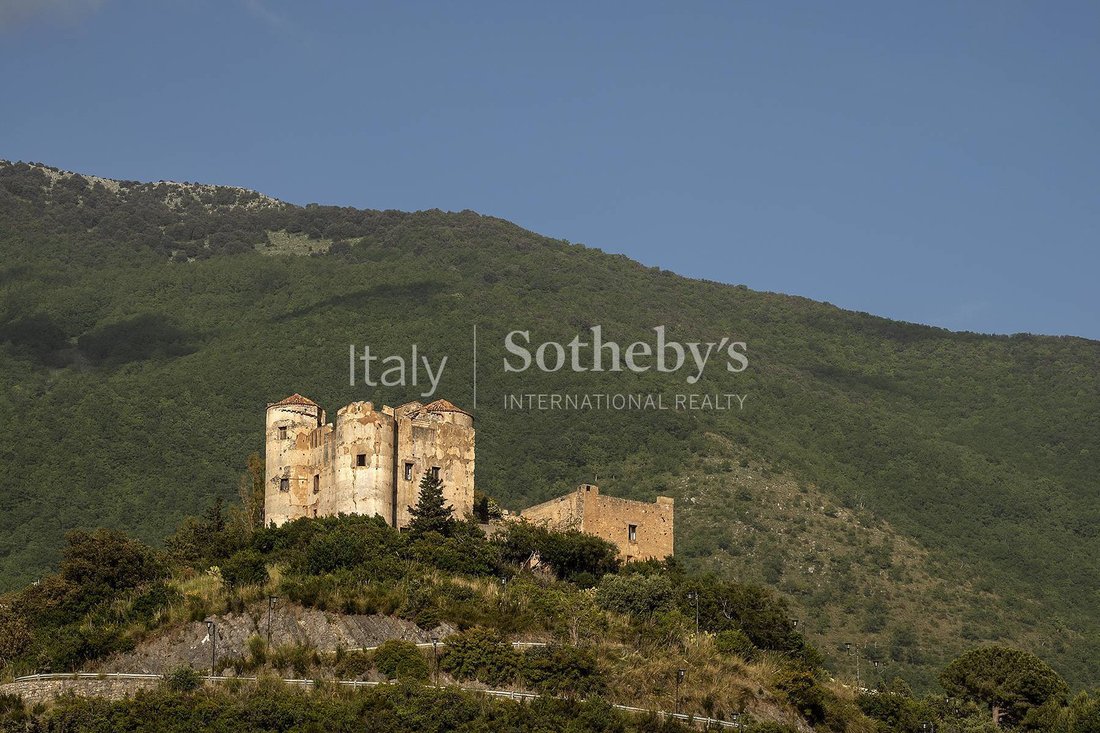
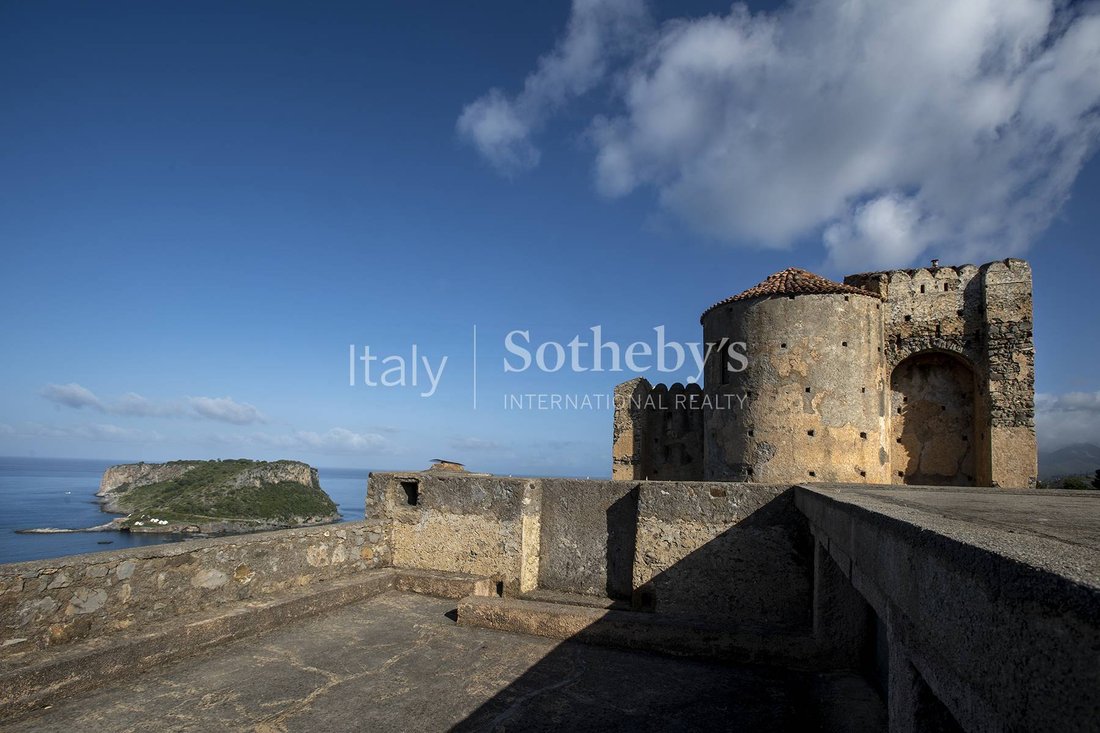
El Castello di Fiuzzi, también conocido como Castillo de Praia a Mare, fue construido entre los siglos XII y XIII como estructura militar, gracias a su posición estratégica. Se encuentra en una pequeña colina frente a la «Isola di Dino», con vistas a una vasta franja de mar y costa. La fortaleza fue encargada por el rey de Nápoles para defender la costa de las incursiones sarracenas y aragonesas.
The Castello di Fiuzzi, also known as the Praia a Mare Castle, was built between the 12th and 13th centuries as a military structure, thanks to its strategic position. It stands on a small hill facing the ’Isola di Dino,’ overlooking a vast stretch of sea and coastline.
The fortress was commissioned by the King of Naples to defend the coast from Saracen and Aragonese incursions. At the en
The fortress was commissioned by the King of Naples to defend the coast from Saracen and Aragonese incursions. At the en
El Castello di Fiuzzi, también conocido como Castillo de Praia a Mare, fue construido entre los siglos XII y XIII como estructura militar, gracias a su posición estratégica. Se encuentra en una pequeña colina frente a la «Isola di Dino», con vistas a una vasta franja de mar y costa. La fortaleza fue encargada por el rey de Nápoles para defender la costa de las incursiones sarracenas y aragonesas. A finales del siglo XVI, el obispo Matteo Cosentini d’Aieta, el señor feudal local, la utilizó como residencia de verano. En el siglo XVIII, el feudo fue vendido a otras familias nobles. A principios de la década de 1950, un descendiente directo de la familia Cosentini d’Aieta volvió a comprar el castillo y decidió devolverlo a su antiguo esplendor mediante una elegante restauración conservadora. El escudo original de los marqueses de Cosentini d’Aieta aún se puede ver en el portal de entrada. La estructura tiene una planta rectangular con dos torres cilíndricas conectadas por paredes anchas, parcialmente originales, adornadas con almenas de estilo árabe. En el interior, la arquitectura presenta pisos de cemento blanco, paredes encaladas y techos abovedados, con muebles y elementos decorativos mínimos. Durante la renovación de la década de 1950, se crearon seis dormitorios, cada uno con su propio baño privado, a partir de la estructura original. En el exterior, en el jardín, hay una pequeña capilla que todavía acoge ceremonias y funciones religiosas en la actualidad. El edificio está rodeado por más de una hectárea de vegetación típica mediterránea y altos cipreses.
The Castello di Fiuzzi, also known as the Praia a Mare Castle, was built between the 12th and 13th centuries as a military structure, thanks to its strategic position. It stands on a small hill facing the ’Isola di Dino,’ overlooking a vast stretch of sea and coastline.
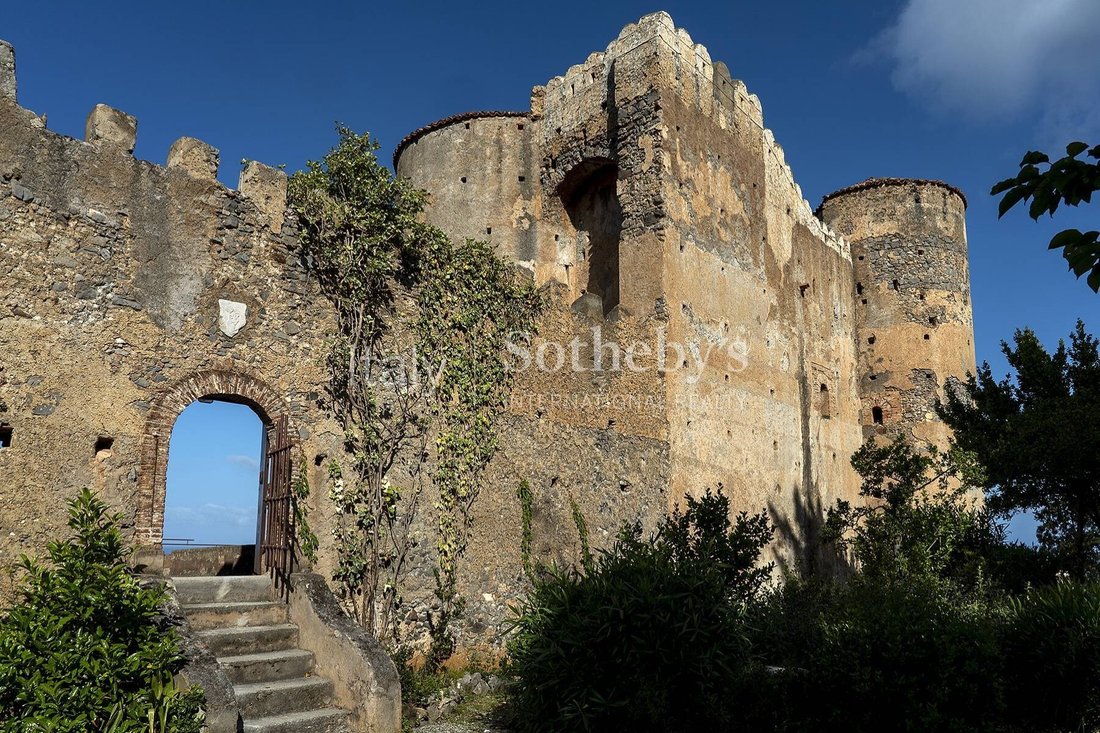
The fortress was commissioned by the King of Naples to defend the coast from Saracen and Aragonese incursions. At the end of the 16th century, Bishop Matteo Cosentini d’Aieta, the local feudal lord, used it as a summer residence. In the 18th century, the fiefdom was sold to other noble families. In the early 1950s, a direct descendant of the Cosentini d’Aieta family repurchased the castle and decided to restore it to its former glory through an elegant conservative restoration. The original coat of arms of the Cosentini d’Aieta marquises can still be seen on the entrance portal.
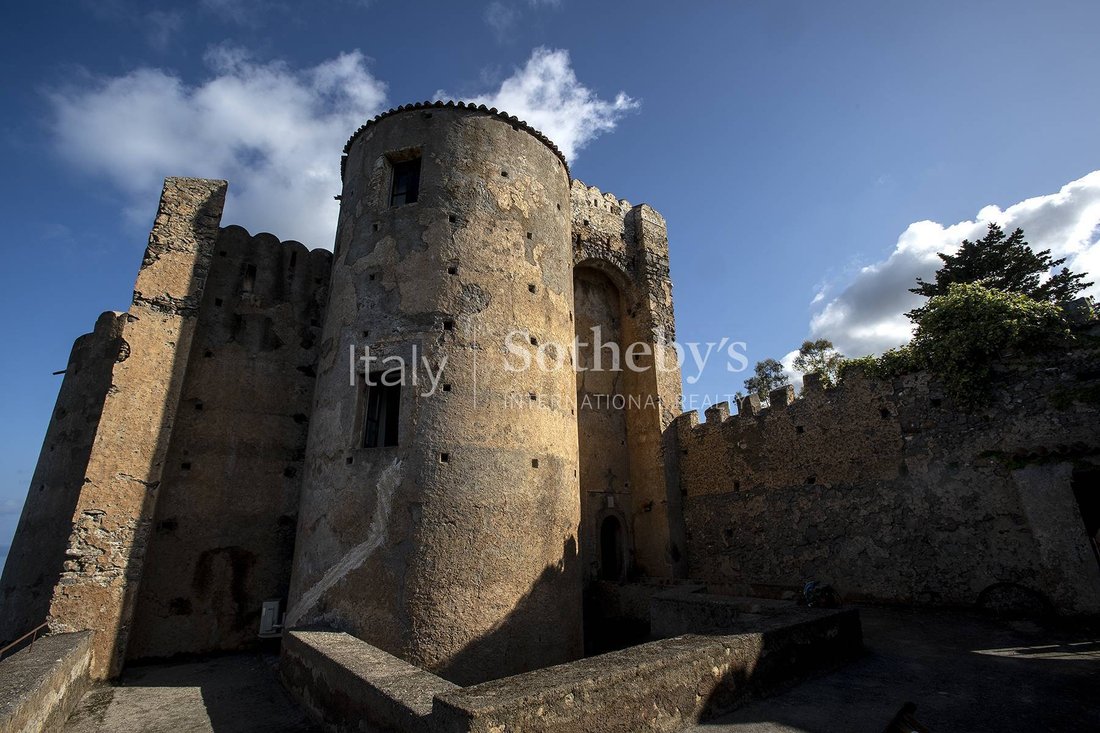
The structure has a rectangular layout with two cylindrical towers connected by wide walls, partially original, adorned with Arab-style battlements. Inside, the architecture features white cement floors, whitewashed walls, and vaulted ceilings, with minimal furniture and decorative elements. During the 1950s renovation, six bedrooms, each with its own private bathroom, were created from the original structure. Outside, in the garden, there is a small chapel that still hosts ceremonies and religious functions today.
The building is surrounded by over one hectare of typical Mediterranean vegetation and tall cypress trees.
The fortress was commissioned by the King of Naples to defend the coast from Saracen and Aragonese incursions. At the end of the 16th century, Bishop Matteo Cosentini d’Aieta, the local feudal lord, used it as a summer residence. In the 18th century, the fiefdom was sold to other noble families. In the early 1950s, a direct descendant of the Cosentini d’Aieta family repurchased the castle and decided to restore it to its former glory through an elegant conservative restoration. The original coat of arms of the Cosentini d’Aieta marquises can still be seen on the entrance portal.
The structure has a rectangular layout with two cylindrical towers connected by wide walls, partially original, adorned with Arab-style battlements. Inside, the architecture features white cement floors, whitewashed walls, and vaulted ceilings, with minimal furniture and decorative elements. During the 1950s renovation, six bedrooms, each with its own private bathroom, were created from the original structure. Outside, in the garden, there is a small chapel that still hosts ceremonies and religious functions today.
The building is surrounded by over one hectare of typical Mediterranean vegetation and tall cypress trees.
-
Tipo de propiedad
Otros
-
Año de construcción
1100
-
Precio/pie²
$257
Características
- Jardín
- Chimenea
- Vista al Agua
- Vista a la Montaña
- Frente al Agua
- Aire Acondicionado
- Balcón
Explorar la zona
Via Don Matteo dei Marchesi Cosentini d'Aieta, Praia a Mare, CS 87028, Calabria, Italia
Ver en Google Maps
Precio por sqft
Bajo
Alto
Ubicada en la encantadora ciudad de Praia a Mare, esta propiedad ofrece fácil acceso a las playas vírgenes del mar Tirreno. Disfrute de la gastronomía local y de los sitios históricos cercanos. A poca distancia en coche de las atracciones culturales de Maratea y a poco más de una hora del aeropuerto internacional de Lamezia Terme. Ideal para quienes buscan un estilo de vida costero sereno.
Ver lugares cercanos
Atracciones
Escuelas
Aeropuerto Internacional de Lamezia Terme
Aeropuerto
86 min
Maratea
Cultura & Patrimonio
31 min
Playa de Arco Magno
Naturaleza y Exterior
8 min
Escuela Internacional de Calabria
Escuela Internacional
90 min

Se unió hace 8 años
Usted ha preguntado por esta propiedad
El agente se comunicará con usted pronto por
Publicado por
4
Anuncios
2018
Se unió
Reserva una visita con Diletta Giorgolo S.
Elija una fecha y si prefiere una visita virtual o presencial con el agente.
Fecha preferida
Tipo de tour

Italy Sotheby's International Realty
Piazza Santi Apostoli 81, 00187, Rome, Roma, Italy
Ver perfil de la agencia
Rome, the eternal city, has been attracting visitors for two millennia but it is still one of the most exhilarating
Rome, the eternal city, has been attracting visitors for two millennia but it is still one of the most exhilarating and romantic destinations in the world. Italy Sotheby’s International Realty offers its international and local clientele a wide selection of luxury properties in Rome, on Capri Island as well as on that beautiful coast of rugged cliffs and sandy coves that is known as Amalfi Coast. Located inside the renowned Palazzo Odescalchi, whose facade was originally designed by Gian Lorenzo Bernini in 1665, and just across the street from Palazzo Colonna, the office is conveniently positioned to offer the right properties catering to individual client needs. Its competent, multi-lingual staff members are delighted to introduce their clients to the marvels of high-end property in some of Italy’s most enchanting destinations.
With the purpose of confirming Italy Sotheby’s International Realty’s vocation for hospitality and the quality of living spaces, it has opened two showrooms, in Milan and Rome. Two spaces designed to welcome guests in a private setting, characterized by pieces of furniture that have made the history of Italian design.
Lo Rome showroom is located in the heart of Roma in Via Fontanella di Borghese , a few steps from Trinità dei Monti and Via dei Condotti. The project of the new space, composed of four different rooms, was born in collaboration with the Giustini/Stagetti Gallery, which for over ten years has based its research on 20th-century Italian design and international contemporary design.
With the purpose of confirming Italy Sotheby’s International Realty’s vocation for hospitality and the quality of living spaces, it has opened two showrooms, in Milan and Rome. Two spaces designed to welcome guests in a private setting, characterized by pieces of furniture that have made the history of Italian design.
Lo Rome showroom is located in the heart of Roma in Via Fontanella di Borghese , a few steps from Trinità dei Monti and Via dei Condotti. The project of the new space, composed of four different rooms, was born in collaboration with the Giustini/Stagetti Gallery, which for over ten years has based its research on 20th-century Italian design and international contemporary design.
Última actualización
Febrero 28
Primera publicación
Enero 14, 2025
Enlace del anuncio
Referencia del anuncio
25YP4L
La confianza de los mejores brokers del mundo
Los agentes tras las propiedades más excepcionales del mundo publican en JamesEdition.
- Anuncios de Sotheby's, Christie's, BARNES y Engel & Völkers
- Cada anuncio se revisa antes de publicarse
- Conecte directamente con agentes verificados
Al continuar, acepta nuestros Términos y la Política de Privacidad.