Precio a Consultar
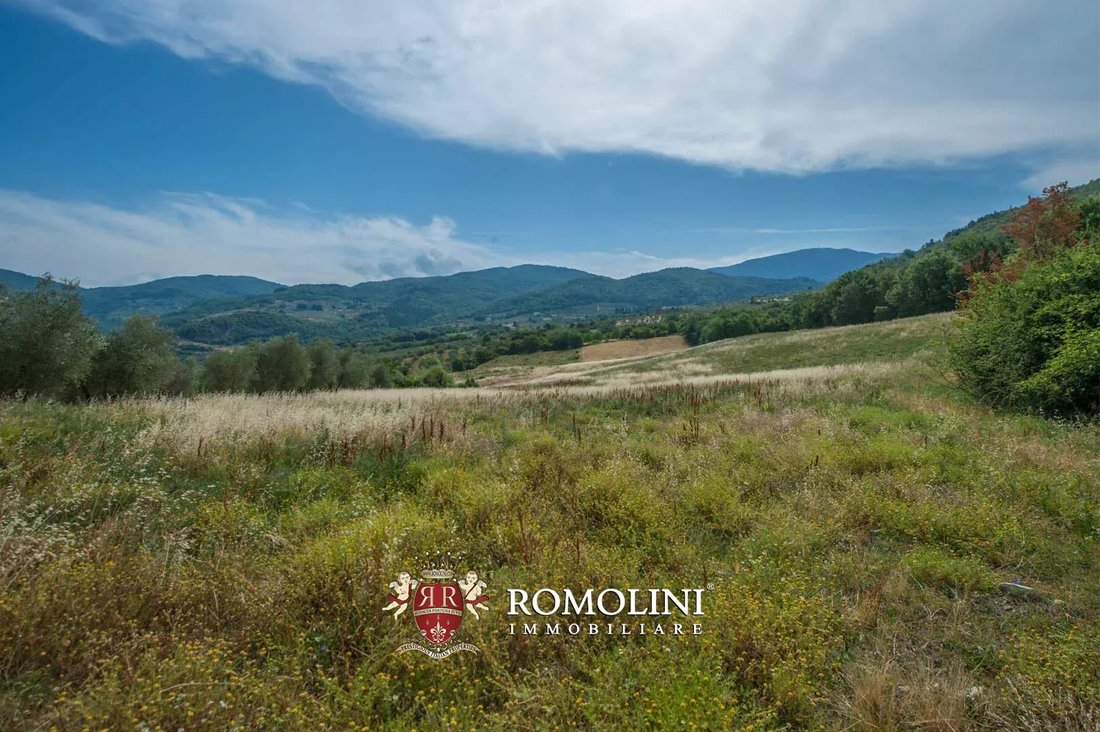
Finca Histórica En Venta En Florencia Chianti
- 50 Hab.
- 30 Baños
- 175,226 Sqft
- 44.73 Ac lot
- Actualizado: Agosto 7
- 10
Sobre la propiedad
La descripción se tradujo automáticamente.
La descripción se muestra en el idioma original.
En la provincia de Florencia, en las colinas del Chianti, prestigiosa finca histórica con villa señorial y bodega.
En una ubicación de fácil acceso, no muy lejos de un centro con todos los servicios (6 km; 10 minutos), la propiedad ofrece un acceso rápido y excelente a toda la Toscana: la hermosa Florencia (25 km; 40 minutos), la torre de San Gimignano (76 km; 1 hora y 20 minutos), Siena (84 k
En una ubicación de fácil acceso, no muy lejos de un centro con todos los servicios (6 km; 10 minutos), la propiedad ofrece un acceso rápido y excelente a toda la Toscana: la hermosa Florencia (25 km; 40 minutos), la torre de San Gimignano (76 km; 1 hora y 20 minutos), Siena (84 k
In the province of Florence, on the Chianti Hills, prestigious historical estate with manor villa and winery.
In an easily accessed location, not far from a center with all the services (6km; 10’), the property grants a quick and excellent access to the whole Tuscany: the beautiful Florence (25km; 40’), the turreted San Gimignano (76km; 1h 20’), Siena (84km; 1h 25’), the renowned Montepul
In an easily accessed location, not far from a center with all the services (6km; 10’), the property grants a quick and excellent access to the whole Tuscany: the beautiful Florence (25km; 40’), the turreted San Gimignano (76km; 1h 20’), Siena (84km; 1h 25’), the renowned Montepul
En la provincia de Florencia, en las colinas del Chianti, prestigiosa finca histórica con villa señorial y bodega.
En una ubicación de fácil acceso, no muy lejos de un centro con todos los servicios (6 km; 10 minutos), la propiedad ofrece un acceso rápido y excelente a toda la Toscana: la hermosa Florencia (25 km; 40 minutos), la torre de San Gimignano (76 km; 1 hora y 20 minutos), Siena (84 km; 1 hora y 25 minutos), el famoso Montepulciano (95 km; 1 hora y 15 minutos) y Montalcino (122 km; 1 hora y 45 minutos) y la Pienza papal (102 km; 1 hora y 25 minutos).
Los aeropuertos para llegar al establecimiento en un tiempo razonable son Firenze Peretola (49 km; 45 minutos), Pisa Galilei (109 km; 1 hora y 25 minutos), Bolonia Marconi (130 km; 1 hora 35 minutos), Perugia Sant’Egidio (145 km; 1 hora 40 minutos), Roma Ciampino (273 km; 2 horas 45 minutos) y Roma Fiumicino (288 km; 2 horas 50 minutos).
DESCRIPCIÓN DE LOS EDIFICIOS
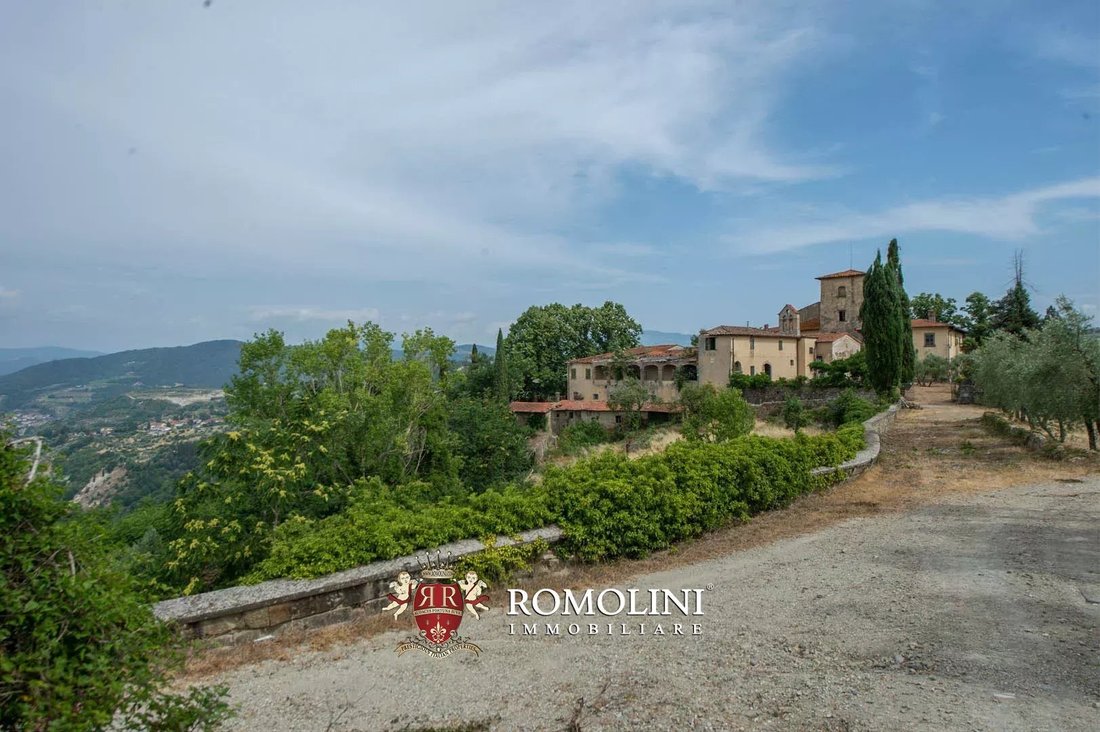
La propiedad se compone de numerosos edificios (17 para una superficie total de 15.500 metros cuadrados) divididos entre las distintas fincas. La guinda del pastel es la histórica villa señorial, que constituye el núcleo más antiguo de la propiedad y data de los siglos XI y XIV. Esta aldea, más allá de la villa, incluye una iglesia de finales de la Edad Media, un molino de aceitunas, varios sótanos, una oficina para el negocio, un taller y una de las granjas.
Las otras cinco fincas incluyen varios edificios destinados a uso agrícola y residencial, parcialmente por restaurar, parcialmente ya restaurados y casi habitables.
En resumen, la propiedad cuenta con 11.000 metros cuadrados (118.360 pies cuadrados) de edificios residenciales, 3.000 metros cuadrados (32.280 pies cuadrados) de cobertizos agrícolas y 1.500 metros cuadrados (16.140 pies cuadrados) de edificios rurales.
HISTORIA, ESTADO Y ACABADOS
La finca se encuentra en un terreno habitado desde la Prehistoria, pero la primera civilización real que construyó y utilizó la región fueron los etruscos a partir del siglo VII a. C. Los romanos recogían entonces el legado del pueblo etrusco construyendo impresionantes villas y granjas en la región. Fue una época próspera para los habitantes, a los que se les concedió un buen grado de autonomía. Sin embargo, esto no iba a durar: la llegada de pueblos germánicos del norte de Europa tras la caída de Roma en el siglo V d.C., cambió radicalmente la situación.
La organización feudal impuesta por los longobardos redujo considerablemente la independencia de los habitantes de la zona y los obligó a ceder ante los nuevos conquistadores.
Tras el final del reinado de los lombardos, la Toscana fue conquistada y administrada por los francos (y luego por los alemanes con el Sacro Imperio Romano Germánico) y, en el siglo X, se inició un proceso de colonización a gran escala en la zona de Florencia, donde hoy se encuentra la villa.
El castillo aparece por primera vez en un documento fechado en 1080 d.C., y luego en varios otros documentos de 1102, 1123 y 1171 d.C. Los propietarios del castillo decidieron abandonarlo cuando Florencia comenzó a emerger como superpotencia en el centro de Italia entre 1140 y 1153. Lo cierto es que los habitantes del feudo participaron en la Segunda Cruzada en 1145 bajo la bandera de Guido Guerra II. En la segunda década del siglo XIII, la familia decidió abandonar definitivamente el castillo donándolo a la cercana abadía de Vallombrosa. Después de eso, el castillo probablemente fue destruido (o al menos gravemente dañado) por los ejércitos gibelinos tras su victoria en la batalla de Montaperti en 1260 d.C. (lo recuerda Dante en los famosos versos «[...] la matanza y la gran carnicería/que han manchado de carmesí el Arbia»).
Como atestigua un documento de 1427, para ese año el castillo ya había sido demolido por completo y los restos se utilizaban como base para un nuevo edificio (hoy en día una granja) que se construyó entre 1260 y 1420. Sin embargo, el edificio ya se encontraba en un avanzado estado de ruina y, durante el siglo XVII, los nuevos propietarios decidieron restaurar la parte norte del complejo, que incluía la antigua torre (la única que queda del castillo), obteniendo una villa. Cuando en el siglo XIX la propiedad volvió a cambiar de manos, se amplió la rectoría de la iglesia y esto permitió la unión de la villa con la granja. El último cambio (que es el que hizo que el complejo pareciera lo que es hoy) fue la reubicación del campanario del lado izquierdo al derecho de la iglesia.
La propiedad está actualmente abandonada en su mayor parte y solo algunos de los edificios han sido reforzados y restaurados estructuralmente. La villa, en particular, es una verdadera joya, ya que está cubierta de frescos y decoraciones; sin embargo, necesita mucho trabajo para devolverle su esplendor original. La iglesia también está en mal estado, con el techo parcialmente derrumbado.
Las demás fincas se componen principalmente de edificios rurales y agrícolas (que son más fáciles de recuperar y restaurar siguiendo las directrices para los edificios históricos).
La bodega está funcionando actualmente, al igual que la almazara, y ambas garantizan la producción regular de aceite de oliva y vinos.
EXTERIOR
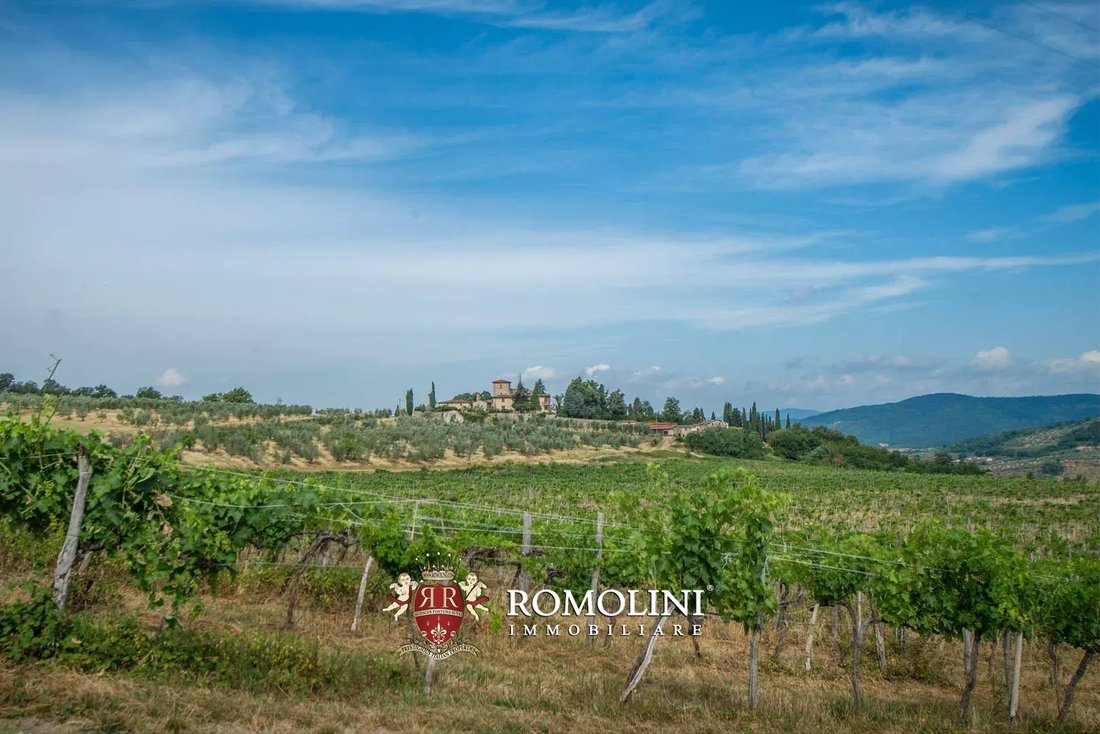
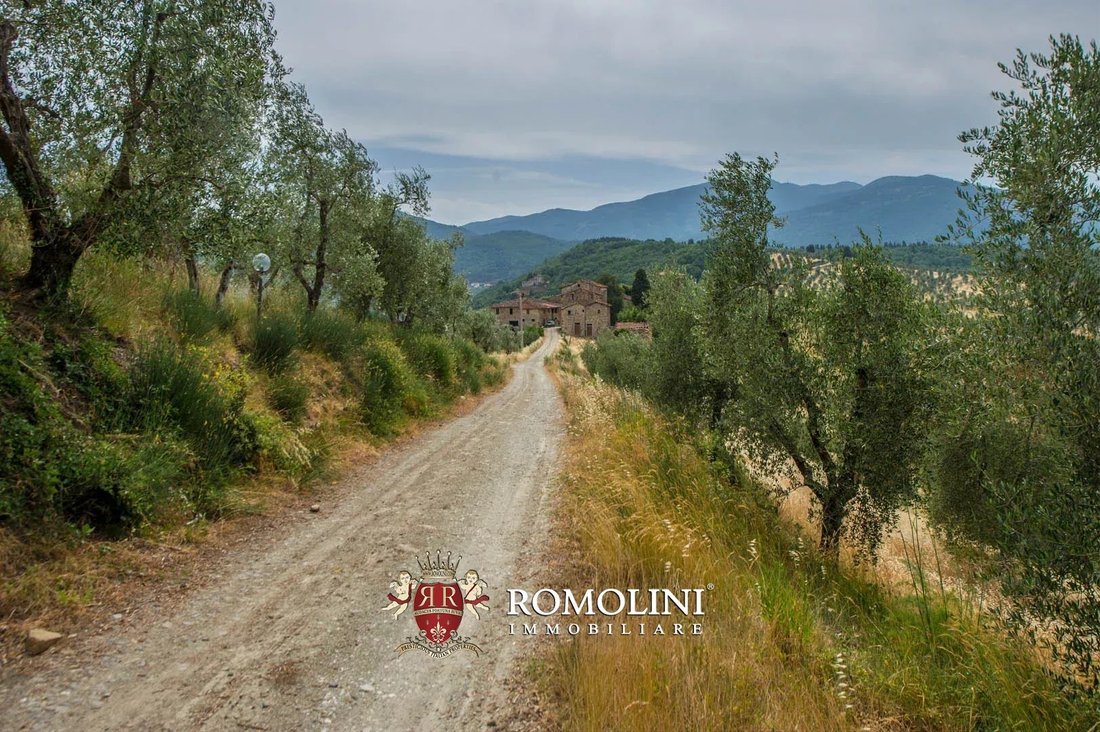
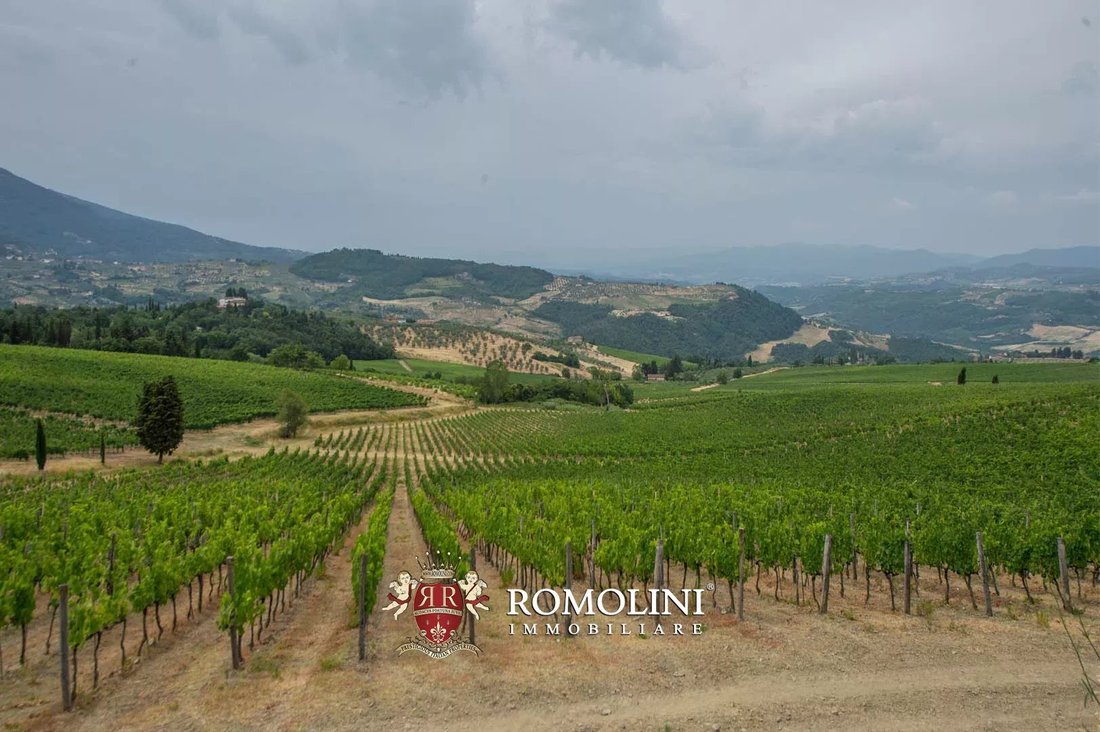
La propiedad consiste en un terreno de 236,2 hectáreas, divididas entre viñedos (18,1 ha), olivares (47,7 ha), tierra cultivable (82,2 ha), tierra de pastoreo (7,8 ha) y huerto de frutas (2.6 ha) y bosques mixtos (77,8 ha).
El viñedo podría ampliarse a otras 27 hectáreas, tomando parte de la tierra de las parcelas cultivables (12 hectáreas de las cuales se habían utilizado como viñedo en el pasado). Lo mismo ocurre con el olivar, que debería ampliarse con 8 hectáreas más gracias al Programa de Desarrollo Rural, que podría cubrir hasta el 80% del costo total.
La producción de aceitunas es totalmente orgánica (con certificación), sin el uso de pesticidas ni fertilizantes químicos, mientras que el viñedo aún no tiene la certificación, incluso si la cosecha se realiza sin utilizar sustancias químicas. La recolección manual y la clasificación de las uvas contribuyen a la excelente calidad del vino.
DETALLES SOBRE LA PRODUCCIÓN DE VINO
- Superficie de viñedo: 18,1 hectáreas (+ 27,0 ha disponibles para plantación)
- Variedades: Sangiovese, Cabernet Sauvignon, Canaiolo, Syrah, Malvasia y Trebbiano
- Año de plantación: 1957 — 2011
- Altitud: 280 — 330 m
- Exposición: sur, sureste, suroeste
- Densidad: 3.500 — 5.000 vidas/ha
- Rendimiento medio: 4,5 — 7,0 toneladas/ha
- Formación: viñas podadas con espolones cordonados
- Vendimia: manual
- Composición del suelo: calcáreo, margoso, arcilloso
- Producción anual: 350,0 hl (46.700 botellas)
- Producciones potenciales máximas: 1.425,0 hl (190.000 botellas)
- Capacidad máxima de vino: 1.870,0 hl
VINOS PRODUCIDOS
- Chianti Colli Fiorentini DOCG: 100% sangiovese
- Chianti Colli Fiorentini DOCG Riserva: 90% Sangiovese, 10% Cabernet Sauvignon
- Rosso Toscano IGT: 40% sangiovese, 30% canaiolo, 20% malvasía, 10% trebbiano
- Rosso Toscano IGT: 50% Cabernet Sauvignon, 25% Merlot, 25% Syrah
- Bianco Toscano IGT: 50% Cabernet Sauvignon, 50% Chardonnay
DETALLES SOBRE LA PRODUCCIÓN DE PETRÓLEO
- Superficie: 47,7 hectáreas (+ 8,0 ha disponibles para plantación)
- Variedades: Frantoio, Moraiolo, Leccino, Pendolino y Peranzana
- Altitud: 300 — 350 m
- Composición del suelo: calcáreo, margoso, arcilloso
- Producción anual: 90,0 hl (12 000 botellas)
USO Y USOS POTENCIALES
Actualmente, la propiedad se utiliza exclusivamente como negocio de producción de vino y aceite, con una producción anual de alrededor de 46.700 botellas de vino (350 hl) y 12.000 botellas de aceite (90 hl). Los edificios están parcialmente restaurados y son utilizables sin necesidad de ningún trabajo.
La finca es perfecta para alguien que busca algo que desarrollar en paralelo con el negocio del aceite y el vino. De hecho, con una restauración completa, se podría pensar en iniciar un negocio de alojamiento de alta calidad, principalmente gracias a las numerosas habitaciones disponibles y a la posición panorámica.
Ya se ha aprobado un proyecto de conversión que prevé la construcción de un hotel con restaurante, sala de conferencias, museo del aceite, centro de bienestar, tienda de productos locales, instalaciones deportivas y la conversión de algunas de las granjas en apartamentos.
En lo que respecta a las instalaciones deportivas, existe la posibilidad de construir piscinas y canchas de tenis con una limitación de una por grupo de edificios, con la excepción de la villa principal, que es lo suficientemente amplia como para permitir la construcción de una piscina y una cancha de tenis en las cercanías.
CIUDADES Y PUEBLOS MÁS CERCANOS
Ciudad con servicios (6 km; 10 minutos), Figline e Incisa Valdarno (14 km; 20 minutos), Florencia (25 km; 40 minutos), San Gimignano (76 km; 1 hora y 20 minutos), Siena (84 km; 1 hora y 25 minutos), Montepulciano (95 km; 1 hora y 15 minutos), Pienza (102 km; 1 hora y 25 minutos), Montalcino (122 km; (1 hora y 45 minutos)
AEROPUERTOS MÁS CERCANOS
Firenze Peretola (49 km; 45 minutos), Pisa Galilei (109 km; 1 hora y 25 minutos), Bolonia Marconi (130 km; 1 hora y 35 minutos), Perugia Sant’Egidio (145 km; 1 hora 40 minutos), Roma Ciampino (273 km; 2 horas y 45 minutos), Roma Fiumicino (288 km; 2 horas 50 minutos)
En una ubicación de fácil acceso, no muy lejos de un centro con todos los servicios (6 km; 10 minutos), la propiedad ofrece un acceso rápido y excelente a toda la Toscana: la hermosa Florencia (25 km; 40 minutos), la torre de San Gimignano (76 km; 1 hora y 20 minutos), Siena (84 km; 1 hora y 25 minutos), el famoso Montepulciano (95 km; 1 hora y 15 minutos) y Montalcino (122 km; 1 hora y 45 minutos) y la Pienza papal (102 km; 1 hora y 25 minutos).
Los aeropuertos para llegar al establecimiento en un tiempo razonable son Firenze Peretola (49 km; 45 minutos), Pisa Galilei (109 km; 1 hora y 25 minutos), Bolonia Marconi (130 km; 1 hora 35 minutos), Perugia Sant’Egidio (145 km; 1 hora 40 minutos), Roma Ciampino (273 km; 2 horas 45 minutos) y Roma Fiumicino (288 km; 2 horas 50 minutos).
DESCRIPCIÓN DE LOS EDIFICIOS
La propiedad se compone de numerosos edificios (17 para una superficie total de 15.500 metros cuadrados) divididos entre las distintas fincas. La guinda del pastel es la histórica villa señorial, que constituye el núcleo más antiguo de la propiedad y data de los siglos XI y XIV. Esta aldea, más allá de la villa, incluye una iglesia de finales de la Edad Media, un molino de aceitunas, varios sótanos, una oficina para el negocio, un taller y una de las granjas.
Las otras cinco fincas incluyen varios edificios destinados a uso agrícola y residencial, parcialmente por restaurar, parcialmente ya restaurados y casi habitables.
En resumen, la propiedad cuenta con 11.000 metros cuadrados (118.360 pies cuadrados) de edificios residenciales, 3.000 metros cuadrados (32.280 pies cuadrados) de cobertizos agrícolas y 1.500 metros cuadrados (16.140 pies cuadrados) de edificios rurales.
HISTORIA, ESTADO Y ACABADOS
La finca se encuentra en un terreno habitado desde la Prehistoria, pero la primera civilización real que construyó y utilizó la región fueron los etruscos a partir del siglo VII a. C. Los romanos recogían entonces el legado del pueblo etrusco construyendo impresionantes villas y granjas en la región. Fue una época próspera para los habitantes, a los que se les concedió un buen grado de autonomía. Sin embargo, esto no iba a durar: la llegada de pueblos germánicos del norte de Europa tras la caída de Roma en el siglo V d.C., cambió radicalmente la situación.
La organización feudal impuesta por los longobardos redujo considerablemente la independencia de los habitantes de la zona y los obligó a ceder ante los nuevos conquistadores.
Tras el final del reinado de los lombardos, la Toscana fue conquistada y administrada por los francos (y luego por los alemanes con el Sacro Imperio Romano Germánico) y, en el siglo X, se inició un proceso de colonización a gran escala en la zona de Florencia, donde hoy se encuentra la villa.
El castillo aparece por primera vez en un documento fechado en 1080 d.C., y luego en varios otros documentos de 1102, 1123 y 1171 d.C. Los propietarios del castillo decidieron abandonarlo cuando Florencia comenzó a emerger como superpotencia en el centro de Italia entre 1140 y 1153. Lo cierto es que los habitantes del feudo participaron en la Segunda Cruzada en 1145 bajo la bandera de Guido Guerra II. En la segunda década del siglo XIII, la familia decidió abandonar definitivamente el castillo donándolo a la cercana abadía de Vallombrosa. Después de eso, el castillo probablemente fue destruido (o al menos gravemente dañado) por los ejércitos gibelinos tras su victoria en la batalla de Montaperti en 1260 d.C. (lo recuerda Dante en los famosos versos «[...] la matanza y la gran carnicería/que han manchado de carmesí el Arbia»).
Como atestigua un documento de 1427, para ese año el castillo ya había sido demolido por completo y los restos se utilizaban como base para un nuevo edificio (hoy en día una granja) que se construyó entre 1260 y 1420. Sin embargo, el edificio ya se encontraba en un avanzado estado de ruina y, durante el siglo XVII, los nuevos propietarios decidieron restaurar la parte norte del complejo, que incluía la antigua torre (la única que queda del castillo), obteniendo una villa. Cuando en el siglo XIX la propiedad volvió a cambiar de manos, se amplió la rectoría de la iglesia y esto permitió la unión de la villa con la granja. El último cambio (que es el que hizo que el complejo pareciera lo que es hoy) fue la reubicación del campanario del lado izquierdo al derecho de la iglesia.
La propiedad está actualmente abandonada en su mayor parte y solo algunos de los edificios han sido reforzados y restaurados estructuralmente. La villa, en particular, es una verdadera joya, ya que está cubierta de frescos y decoraciones; sin embargo, necesita mucho trabajo para devolverle su esplendor original. La iglesia también está en mal estado, con el techo parcialmente derrumbado.
Las demás fincas se componen principalmente de edificios rurales y agrícolas (que son más fáciles de recuperar y restaurar siguiendo las directrices para los edificios históricos).
La bodega está funcionando actualmente, al igual que la almazara, y ambas garantizan la producción regular de aceite de oliva y vinos.
EXTERIOR
La propiedad consiste en un terreno de 236,2 hectáreas, divididas entre viñedos (18,1 ha), olivares (47,7 ha), tierra cultivable (82,2 ha), tierra de pastoreo (7,8 ha) y huerto de frutas (2.6 ha) y bosques mixtos (77,8 ha).
El viñedo podría ampliarse a otras 27 hectáreas, tomando parte de la tierra de las parcelas cultivables (12 hectáreas de las cuales se habían utilizado como viñedo en el pasado). Lo mismo ocurre con el olivar, que debería ampliarse con 8 hectáreas más gracias al Programa de Desarrollo Rural, que podría cubrir hasta el 80% del costo total.
La producción de aceitunas es totalmente orgánica (con certificación), sin el uso de pesticidas ni fertilizantes químicos, mientras que el viñedo aún no tiene la certificación, incluso si la cosecha se realiza sin utilizar sustancias químicas. La recolección manual y la clasificación de las uvas contribuyen a la excelente calidad del vino.
DETALLES SOBRE LA PRODUCCIÓN DE VINO
- Superficie de viñedo: 18,1 hectáreas (+ 27,0 ha disponibles para plantación)
- Variedades: Sangiovese, Cabernet Sauvignon, Canaiolo, Syrah, Malvasia y Trebbiano
- Año de plantación: 1957 — 2011
- Altitud: 280 — 330 m
- Exposición: sur, sureste, suroeste
- Densidad: 3.500 — 5.000 vidas/ha
- Rendimiento medio: 4,5 — 7,0 toneladas/ha
- Formación: viñas podadas con espolones cordonados
- Vendimia: manual
- Composición del suelo: calcáreo, margoso, arcilloso
- Producción anual: 350,0 hl (46.700 botellas)
- Producciones potenciales máximas: 1.425,0 hl (190.000 botellas)
- Capacidad máxima de vino: 1.870,0 hl
VINOS PRODUCIDOS
- Chianti Colli Fiorentini DOCG: 100% sangiovese
- Chianti Colli Fiorentini DOCG Riserva: 90% Sangiovese, 10% Cabernet Sauvignon
- Rosso Toscano IGT: 40% sangiovese, 30% canaiolo, 20% malvasía, 10% trebbiano
- Rosso Toscano IGT: 50% Cabernet Sauvignon, 25% Merlot, 25% Syrah
- Bianco Toscano IGT: 50% Cabernet Sauvignon, 50% Chardonnay
DETALLES SOBRE LA PRODUCCIÓN DE PETRÓLEO
- Superficie: 47,7 hectáreas (+ 8,0 ha disponibles para plantación)
- Variedades: Frantoio, Moraiolo, Leccino, Pendolino y Peranzana
- Altitud: 300 — 350 m
- Composición del suelo: calcáreo, margoso, arcilloso
- Producción anual: 90,0 hl (12 000 botellas)
USO Y USOS POTENCIALES
Actualmente, la propiedad se utiliza exclusivamente como negocio de producción de vino y aceite, con una producción anual de alrededor de 46.700 botellas de vino (350 hl) y 12.000 botellas de aceite (90 hl). Los edificios están parcialmente restaurados y son utilizables sin necesidad de ningún trabajo.
La finca es perfecta para alguien que busca algo que desarrollar en paralelo con el negocio del aceite y el vino. De hecho, con una restauración completa, se podría pensar en iniciar un negocio de alojamiento de alta calidad, principalmente gracias a las numerosas habitaciones disponibles y a la posición panorámica.
Ya se ha aprobado un proyecto de conversión que prevé la construcción de un hotel con restaurante, sala de conferencias, museo del aceite, centro de bienestar, tienda de productos locales, instalaciones deportivas y la conversión de algunas de las granjas en apartamentos.
En lo que respecta a las instalaciones deportivas, existe la posibilidad de construir piscinas y canchas de tenis con una limitación de una por grupo de edificios, con la excepción de la villa principal, que es lo suficientemente amplia como para permitir la construcción de una piscina y una cancha de tenis en las cercanías.
CIUDADES Y PUEBLOS MÁS CERCANOS
Ciudad con servicios (6 km; 10 minutos), Figline e Incisa Valdarno (14 km; 20 minutos), Florencia (25 km; 40 minutos), San Gimignano (76 km; 1 hora y 20 minutos), Siena (84 km; 1 hora y 25 minutos), Montepulciano (95 km; 1 hora y 15 minutos), Pienza (102 km; 1 hora y 25 minutos), Montalcino (122 km; (1 hora y 45 minutos)
AEROPUERTOS MÁS CERCANOS
Firenze Peretola (49 km; 45 minutos), Pisa Galilei (109 km; 1 hora y 25 minutos), Bolonia Marconi (130 km; 1 hora y 35 minutos), Perugia Sant’Egidio (145 km; 1 hora 40 minutos), Roma Ciampino (273 km; 2 horas y 45 minutos), Roma Fiumicino (288 km; 2 horas 50 minutos)
In the province of Florence, on the Chianti Hills, prestigious historical estate with manor villa and winery.
In an easily accessed location, not far from a center with all the services (6km; 10’), the property grants a quick and excellent access to the whole Tuscany: the beautiful Florence (25km; 40’), the turreted San Gimignano (76km; 1h 20’), Siena (84km; 1h 25’), the renowned Montepulciano (95km; 1h 15’) and Montalcino (122km; 1h 45’) and the papal Pienza (102km; 1h 25’).
The airports to reach the property in reasonable time are Firenze Peretola (49km; 45’), Pisa Galilei (109km; 1h 25’), Bologna Marconi (130km; 1h 35’), Perugia Sant’Egidio (145km; 1h 40’), Roma Ciampino (273km; 2h 45’) e Roma Fiumicino (288km; 2h 50’).
DESCRIPTION OF THE BUILDINGS
The property is made up of numerous buildings (17 for a total surface of 15,500 sqm) split among the various farms. Icing on the cake is the historical manor villa, constituting the older core of the property dating back to the 11th and 14th century. This hamlet, beyond the villa, includes a late Middle Ages church, an olive mill, several cellar rooms, office for the business, a workshop and one of the farms.
The other five farms include several buildings intended for agricultural and residential use, partially to be restored partially already restored and almost livable.
To summarize, the property boasts 11,000 sqm (118,360 sqft) of residential buildings, 3,000 sqm (32,280 sqft) of agricultural sheds and 1,500 sqm (16,140 sqft) of rural buildings.
HISTORY, STATE AND FINISHES
The estate lies on a land inhabited since Prehistory, but the first real civilization to build and use the region was the Etruscans starting from the 7th century BC. Romans would then pick up the legacy of the Etruscan people by building impressive villas and farms in the region. It was a prosperous age for the inhabitants, which were granted a good degree of autonomy. However this wasn’t bound to last: the arrival of Germanic people from northern Europe after the fall of Rome in the 5th century AD dramatically changed the situation.
The feudal organization imposed by the Longobards severely reduced the independence for the people in the area and forced them to bow to the new conquerors.
After the end of the Langobardic reign, Tuscany was conquered and administered by Franks (and then Germans with the Holy Roman Empire) and in the 10th century a process of encastellation began on a large scale in the area of Florence and where the villa is sitting today.
The castle appears for the first time in a document dated 1080 AD and then in several other papers from 1102, 1123 and 1171 AD. The owners of the castle decided to abandon it when Florence started emerging as a superpower in Central Italy between 1140 and 1153. What is sure is that the people of the fiefdom took part in the Second Crusade in 1145 under the flag of Guido Guerra II. In the second decade of the 13th century the family decided to finally give up the castle by donating it to the nearby Abbey of Vallombrosa. After that, the castle was probably destroyed (or at least heavily damaged) by the Ghibellines armies following their victory in the battle of Montaperti in 1260 AD (recalled by Dante in the famous verses “[…] the slaughter and great carnage / which have with crimson stained the Arbia”).
As testified by a document from 1427, by that year the castle had already been totally demolished and the remains used as a base for a new building (nowadays a farm) which was built between 1260 and 1420. However, the building was already in an advanced state of ruin and during the 17th century the new owners decided to restore the northern part of the complex which included the old tower (the only remain of the castle), obtaining a villa. When in the 19th century the property changed hands again, the rectory of the church was expanded and this allowed the conjunction of the villa with the farm. The last change (which is the one that made the complex look what it is today) was the relocation of the bell tower from the left to the right side of the church.
The property is currently abandoned for the most part and just a few of the buildings have been structurally reinforced and restored. The villa in particular is a real gem, covered as it is in frescoes and decorations; however it needs lots of work to be brought back to its original splendor. The church is also in bad shape, with the roof partially collapsed.
The other farms are mainly made up of rural and agricultural buildings (which are easier to recover and restore following the guidelines for historical buildings).
The cellar is currently working, as well as the olive mill, and both grant the regular production of olive oil and wines.
EXTERIOR
The property consists of a 236.2 hectares piece of land, split among vineyard (18.1 ha), olive grove (47.7 ha), arable land (82.2 ha), grazing land (7.8 ha), fruit orchard (2.6 ha) and mixed woodland (77.8 ha).
The vineyard is potentially expandable for further 27 hectares, taking some land from the arable plots (12 hectares of which had been used as a vineyard in the past). Same goes for the olive grove, which should be expanded with 8 more hectares thanks to the Rural Development Program which could cover up to 80% of the total cost.
The production of olives is totally organic (with certification), without the use of pesticides and chemical fertilizers, while vineyard hasn’t got the certification yet, even if harvesting is carried out without using chemical substances. Manual harvesting and sorting of grapes contribute to the excellent quality of the wine.
DETAILS ON WINE PRODUCTION
- Vineyard surface: 18.1 hectares (+ 27.0 ha available for plantation)
- Varieties: Sangiovese, Cabernet Sauvignon, Canaiolo, Syrah, Malvasia and Trebbiano
- Year of planting: 1957 – 2011
- Altitude: 280 – 330 m
- Exposure: south, south-east, south-west
- Density: 3,500 – 5,000 vines / ha
- Average yield: 4.5 – 7.0 tons / ha
- Training: pruned-spur cordon-trained vines
- Harvesting: manual
- Soil composition: calcareous, marlstone, clayish
- Yearly production: 350.0 hl (46,700 bottles)
- Maximum potential productions: 1,425.0 hl (190,000 bottles)
- Maximum wine capacity: 1,870.0 hl
PRODUCED WINES
- Chianti Colli Fiorentini DOCG: 100% Sangiovese
- Chianti Colli Fiorentini DOCG Riserva: 90% Sangiovese, 10% Cabernet Sauvignon
- Rosso Toscano IGT: 40% Sangiovese, 30% Canaiolo, 20% Malvasia, 10% Trebbiano
- Rosso Toscano IGT: 50% Cabernet Sauvignon, 25% Merlot, 25% Syrah
- Bianco Toscano IGT: 50% Cabernet Sauvignon, 50% Chardonnay
DETAILS ON OIL PRODUCTION
- Surface: 47.7 hectares (+ 8.0 ha available for plantation)
- Varieties: Frantoio, Moraiolo, Leccino, Pendolino and Peranzana
- Altitude: 300 – 350 m
- Soil composition: calcareous, marlstone, clayish
- Yearly production: 90.0 hl (12,000 bottles)
USE AND POTENTIAL USES
The property is currently used exclusively as a wine and oil producing business, with a yearly production ranging around 46,700 bottles of wine (350 hl) and 12,000 bottles of oil (90 hl). Buildings are partially restored and usable without any work needed.
The estate is perfect for someone looking for something to develop in parallel with the oil and wine business. With a full restoration one could, as a matter of fact, think about starting a high quality hosting business, mainly thanks to the numerous available bedrooms and the panoramic position.
A conversion project has already been approved and envisages the realization of a hotel with restaurant, conference hall, oil museum, wellness centre, shop for local products, sporting facilities and the conversion of some of the farms into apartments.
As far as sporting facilities are concerned, there is the possibility of building pools and tennis courts with a limitation of one per group of buildings, with the exception of the main villa which is ample enough to allow the construction of both a pool and a tennis court in the vicinity.
CLOSEST CITIES AND TOWN†S
Town with services (6km; 10’), Figline e Incisa Valdarno (14km; 20’), Florence (25km; 40’), San Gimignano (76km; 1h 20’), Siena (84km; 1h 25’), Montepulciano (95km; 1h 15’), Pienza (102km; 1h 25’), Montalcino (122km; 1h 45’)
CLOSEST AIRPORTS
Firenze Peretola (49km; 45’), Pisa Galilei (109km; 1h 25’), Bologna Marconi (130km; 1h 35’), Perugia Sant’Egidio (145km; 1h 40’), Roma Ciampino (273km; 2h 45’), Roma Fiumicino (288km; 2h 50’)
In an easily accessed location, not far from a center with all the services (6km; 10’), the property grants a quick and excellent access to the whole Tuscany: the beautiful Florence (25km; 40’), the turreted San Gimignano (76km; 1h 20’), Siena (84km; 1h 25’), the renowned Montepulciano (95km; 1h 15’) and Montalcino (122km; 1h 45’) and the papal Pienza (102km; 1h 25’).
The airports to reach the property in reasonable time are Firenze Peretola (49km; 45’), Pisa Galilei (109km; 1h 25’), Bologna Marconi (130km; 1h 35’), Perugia Sant’Egidio (145km; 1h 40’), Roma Ciampino (273km; 2h 45’) e Roma Fiumicino (288km; 2h 50’).
DESCRIPTION OF THE BUILDINGS
The property is made up of numerous buildings (17 for a total surface of 15,500 sqm) split among the various farms. Icing on the cake is the historical manor villa, constituting the older core of the property dating back to the 11th and 14th century. This hamlet, beyond the villa, includes a late Middle Ages church, an olive mill, several cellar rooms, office for the business, a workshop and one of the farms.
The other five farms include several buildings intended for agricultural and residential use, partially to be restored partially already restored and almost livable.
To summarize, the property boasts 11,000 sqm (118,360 sqft) of residential buildings, 3,000 sqm (32,280 sqft) of agricultural sheds and 1,500 sqm (16,140 sqft) of rural buildings.
HISTORY, STATE AND FINISHES
The estate lies on a land inhabited since Prehistory, but the first real civilization to build and use the region was the Etruscans starting from the 7th century BC. Romans would then pick up the legacy of the Etruscan people by building impressive villas and farms in the region. It was a prosperous age for the inhabitants, which were granted a good degree of autonomy. However this wasn’t bound to last: the arrival of Germanic people from northern Europe after the fall of Rome in the 5th century AD dramatically changed the situation.
The feudal organization imposed by the Longobards severely reduced the independence for the people in the area and forced them to bow to the new conquerors.
After the end of the Langobardic reign, Tuscany was conquered and administered by Franks (and then Germans with the Holy Roman Empire) and in the 10th century a process of encastellation began on a large scale in the area of Florence and where the villa is sitting today.
The castle appears for the first time in a document dated 1080 AD and then in several other papers from 1102, 1123 and 1171 AD. The owners of the castle decided to abandon it when Florence started emerging as a superpower in Central Italy between 1140 and 1153. What is sure is that the people of the fiefdom took part in the Second Crusade in 1145 under the flag of Guido Guerra II. In the second decade of the 13th century the family decided to finally give up the castle by donating it to the nearby Abbey of Vallombrosa. After that, the castle was probably destroyed (or at least heavily damaged) by the Ghibellines armies following their victory in the battle of Montaperti in 1260 AD (recalled by Dante in the famous verses “[…] the slaughter and great carnage / which have with crimson stained the Arbia”).
As testified by a document from 1427, by that year the castle had already been totally demolished and the remains used as a base for a new building (nowadays a farm) which was built between 1260 and 1420. However, the building was already in an advanced state of ruin and during the 17th century the new owners decided to restore the northern part of the complex which included the old tower (the only remain of the castle), obtaining a villa. When in the 19th century the property changed hands again, the rectory of the church was expanded and this allowed the conjunction of the villa with the farm. The last change (which is the one that made the complex look what it is today) was the relocation of the bell tower from the left to the right side of the church.
The property is currently abandoned for the most part and just a few of the buildings have been structurally reinforced and restored. The villa in particular is a real gem, covered as it is in frescoes and decorations; however it needs lots of work to be brought back to its original splendor. The church is also in bad shape, with the roof partially collapsed.
The other farms are mainly made up of rural and agricultural buildings (which are easier to recover and restore following the guidelines for historical buildings).
The cellar is currently working, as well as the olive mill, and both grant the regular production of olive oil and wines.
EXTERIOR
The property consists of a 236.2 hectares piece of land, split among vineyard (18.1 ha), olive grove (47.7 ha), arable land (82.2 ha), grazing land (7.8 ha), fruit orchard (2.6 ha) and mixed woodland (77.8 ha).
The vineyard is potentially expandable for further 27 hectares, taking some land from the arable plots (12 hectares of which had been used as a vineyard in the past). Same goes for the olive grove, which should be expanded with 8 more hectares thanks to the Rural Development Program which could cover up to 80% of the total cost.
The production of olives is totally organic (with certification), without the use of pesticides and chemical fertilizers, while vineyard hasn’t got the certification yet, even if harvesting is carried out without using chemical substances. Manual harvesting and sorting of grapes contribute to the excellent quality of the wine.
DETAILS ON WINE PRODUCTION
- Vineyard surface: 18.1 hectares (+ 27.0 ha available for plantation)
- Varieties: Sangiovese, Cabernet Sauvignon, Canaiolo, Syrah, Malvasia and Trebbiano
- Year of planting: 1957 – 2011
- Altitude: 280 – 330 m
- Exposure: south, south-east, south-west
- Density: 3,500 – 5,000 vines / ha
- Average yield: 4.5 – 7.0 tons / ha
- Training: pruned-spur cordon-trained vines
- Harvesting: manual
- Soil composition: calcareous, marlstone, clayish
- Yearly production: 350.0 hl (46,700 bottles)
- Maximum potential productions: 1,425.0 hl (190,000 bottles)
- Maximum wine capacity: 1,870.0 hl
PRODUCED WINES
- Chianti Colli Fiorentini DOCG: 100% Sangiovese
- Chianti Colli Fiorentini DOCG Riserva: 90% Sangiovese, 10% Cabernet Sauvignon
- Rosso Toscano IGT: 40% Sangiovese, 30% Canaiolo, 20% Malvasia, 10% Trebbiano
- Rosso Toscano IGT: 50% Cabernet Sauvignon, 25% Merlot, 25% Syrah
- Bianco Toscano IGT: 50% Cabernet Sauvignon, 50% Chardonnay
DETAILS ON OIL PRODUCTION
- Surface: 47.7 hectares (+ 8.0 ha available for plantation)
- Varieties: Frantoio, Moraiolo, Leccino, Pendolino and Peranzana
- Altitude: 300 – 350 m
- Soil composition: calcareous, marlstone, clayish
- Yearly production: 90.0 hl (12,000 bottles)
USE AND POTENTIAL USES
The property is currently used exclusively as a wine and oil producing business, with a yearly production ranging around 46,700 bottles of wine (350 hl) and 12,000 bottles of oil (90 hl). Buildings are partially restored and usable without any work needed.
The estate is perfect for someone looking for something to develop in parallel with the oil and wine business. With a full restoration one could, as a matter of fact, think about starting a high quality hosting business, mainly thanks to the numerous available bedrooms and the panoramic position.
A conversion project has already been approved and envisages the realization of a hotel with restaurant, conference hall, oil museum, wellness centre, shop for local products, sporting facilities and the conversion of some of the farms into apartments.
As far as sporting facilities are concerned, there is the possibility of building pools and tennis courts with a limitation of one per group of buildings, with the exception of the main villa which is ample enough to allow the construction of both a pool and a tennis court in the vicinity.
CLOSEST CITIES AND TOWN†S
Town with services (6km; 10’), Figline e Incisa Valdarno (14km; 20’), Florence (25km; 40’), San Gimignano (76km; 1h 20’), Siena (84km; 1h 25’), Montepulciano (95km; 1h 15’), Pienza (102km; 1h 25’), Montalcino (122km; 1h 45’)
CLOSEST AIRPORTS
Firenze Peretola (49km; 45’), Pisa Galilei (109km; 1h 25’), Bologna Marconi (130km; 1h 35’), Perugia Sant’Egidio (145km; 1h 40’), Roma Ciampino (273km; 2h 45’), Roma Fiumicino (288km; 2h 50’)
-
Tipo de propiedad
Rancho
-
Pisos
3
Características
Características
Lote
Interior
Outdoor
- Terraza
- Aparcamiento
- Piscina
- Garaje
- Cancha de Tenis
- Espacio de vida al aire libre
- Jardín
- Viñedo / Bodega
Explorar la zona
Pontassieve, Toscana, Italia
Ver en Google Maps
Precio por sqft
Bajo
Alto
Ubicada en las colinas toscanas, Pontassieve ofrece una combinación de tranquilidad y accesibilidad. Disfruta de la proximidad a Florencia, el corazón del arte y la cultura del Renacimiento, a solo 25 minutos. Explora viñedos locales y saborea la auténtica cocina italiana. La zona brinda acceso conveniente a las compras de lujo y opciones de bienestar en Florencia, mientras que el campo pintoresco invita a aventuras al aire libre. Ideal para quienes buscan un estilo de vida refinado inmerso en la rica herencia de Italia.
Ver lugares cercanos
Atracciones
Escuelas
Aeropuerto de Florencia Peretola
Aeropuerto
36 min
Estación de Pontassieve
Centro de transporte público
5 min
Los centros comerciales de lujo
Compras y Estilo de Vida
19 min
Galería Uffizi
Cultura y Patrimonio
25 min
Ponte Vecchio
Cultura y Patrimonio
27 min
Región vinícola de Chianti
Aire libre y Naturaleza
32 min
Escuela Internacional de Florencia
Escuela Internacional
27 min
Universidad de Florencia
Universidad / Educación superior
28 min
Liceo Científico Piero Gobetti
Escuela pública
10 min

Se unió hace 4 años
Usted ha preguntado por esta propiedad
El agente se comunicará con usted pronto por
Publicado por
222
Anuncios
2022
Se unió
Reserva una visita con Danilo Romolini
Elija una fecha y si prefiere una visita virtual o presencial con el agente.
Fecha preferida
Tipo de tour

Romolini Immobiliare
Piazza Torre di Berta 4, Tuscany, 52037, Sansepolcro, Italy
Ver perfil de la agencia
Riccardo and Marta met during their high school years. Since then, their paths have never parted. United by shared
Riccardo and Marta met during their high school years. Since then, their paths have never parted. United by shared dreams and aspirations, they married in 1999 and are today parents of three children. In 2004, driven by their passion for their native land, art, and beauty, they chose the historic heart of Tuscany – the charming village of Anghiari – as the birthplace of a project that already carried the warmth of home: Romolini Immobiliare. A story founded on courage, dedication, and profound values that, paired with their vision, quickly earned them recognition within both the national and international real estate markets. In 2008, an important achievement further strengthened their reputation: Romolini Immobiliare was appointed exclusive affiliate of Christie’s International Real Estate, the world’s most prestigious name in luxury real estate – a testament to their authenticity and unwavering commitment. Romolini, however, is more than a business: it is a family. Those who have joined Riccardo and Marta in this endeavor were welcomed for their human qualities, integrity, and outstanding professionalism, becoming not just exceptional team members, but part of a greater family. Each brings a unique approach, a personal style, and a shared dedication to the values that have always defined Romolini. In 2020, Danilo, their eldest son, chose to join the company. Having grown up amid the dreams and challenges of the family business, he brought a visionary spirit and a profound love for beauty. Danilo pioneered a new way of presenting properties in Italy, creating emotional and engaging video narratives that captivate and inspire. With his contribution, Romolini Immobiliare embraced a new chapter. A refined approach to communication, an even greater attention to detail, and a client-centered philosophy have established the company as a leading figure in the luxury real estate sector. Romolini is not just a name. It is a legacy. It is a family dream brought to life. It is a journey that moves forward with passion and purpose.
Última actualización
Agosto 7
Primera publicación
Mayo 21, 2025
Referencia del anuncio
1561
Propiedades similares cercanas
Nuevos anuncios en Pontassieve





Explorar más viviendas en venta
Pontassieve, Toscana, Italia tipos de propiedad
Pontassieve, Toscana, Italia búsquedas populares
- Propiedades Vista al Lago en Pontassieve, Toscana, Italia
- Propiedades Vista al Río en Pontassieve, Toscana, Italia
- Propiedades Gran Altitud en Pontassieve, Toscana, Italia
- Propiedades Moderno en Pontassieve, Toscana, Italia
- Propiedades con Helipuerto en Pontassieve, Toscana, Italia
- Propiedades Frente al Lago en Pontassieve, Toscana, Italia
Guías e historias relacionadas
La confianza de los mejores brokers del mundo
Los agentes tras las propiedades más excepcionales del mundo publican en JamesEdition.
- Anuncios de Sotheby's, Christie's, BARNES y Engel & Völkers
- Cada anuncio se revisa antes de publicarse
- Conecte directamente con agentes verificados
Al continuar, acepta nuestros Términos y la Política de Privacidad.