$4,277,848
Magnificent Liberty Residence
- 8 Hab.
- 7 Baños
- 12,573 Sqft
- 82
Sobre la propiedad
La descripción se tradujo automáticamente.
La descripción se muestra en el idioma original.
Villa Virginia, construida entre 1906 y 1908 según un diseño del arquitecto Filippo La Porta, es uno de los ejemplos más fascinantes de la arquitectura Art Nouveau temprana de Palermo. Encargado por el empresario Vincenzo Caruso, que tenía vínculos con la familia Florio, encarna el gusto y la elegancia de una época pasada.
Con una superficie de aproximadamente 12.573 pies cuadrados, la p
Con una superficie de aproximadamente 12.573 pies cuadrados, la p
Villa Virginia, built between 1906 and 1908 to a design by architect Filippo La Porta, is one of the most fascinating examples of early Art Nouveau architecture in Palermo. Commissioned by the entrepreneur Vincenzo Caruso, who had ties to the Florio family, it embodies the taste and elegance of a bygone era.
Covering approximately 12,573 sq ft, the property is arranged over two floors plu
Covering approximately 12,573 sq ft, the property is arranged over two floors plu
Villa Virginia, construida entre 1906 y 1908 según un diseño del arquitecto Filippo La Porta, es uno de los ejemplos más fascinantes de la arquitectura Art Nouveau temprana de Palermo. Encargado por el empresario Vincenzo Caruso, que tenía vínculos con la familia Florio, encarna el gusto y la elegancia de una época pasada.
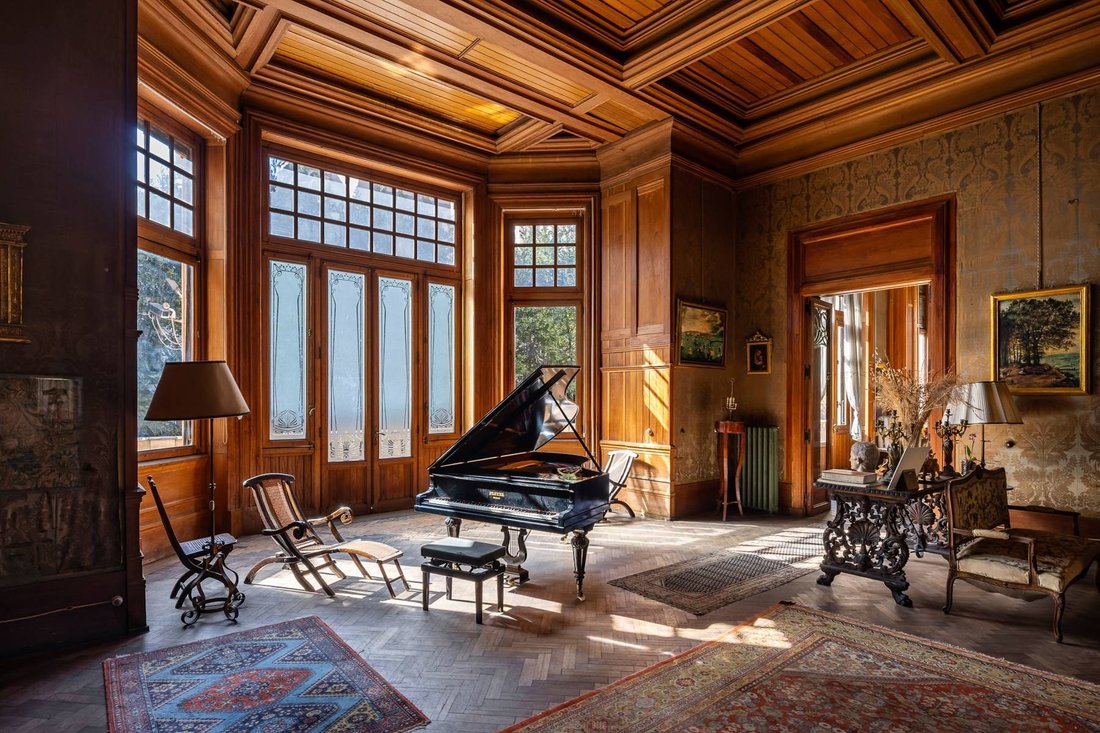
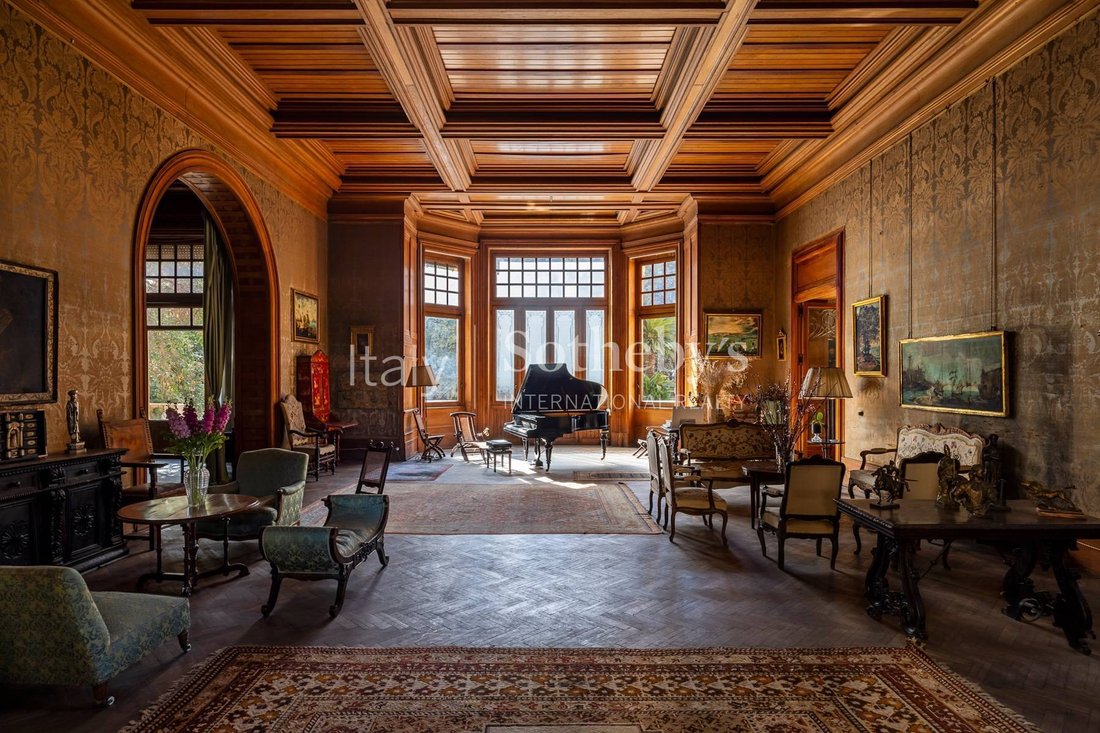
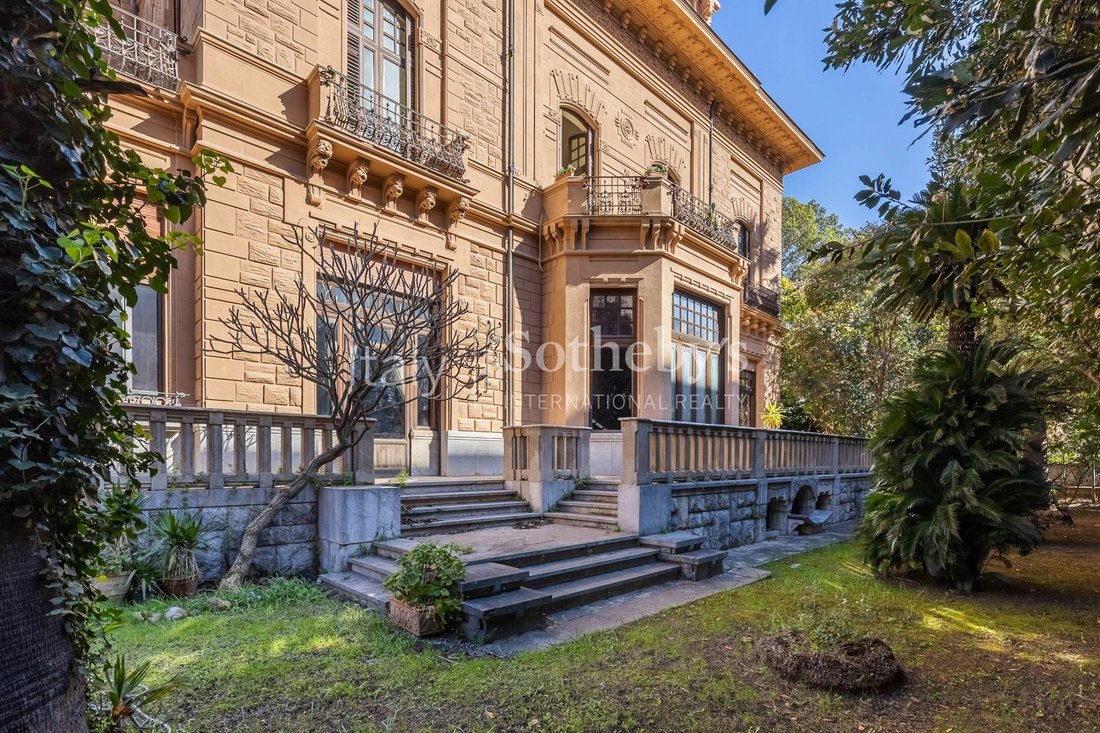
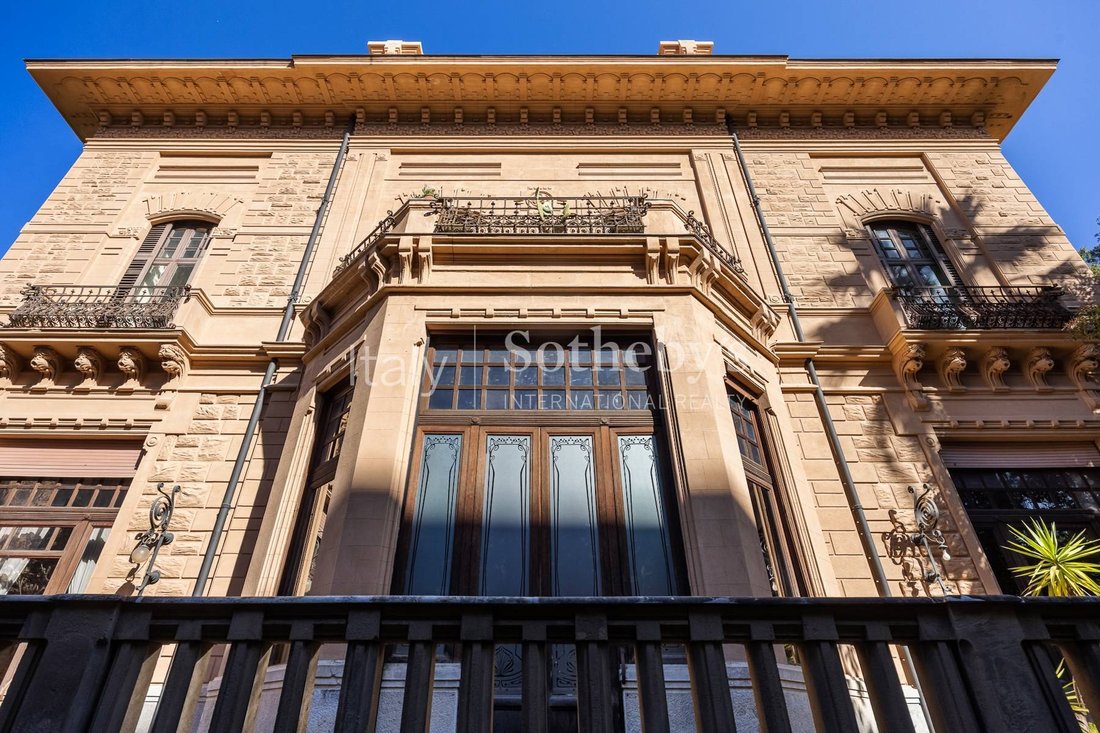
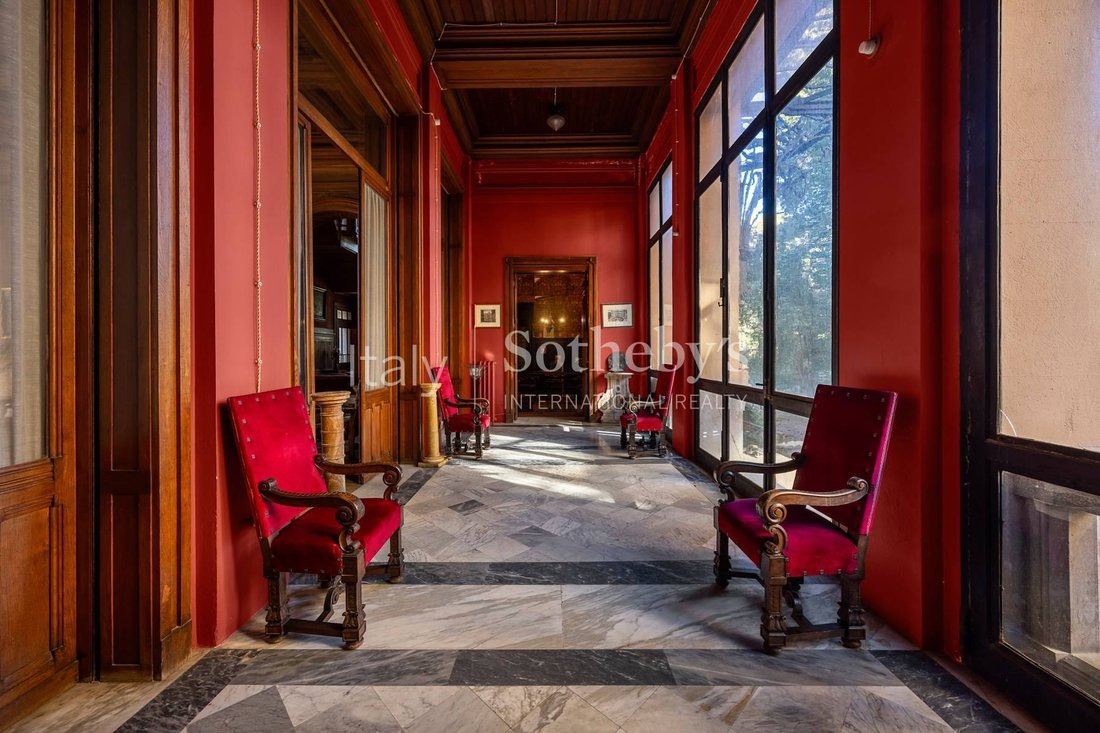
Con una superficie de aproximadamente 12.573 pies cuadrados, la propiedad se distribuye en dos plantas más un semisótano, y se distingue por sus torretas en las esquinas y una llamativa torre octogonal que define su perfil arquitectónico. La entrada de la planta baja se abre a un amplio hall de recepción con techo artesonado. Las habitaciones fluyen armoniosamente entre comedores, salones y un estudio con paneles de seda y pan dorado. Una de las habitaciones está decorada con pinturas del artista japonés Otama Kiyohara. Completan el piso una cocina, baños y una escalera de servicio.
Destaca la espectacular escalera de nogal de estilo Art Nouveau, flanqueada por una artística vidriera del maestro Bevilacqua. Toda la residencia está realzada por ventanas y muebles emplomados de las históricas firmas Ducrot y Mucoli. La primera planta consta de cinco dormitorios con acceso a terrazas, algunas de las cuales conducen a las torres, creando espacios particularmente amplios y luminosos. La propiedad también incluye un anexo de estilo Art Nouveau de dos pisos (aproximadamente 882 pies cuadrados).
La villa está rodeada por un jardín privado con estacionamiento y goza de una ubicación céntrica, a pocos pasos de Villa Whitaker y Piazza Politeama.
Con una superficie de aproximadamente 12.573 pies cuadrados, la propiedad se distribuye en dos plantas más un semisótano, y se distingue por sus torretas en las esquinas y una llamativa torre octogonal que define su perfil arquitectónico. La entrada de la planta baja se abre a un amplio hall de recepción con techo artesonado. Las habitaciones fluyen armoniosamente entre comedores, salones y un estudio con paneles de seda y pan dorado. Una de las habitaciones está decorada con pinturas del artista japonés Otama Kiyohara. Completan el piso una cocina, baños y una escalera de servicio.
Destaca la espectacular escalera de nogal de estilo Art Nouveau, flanqueada por una artística vidriera del maestro Bevilacqua. Toda la residencia está realzada por ventanas y muebles emplomados de las históricas firmas Ducrot y Mucoli. La primera planta consta de cinco dormitorios con acceso a terrazas, algunas de las cuales conducen a las torres, creando espacios particularmente amplios y luminosos. La propiedad también incluye un anexo de estilo Art Nouveau de dos pisos (aproximadamente 882 pies cuadrados).
La villa está rodeada por un jardín privado con estacionamiento y goza de una ubicación céntrica, a pocos pasos de Villa Whitaker y Piazza Politeama.
Villa Virginia, built between 1906 and 1908 to a design by architect Filippo La Porta, is one of the most fascinating examples of early Art Nouveau architecture in Palermo. Commissioned by the entrepreneur Vincenzo Caruso, who had ties to the Florio family, it embodies the taste and elegance of a bygone era.
Covering approximately 12,573 sq ft, the property is arranged over two floors plus a semi-basement level, and is distinguished by corner turrets and a striking octagonal tower that defines its architectural profile. The entrance on the ground floor opens into a spacious reception hall with a coffered ceiling. The rooms flow harmoniously between dining rooms, salons, and a study featuring silk and gold-leaf panelling. One of the rooms is decorated with paintings by the Japanese artist Otama Kiyohara. The floor is completed by a kitchen, bathrooms, and a service staircase.
Of particular note is the spectacular Art Nouveau walnut staircase, flanked by an artistic stained-glass window by Maestro Bevilacqua. The entire residence is enhanced by leaded windows and furnishings from the historic firms Ducrot and Mucoli. The first floor comprises five bedrooms with access to terraces, some of which lead to the towers, creating particularly bright and airy spaces. The property also includes a two-storey Art Nouveau annexe (approximately 882 sq ft).
The villa is surrounded by a private garden with parking and enjoys a central location, just a short walk from Villa Whitaker and Piazza Politeama.
Covering approximately 12,573 sq ft, the property is arranged over two floors plus a semi-basement level, and is distinguished by corner turrets and a striking octagonal tower that defines its architectural profile. The entrance on the ground floor opens into a spacious reception hall with a coffered ceiling. The rooms flow harmoniously between dining rooms, salons, and a study featuring silk and gold-leaf panelling. One of the rooms is decorated with paintings by the Japanese artist Otama Kiyohara. The floor is completed by a kitchen, bathrooms, and a service staircase.
Of particular note is the spectacular Art Nouveau walnut staircase, flanked by an artistic stained-glass window by Maestro Bevilacqua. The entire residence is enhanced by leaded windows and furnishings from the historic firms Ducrot and Mucoli. The first floor comprises five bedrooms with access to terraces, some of which lead to the towers, creating particularly bright and airy spaces. The property also includes a two-storey Art Nouveau annexe (approximately 882 sq ft).
The villa is surrounded by a private garden with parking and enjoys a central location, just a short walk from Villa Whitaker and Piazza Politeama.
-
Tipo de propiedad
Casa
-
Año de construcción
1900
-
Precio/pie²
$340
Características
- Jardín
- Terraza
- Chimenea
- Vestidor
- Biblioteca
- Vista a la Montaña
- Plano de planta 2D
- Sótano
- Oficina
Características
Lote
Interior
- Techo alto
- Oficina
- Chimenea
- Aire Acondicionado
- Biblioteca
- Sótano
- Vestidor
Outdoor
Explorar la zona
Via Dante, Palermo, PA 90141, Malaspina - Palagonia, Italia
Ver en Google Maps
Precio por sqft
Bajo
Alto
Ubicada en el corazón de Palermo, Via Dante ofrece fácil acceso a la vibrante cultura e historia de la ciudad. Cerca de puntos calientes gastronómicos y centros comerciales, es ideal para quienes buscan un estilo de vida cosmopolita. El cercano Aeropuerto Falcone Borsellino asegura conectividad internacional sin complicaciones. Los hitos culturales como el Teatro Massimo están a minutos, enriqueciendo la experiencia de vida con arte y patrimonio.
Ver lugares cercanos
Atracciones
Escuelas
Aeropuerto Falcone Borsellino
Aeropuerto
35 min
Teatro Massimo
Cultura y Patrimonio
6 min
Catedral de Palermo
Cultura y Patrimonio
5 min
Escuela Internacional de Palermo
Escuela internacional
10 min

Se unió hace 2 años
Usted ha preguntado por esta propiedad
El agente se comunicará con usted pronto por
Publicado por
6
Anuncios
2025
Se unió
Reserva una visita con Franca Tasca d'Almerita
Elija una fecha y si prefiere una visita virtual o presencial con el agente.
Fecha preferida
Tipo de tour

Italy Sotheby's International Realty
Via Pasubio, 9, Palermo, Palermo, Italy
Ver perfil de la agencia
An extraordinary historical and cultural heritage. As the capital of the island,
Palermo is a crossroads of civ
Palermo is a crossroads of civ
An extraordinary historical and cultural heritage. As the capital of the island,
Palermo is a crossroads of civilizations that have left an indelible mark over
the centuries, from the magnificent Arab-Norman architecture recognized as a
UNESCO World Heritage Site to the opulent Baroque palaces and vibrant popular
traditions. Its authentic beauty, combined with a rich culinary and wine
tradition and lively city life, attracts visitors from all over the world every
year, captivated by its unique atmosphere and millennia-old history. Italy
Sotheby’s International Realty has chosen Palermo as the location for its
twelfth office in Italy, further strengthening its presence in Southern Italy
and offering comprehensive coverage of the Sicilian territory. This includes
iconic destinations such as Taormina, Ragusa, the enchanting Egadi Islands with
their crystal-clear waters, Trapani with its ancient salt pans and charming
historic center, Marsala renowned for its wines and traditions, Sciacca with its
picturesque harbor and thermal baths, Agrigento and the extraordinary Valley of
the Temples, and Pantelleria, a volcanic island with a wild and unique charm.
Palermo is a crossroads of civilizations that have left an indelible mark over
the centuries, from the magnificent Arab-Norman architecture recognized as a
UNESCO World Heritage Site to the opulent Baroque palaces and vibrant popular
traditions. Its authentic beauty, combined with a rich culinary and wine
tradition and lively city life, attracts visitors from all over the world every
year, captivated by its unique atmosphere and millennia-old history. Italy
Sotheby’s International Realty has chosen Palermo as the location for its
twelfth office in Italy, further strengthening its presence in Southern Italy
and offering comprehensive coverage of the Sicilian territory. This includes
iconic destinations such as Taormina, Ragusa, the enchanting Egadi Islands with
their crystal-clear waters, Trapani with its ancient salt pans and charming
historic center, Marsala renowned for its wines and traditions, Sciacca with its
picturesque harbor and thermal baths, Agrigento and the extraordinary Valley of
the Temples, and Pantelleria, a volcanic island with a wild and unique charm.
Última actualización
Abril 25
Primera publicación
Marzo 27
Enlace del anuncio
Referencia del anuncio
322PVN
La confianza de los mejores brokers del mundo
Los agentes tras las propiedades más excepcionales del mundo publican en JamesEdition.
- Anuncios de Sotheby's, Christie's, BARNES y Engel & Völkers
- Cada anuncio se revisa antes de publicarse
- Conecte directamente con agentes verificados
Al continuar, acepta nuestros Términos y la Política de Privacidad.