$1,846,366
Isola Delle Femmine, Isla Privada En Venta En Sicilia, Mar Mediterráneo
- 5,318 Sqft
- 32.13 Ac lot
- Actualizado: Agosto 7
- 14
Sobre la propiedad
La descripción se tradujo automáticamente.
La descripción se muestra en el idioma original.
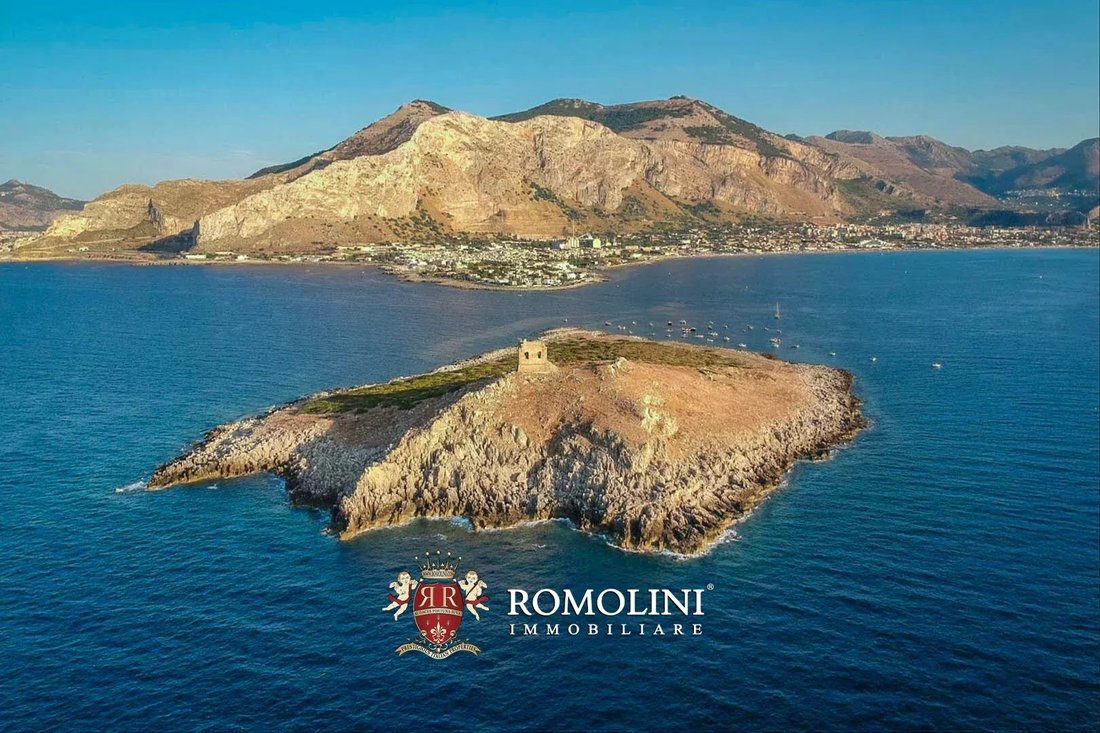
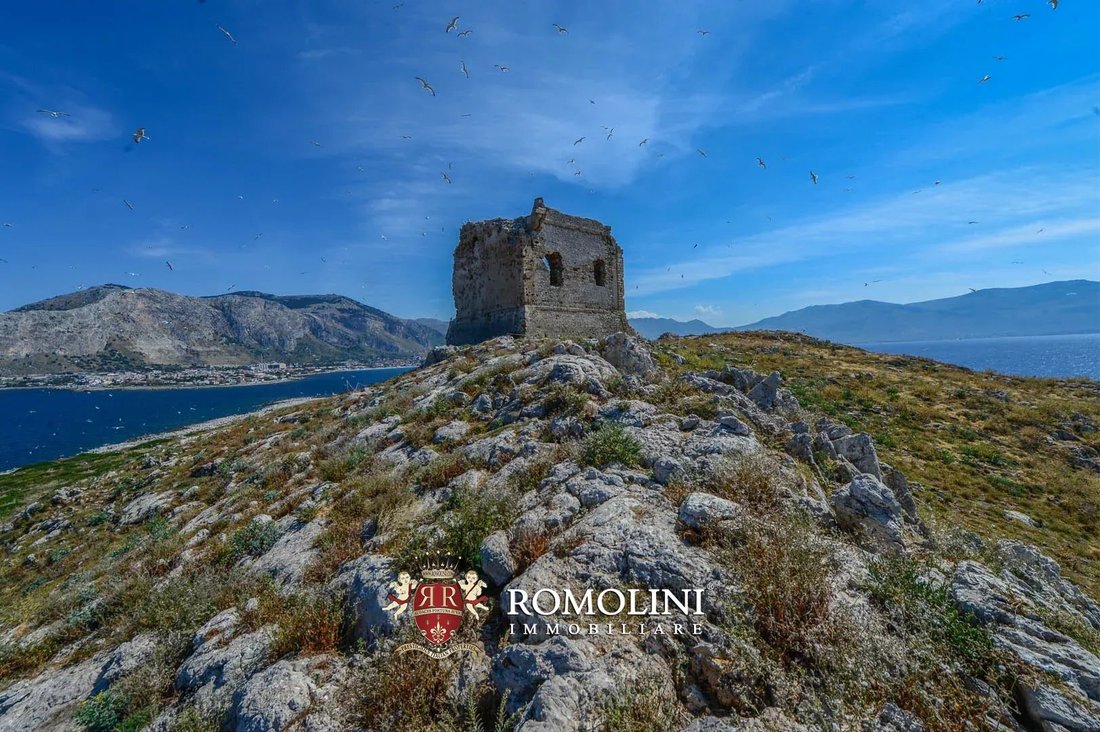
Situada a poca distancia de Palermo y del continente (300 m), la Isola delle Femmine (literalmente, Isla de las Mujeres) tiene una superficie de 13,9 hectáreas con una altura máxima de 35 m sobre el nivel del mar, donde podemos ver los restos de una antigua torre de vigilancia.
Una vez en tierra firme, se puede llegar fácilmente a varias ciudades de Sicilia: Palermo (19 km; 40 minutos), Monrea
Una vez en tierra firme, se puede llegar fácilmente a varias ciudades de Sicilia: Palermo (19 km; 40 minutos), Monrea
Located a short distance from Palermo and the mainland (300 m), the Isola delle Femmine (literally, Island of the Women) is 13.9 hectares in surface with a maximum height of 35 m above sea level, where we can spot the remains of an ancient watchtower.
Once landed on the mainland, various cities in Sicily are easily reached: Palermo (19km; 40’), Monreale (21km; 40’), Trapani (92km; 1h 5’), Mars
Once landed on the mainland, various cities in Sicily are easily reached: Palermo (19km; 40’), Monreale (21km; 40’), Trapani (92km; 1h 5’), Mars
Situada a poca distancia de Palermo y del continente (300 m), la Isola delle Femmine (literalmente, Isla de las Mujeres) tiene una superficie de 13,9 hectáreas con una altura máxima de 35 m sobre el nivel del mar, donde podemos ver los restos de una antigua torre de vigilancia.
Una vez en tierra firme, se puede llegar fácilmente a varias ciudades de Sicilia: Palermo (19 km; 40 minutos), Monreale (21 km; 40 minutos), Trapani (92 km; 1 hora y 5 minutos), Marsala (110 km; 1 hora y 25 minutos) y Agrigento (189 km; 2 horas y 25 minutos). Los aeropuertos más cercanos son Palermo Falcone-Borsellino (16 km; 15 minutos), Palermo Boccadifalco (16 km; 15 minutos), Trapani Birgi (97 km; 1 hora y 5 minutos) y Catania Fontanarossa (223 km; 1 hora y 30 minutos).
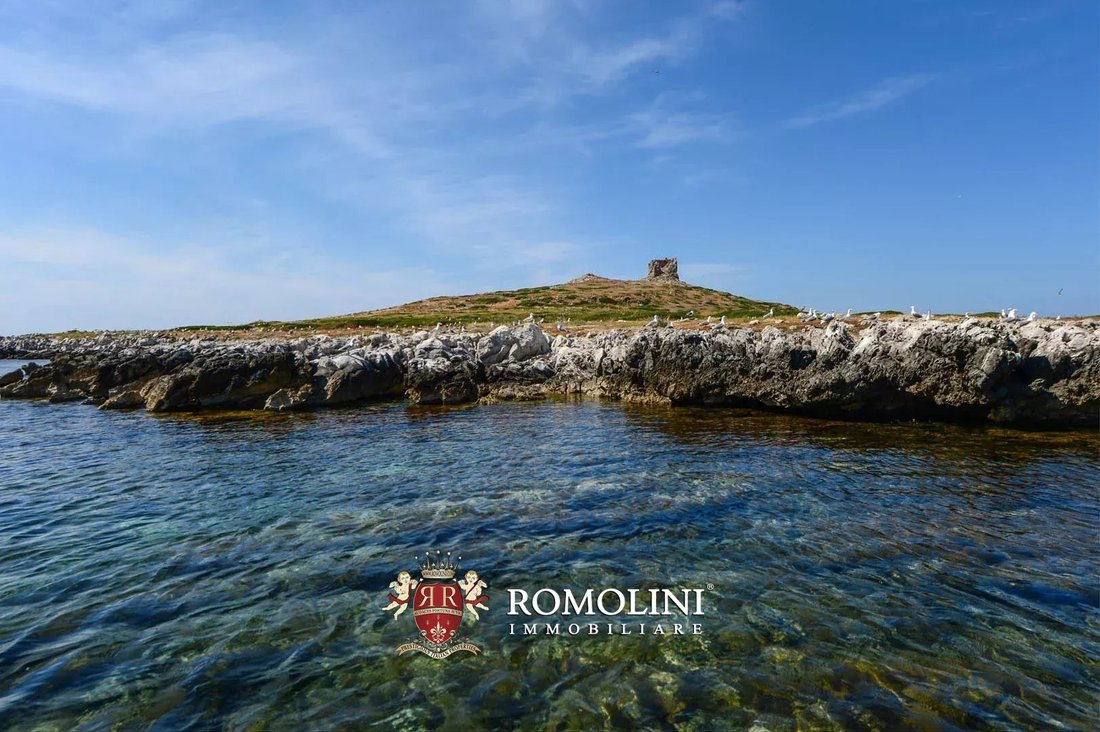
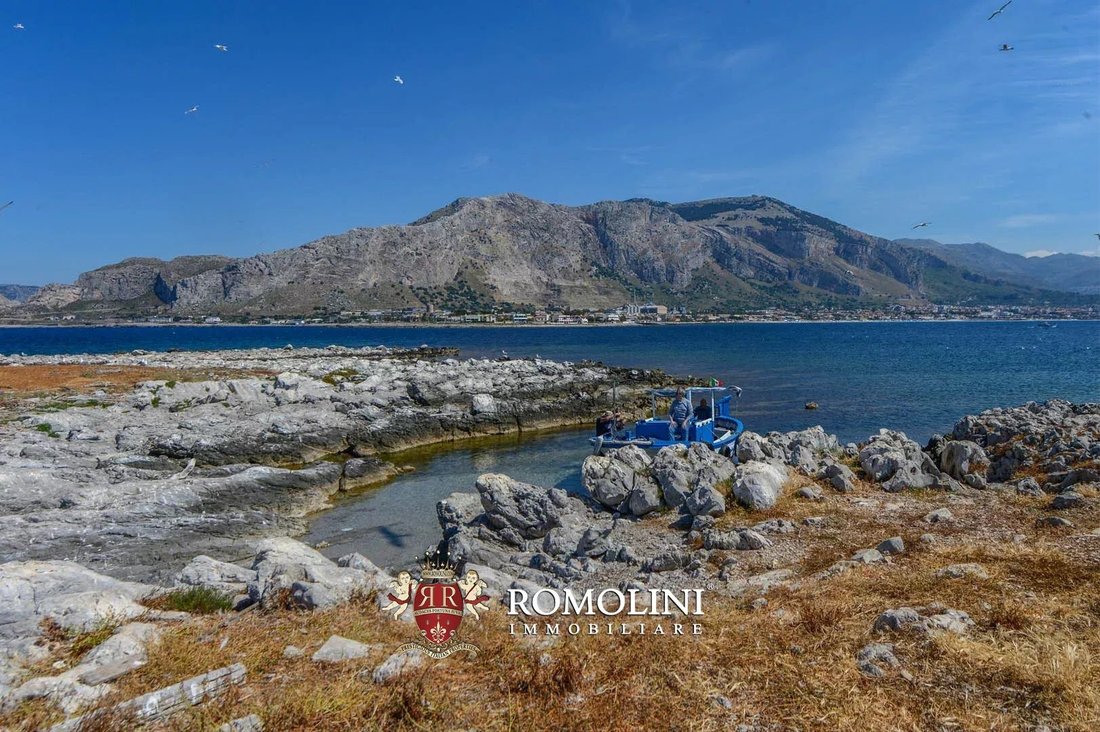
El fondo marino que rodea la isla es fácilmente accesible, incluso para buceadores no profesionales, gracias principalmente a la increíble claridad del agua. Y es gracias a esta claridad que se pueden admirar las hermosas formas de vida típicas de la isla y algunos restos de la época griega y romana.
La isla se caracteriza por la típica estepa mediterránea, cubierta principalmente de malva, mandrágora y erba stella en los terrenos más altos, que dejan espacio a la cristalería y al trébol pata de pájaro en los acantilados que se dirigen hacia la costa. Para enriquecer aún más el paisaje, encontramos hermosas flores de iris y romulea. La fauna está compuesta principalmente por lagartos, pero también hay algunas especies de mariposas hermosas y poco comunes.
ORIGEN DEL NOMBRE: LEYENDAS Y FILOLOGÍA
Cuenta la leyenda que trece doncellas turcas, condenadas por delitos graves, fueron embarcadas por sus familiares en un barco y abandonadas a la deriva en medio del mar. Una tormenta hizo naufragar el barco en una pequeña isla rocosa, donde las niñas vivieron solas durante siete largos años. Cuando sus familias, al darse cuenta de sus horribles acciones, lograron encontrarlas, decidieron no regresar a su tierra natal sino fundar una nueva ciudad en tierra firme. La llamaron Capaci (CCA-Paci, literalmente aquí la paz), mientras que la isla pasó a llamarse Isola delle Femmine (literalmente Isla de las Mujeres).
Si dejamos de lado la leyenda y solo consideramos la historia, el origen del nombre es muy incierto. Lo que es seguro es que es el resultado de un largo proceso de italianización. La tradición popular utiliza el topónimo Insula Fimi, probablemente un error ortográfico de una antigua Insula Eufemia (donde Eufemio es el nombre del gobernador bizantino de Sicilia en el siglo IX d.C.). Otro posible origen es el término Fimis, latinización de la palabra árabe fim (literalmente bahía, estrecho) que indica el tramo de mar que divide la isla del continente.
HISTORIA DE LA ISLA: CUENCAS ROMANAS Y TORRE DE CAMILLIANI
En la isla podemos encontrar algunos vestigios que se remontan a la época romana, probablemente después de la segunda guerra púnica, en forma de cuencas de piedra y hormigón que alguna vez se usaron para preparar un plato de pescado típico.
El pozo y otras cuencas pluviales se remontan, en cambio, a la Edad Media.
La torre situada en lo alto de la isla se construyó en el siglo XVI como parte de un enorme sistema de defensa que recorría Sicilia contra los ataques de los barcos corsarios (este proyecto defensivo se remonta al siglo XIV y continuó por necesidad durante varios años). Como ocurre con muchas otras torres de la misma época, el proyecto está muy influenciado por el arquitecto florentino Camillo Camilliani, mejor conocido por su trabajo en la Fontana Pretoria de Palermo. El propio Camilliani, en su Libro de torres marítimas, explica la ubicación y subraya la importancia de la torre: «[...] donde debería construirse la torre de la que hablamos, y eso sería genial; esta (torre) brinda seguridad a los marineros y vagabundos que cruzan ese tramo de mar».
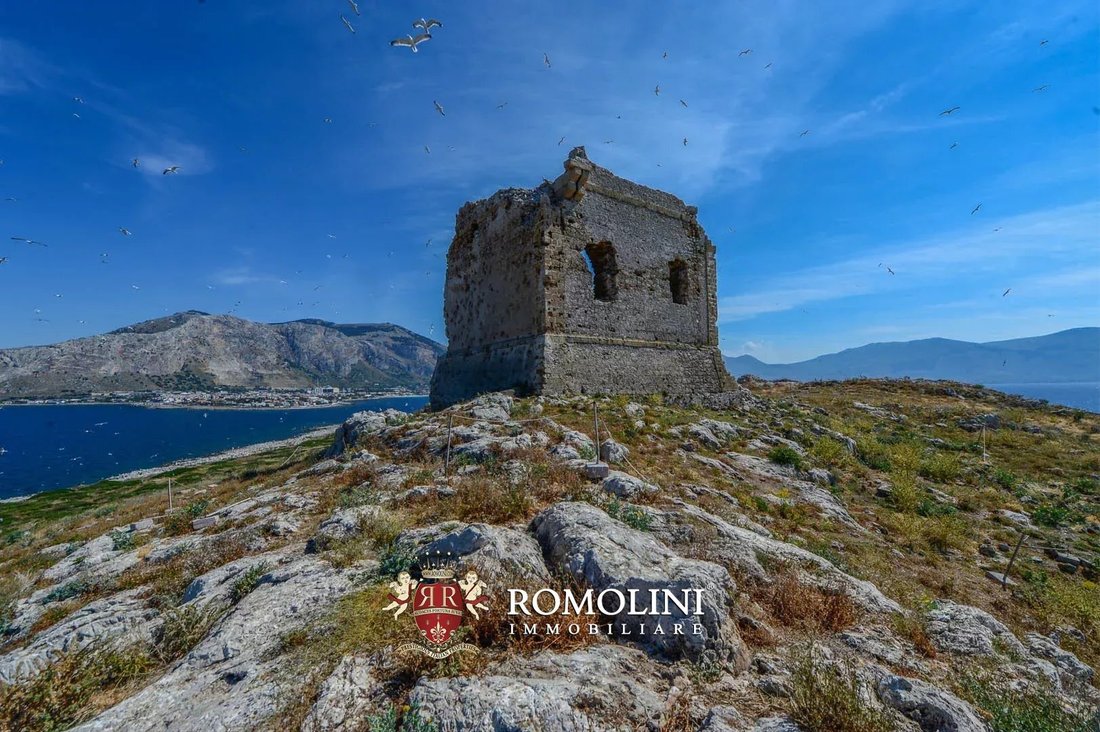
Estructurada originalmente en dos plantas y ahora en una sola planta, la torre tiene una base cuadrada (247 metros cuadrados — 2.658 pies cuadrados). La planta baja se dividió en tres habitaciones cubiertas con bóvedas de cañón y destinadas a una cisterna de agua (dos de cada tres) y a una armería. Desde este último local se podía subir al cuartel de la guardia a través de un agujero en el techo, y desde el cuarto era fácil llegar a la azotea a través de una escalera de madera. Aquí estaban las piezas de artillería para derribar las naves enemigas.
La torre se encuentra actualmente en muy mal estado, principalmente debido a los graves daños que sufrió durante el desembarco aliado en Sicilia como parte de la Operación Husky en 1943. Tras la Segunda Guerra Mundial, la torre no fue reconstruida ni mantenida, y este abandono contribuyó a su decadencia final.
El edificio puede reconstruirse por completo, respetando el volumen original de la estructura, y es posible obtener financiación de la Unión Europea o del Ministerio de Patrimonio Cultural y Actividades y Turismo para un posible programa de desarrollo cultural y turístico de la isla, todo ello respetando las restricciones naturalistas.
De hecho, desde 1997, la isla está incluida en la reserva natural de Isola delle Femmine, cuya autoridad de gestión es la Liga Italiana para la Protección de las Aves (LIPU). La Unión Europea reconoció la importancia del lugar, que fue el primer clanClasificado como SCI (sitio de importancia comunitaria) y luego como SAC (área especial de conservación).
USO Y USOS POTENCIALES
La compra de la isla es una oportunidad única para quienes buscan un «bien trofeo»: un uso privado o simplemente una actividad de preservación de algo realmente único.
La restauración conservadora de la torre permitiría que el edificio pudiera utilizarse como residencia privada, edificio representativo, imagen corporativa o la creación de un museo que permitiera a los turistas apreciar no solo el valor naturalista de la isla, sino también los valores históricos, artísticos y arqueológicos.
CIUDADES Y PUEBLOS MÁS CERCANOS
Todas las distancias se calculan desde la ciudad continental de Isola delle Femmine: Palermo (19 km; 40 minutos), Monreale (21 km; 40 minutos), Trapani (92 km; 1 hora y 5 minutos), Marsala (110 km; 1 hora 25 minutos), Agrigento (189 km; 2 h 25 minutos)
AEROPUERTOS MÁS CERCANOS
Palermo Falcone-Borsellino (16 km; 15 minutos), Palermo Boccadifalco (16 km; 15 minutos), Trapani Birgi (97 km; 1 hora y 5 minutos), Catania Fontanarossa (223 km; 1 hora y 30 minutos)
Una vez en tierra firme, se puede llegar fácilmente a varias ciudades de Sicilia: Palermo (19 km; 40 minutos), Monreale (21 km; 40 minutos), Trapani (92 km; 1 hora y 5 minutos), Marsala (110 km; 1 hora y 25 minutos) y Agrigento (189 km; 2 horas y 25 minutos). Los aeropuertos más cercanos son Palermo Falcone-Borsellino (16 km; 15 minutos), Palermo Boccadifalco (16 km; 15 minutos), Trapani Birgi (97 km; 1 hora y 5 minutos) y Catania Fontanarossa (223 km; 1 hora y 30 minutos).
El fondo marino que rodea la isla es fácilmente accesible, incluso para buceadores no profesionales, gracias principalmente a la increíble claridad del agua. Y es gracias a esta claridad que se pueden admirar las hermosas formas de vida típicas de la isla y algunos restos de la época griega y romana.
La isla se caracteriza por la típica estepa mediterránea, cubierta principalmente de malva, mandrágora y erba stella en los terrenos más altos, que dejan espacio a la cristalería y al trébol pata de pájaro en los acantilados que se dirigen hacia la costa. Para enriquecer aún más el paisaje, encontramos hermosas flores de iris y romulea. La fauna está compuesta principalmente por lagartos, pero también hay algunas especies de mariposas hermosas y poco comunes.
ORIGEN DEL NOMBRE: LEYENDAS Y FILOLOGÍA
Cuenta la leyenda que trece doncellas turcas, condenadas por delitos graves, fueron embarcadas por sus familiares en un barco y abandonadas a la deriva en medio del mar. Una tormenta hizo naufragar el barco en una pequeña isla rocosa, donde las niñas vivieron solas durante siete largos años. Cuando sus familias, al darse cuenta de sus horribles acciones, lograron encontrarlas, decidieron no regresar a su tierra natal sino fundar una nueva ciudad en tierra firme. La llamaron Capaci (CCA-Paci, literalmente aquí la paz), mientras que la isla pasó a llamarse Isola delle Femmine (literalmente Isla de las Mujeres).
Si dejamos de lado la leyenda y solo consideramos la historia, el origen del nombre es muy incierto. Lo que es seguro es que es el resultado de un largo proceso de italianización. La tradición popular utiliza el topónimo Insula Fimi, probablemente un error ortográfico de una antigua Insula Eufemia (donde Eufemio es el nombre del gobernador bizantino de Sicilia en el siglo IX d.C.). Otro posible origen es el término Fimis, latinización de la palabra árabe fim (literalmente bahía, estrecho) que indica el tramo de mar que divide la isla del continente.
HISTORIA DE LA ISLA: CUENCAS ROMANAS Y TORRE DE CAMILLIANI
En la isla podemos encontrar algunos vestigios que se remontan a la época romana, probablemente después de la segunda guerra púnica, en forma de cuencas de piedra y hormigón que alguna vez se usaron para preparar un plato de pescado típico.
El pozo y otras cuencas pluviales se remontan, en cambio, a la Edad Media.
La torre situada en lo alto de la isla se construyó en el siglo XVI como parte de un enorme sistema de defensa que recorría Sicilia contra los ataques de los barcos corsarios (este proyecto defensivo se remonta al siglo XIV y continuó por necesidad durante varios años). Como ocurre con muchas otras torres de la misma época, el proyecto está muy influenciado por el arquitecto florentino Camillo Camilliani, mejor conocido por su trabajo en la Fontana Pretoria de Palermo. El propio Camilliani, en su Libro de torres marítimas, explica la ubicación y subraya la importancia de la torre: «[...] donde debería construirse la torre de la que hablamos, y eso sería genial; esta (torre) brinda seguridad a los marineros y vagabundos que cruzan ese tramo de mar».
Estructurada originalmente en dos plantas y ahora en una sola planta, la torre tiene una base cuadrada (247 metros cuadrados — 2.658 pies cuadrados). La planta baja se dividió en tres habitaciones cubiertas con bóvedas de cañón y destinadas a una cisterna de agua (dos de cada tres) y a una armería. Desde este último local se podía subir al cuartel de la guardia a través de un agujero en el techo, y desde el cuarto era fácil llegar a la azotea a través de una escalera de madera. Aquí estaban las piezas de artillería para derribar las naves enemigas.
La torre se encuentra actualmente en muy mal estado, principalmente debido a los graves daños que sufrió durante el desembarco aliado en Sicilia como parte de la Operación Husky en 1943. Tras la Segunda Guerra Mundial, la torre no fue reconstruida ni mantenida, y este abandono contribuyó a su decadencia final.
El edificio puede reconstruirse por completo, respetando el volumen original de la estructura, y es posible obtener financiación de la Unión Europea o del Ministerio de Patrimonio Cultural y Actividades y Turismo para un posible programa de desarrollo cultural y turístico de la isla, todo ello respetando las restricciones naturalistas.
De hecho, desde 1997, la isla está incluida en la reserva natural de Isola delle Femmine, cuya autoridad de gestión es la Liga Italiana para la Protección de las Aves (LIPU). La Unión Europea reconoció la importancia del lugar, que fue el primer clanClasificado como SCI (sitio de importancia comunitaria) y luego como SAC (área especial de conservación).
USO Y USOS POTENCIALES
La compra de la isla es una oportunidad única para quienes buscan un «bien trofeo»: un uso privado o simplemente una actividad de preservación de algo realmente único.
La restauración conservadora de la torre permitiría que el edificio pudiera utilizarse como residencia privada, edificio representativo, imagen corporativa o la creación de un museo que permitiera a los turistas apreciar no solo el valor naturalista de la isla, sino también los valores históricos, artísticos y arqueológicos.
CIUDADES Y PUEBLOS MÁS CERCANOS
Todas las distancias se calculan desde la ciudad continental de Isola delle Femmine: Palermo (19 km; 40 minutos), Monreale (21 km; 40 minutos), Trapani (92 km; 1 hora y 5 minutos), Marsala (110 km; 1 hora 25 minutos), Agrigento (189 km; 2 h 25 minutos)
AEROPUERTOS MÁS CERCANOS
Palermo Falcone-Borsellino (16 km; 15 minutos), Palermo Boccadifalco (16 km; 15 minutos), Trapani Birgi (97 km; 1 hora y 5 minutos), Catania Fontanarossa (223 km; 1 hora y 30 minutos)
Located a short distance from Palermo and the mainland (300 m), the Isola delle Femmine (literally, Island of the Women) is 13.9 hectares in surface with a maximum height of 35 m above sea level, where we can spot the remains of an ancient watchtower.
Once landed on the mainland, various cities in Sicily are easily reached: Palermo (19km; 40’), Monreale (21km; 40’), Trapani (92km; 1h 5’), Marsala (110km; 1h 25’) and Agrigento (189km; 2h 25’). Closest airports are Palermo Falcone-Borsellino (16km; 15’), Palermo Boccadifalco (16km; 15’), Trapani Birgi (97km; 1h 5’) and Catania Fontanarossa (223km; 1h 30’).
The seabed around the island is easily reachable, even by non-professional scuba-divers, thanks mainly to the incredible clearness of the water. And it is thanks to this clearness that one can admire the beautiful life forms typical of the island and several remaining of Greek and Roman age.
The island is characterized by the typical Mediterranean steppe, mainly covered in mallow, mandrake and erba stella on the higher ground which leave space to glasswort and bird’s-foot trefoil on the cliffs going toward the coastline. Further enriching the landscape we find beautiful Iris and Romulea flowers. Fauna is mainly composed of lizards, but there are also some beautiful and uncommon species of butterflies.
ORIGIN OF THE NAME: LEGENDS AND PHILOLOGY
The legend tales of thirteen Turkish maidens who, condemned for serious crimes, were embarked by their relatives on a ship and left adrift in the middle of the sea. A storm wrecked the ship on a small rocky island, where the girls lived alone for seven long years. When their families, having realized their horrible doings, managed to find the girls decided not to return to their homeland but to found a new town on the mainland. They named it Capaci (Cca-paci, literally here the peace) while the island was renamed Isola delle Femmine (literally Island of the Women).
If we take aside the legend and only consider history, the origin of the name is highly uncertain. What’s sure is that it is the result of a long process of Italianization. Popular tradition uses the toponym Insula Fimi, probably a misspelling of an older Insula Euphemi (where Euphemius is the name of the Byzantine governor of Sicily in the 9th century AD). Other possible origin is the term Fimis, latinization of the Arab word fim (literally bay, strait) indicating the stretch of sea dividing the island from the mainland.
HISTORY OF THE ISLAND: ROMAN BASINS AND CAMILLIANI’S TOWER
On the island we can find some traces dating back to the Roman age, probably after the second Punic War, in the form of stone and concrete basins once used in the preparation of a typical fish plate.
The well and other rainwater basins date back to the Middle Age instead.
The tower at the top of the island was built in the 16th century as part of a huge defense system entouring Sicily against the attacks of Corsair ships (this defensive project dated back to the 14th century and was continued based on necessity for several years). As for many other towers of the same age, the project is highly influenced by the Florentine architect Camillo Camilliani, who is better known for its work on the Fontana Pretoria in Palermo. Camilliani himself, in its Book of Maritime Towers, explains the location and underline the importance of the tower: “[…] where the tower we discussed should be built, and that would be a great thing; this (tower) grants security to sailors and wanderers crossing that stretch of sea”.
Originally structured onto two floors and now on a single floor, the tower has a squared base (247 sqm – 2,658 sqft). The ground floor was split into three rooms covered with barrel vaults and earmarked to water cistern (two out of three) and armory. From this last local it was possible to climb up to the guardsmen quarter through a hole in the roof, and from the quarters it was in turn easy to reach the rooftop through a wooden ladder. Here there were the artillery pieces to gun down enemy ships.
The tower is currently in a very bad shape, mainly because of the heavy damage it suffered during the Allied landing in Sicily as part of the Operation Husky in 1943. After World War II, the tower was neither rebuilt nor maintained and this abandonment contributed to its final decadence.
The building can be fully rebuilt, respecting the original volume of the structure, and it is possible to obtain a financing from the European Union or the Ministry of Cultural Heritage and Activities and Tourism for a possible cultural and touristic development program for the isle, all complying with the naturalistic constraint.
As a matter of fact, since 1997 the island has been included in the Natural reserve of Isola delle Femmine for which the Italian League for Bird Protection (LIPU) is managing authority. The European Union recognized the importance of the location which was first classified as SCI (Site of Community Importance) and then as SAC (Special Area of Conservation).
USE AND POTENTIAL USES
The purchase of the island is a unique opportunity for some looking for a “trophy asset”: a private use or simply an activity of preservation of something really unique.
The conservative restoration of the tower would allow making the building usable as a private residence, representative building, corporate image or the realization of a museum allowing tourists to appreciate not just the naturalistic value of the island but also the historical, artistic and archaeological ones.
CLOSEST CITIES AND TOWNS
All the distances are calculated from the mainland town of Isola delle Femmine: Palermo (19km; 40’), Monreale (21km; 40’), Trapani (92km; 1h 5’), Marsala (110km; 1h 25’), Agrigento (189km; 2h 25’)
CLOSEST AIRPORTS
Palermo Falcone-Borsellino (16km; 15’), Palermo Boccadifalco (16km; 15’), Trapani Birgi (97km; 1h 5’), Catania Fontanarossa (223km; 1h 30’)
Once landed on the mainland, various cities in Sicily are easily reached: Palermo (19km; 40’), Monreale (21km; 40’), Trapani (92km; 1h 5’), Marsala (110km; 1h 25’) and Agrigento (189km; 2h 25’). Closest airports are Palermo Falcone-Borsellino (16km; 15’), Palermo Boccadifalco (16km; 15’), Trapani Birgi (97km; 1h 5’) and Catania Fontanarossa (223km; 1h 30’).
The seabed around the island is easily reachable, even by non-professional scuba-divers, thanks mainly to the incredible clearness of the water. And it is thanks to this clearness that one can admire the beautiful life forms typical of the island and several remaining of Greek and Roman age.
The island is characterized by the typical Mediterranean steppe, mainly covered in mallow, mandrake and erba stella on the higher ground which leave space to glasswort and bird’s-foot trefoil on the cliffs going toward the coastline. Further enriching the landscape we find beautiful Iris and Romulea flowers. Fauna is mainly composed of lizards, but there are also some beautiful and uncommon species of butterflies.
ORIGIN OF THE NAME: LEGENDS AND PHILOLOGY
The legend tales of thirteen Turkish maidens who, condemned for serious crimes, were embarked by their relatives on a ship and left adrift in the middle of the sea. A storm wrecked the ship on a small rocky island, where the girls lived alone for seven long years. When their families, having realized their horrible doings, managed to find the girls decided not to return to their homeland but to found a new town on the mainland. They named it Capaci (Cca-paci, literally here the peace) while the island was renamed Isola delle Femmine (literally Island of the Women).
If we take aside the legend and only consider history, the origin of the name is highly uncertain. What’s sure is that it is the result of a long process of Italianization. Popular tradition uses the toponym Insula Fimi, probably a misspelling of an older Insula Euphemi (where Euphemius is the name of the Byzantine governor of Sicily in the 9th century AD). Other possible origin is the term Fimis, latinization of the Arab word fim (literally bay, strait) indicating the stretch of sea dividing the island from the mainland.
HISTORY OF THE ISLAND: ROMAN BASINS AND CAMILLIANI’S TOWER
On the island we can find some traces dating back to the Roman age, probably after the second Punic War, in the form of stone and concrete basins once used in the preparation of a typical fish plate.
The well and other rainwater basins date back to the Middle Age instead.
The tower at the top of the island was built in the 16th century as part of a huge defense system entouring Sicily against the attacks of Corsair ships (this defensive project dated back to the 14th century and was continued based on necessity for several years). As for many other towers of the same age, the project is highly influenced by the Florentine architect Camillo Camilliani, who is better known for its work on the Fontana Pretoria in Palermo. Camilliani himself, in its Book of Maritime Towers, explains the location and underline the importance of the tower: “[…] where the tower we discussed should be built, and that would be a great thing; this (tower) grants security to sailors and wanderers crossing that stretch of sea”.
Originally structured onto two floors and now on a single floor, the tower has a squared base (247 sqm – 2,658 sqft). The ground floor was split into three rooms covered with barrel vaults and earmarked to water cistern (two out of three) and armory. From this last local it was possible to climb up to the guardsmen quarter through a hole in the roof, and from the quarters it was in turn easy to reach the rooftop through a wooden ladder. Here there were the artillery pieces to gun down enemy ships.
The tower is currently in a very bad shape, mainly because of the heavy damage it suffered during the Allied landing in Sicily as part of the Operation Husky in 1943. After World War II, the tower was neither rebuilt nor maintained and this abandonment contributed to its final decadence.
The building can be fully rebuilt, respecting the original volume of the structure, and it is possible to obtain a financing from the European Union or the Ministry of Cultural Heritage and Activities and Tourism for a possible cultural and touristic development program for the isle, all complying with the naturalistic constraint.
As a matter of fact, since 1997 the island has been included in the Natural reserve of Isola delle Femmine for which the Italian League for Bird Protection (LIPU) is managing authority. The European Union recognized the importance of the location which was first classified as SCI (Site of Community Importance) and then as SAC (Special Area of Conservation).
USE AND POTENTIAL USES
The purchase of the island is a unique opportunity for some looking for a “trophy asset”: a private use or simply an activity of preservation of something really unique.
The conservative restoration of the tower would allow making the building usable as a private residence, representative building, corporate image or the realization of a museum allowing tourists to appreciate not just the naturalistic value of the island but also the historical, artistic and archaeological ones.
CLOSEST CITIES AND TOWNS
All the distances are calculated from the mainland town of Isola delle Femmine: Palermo (19km; 40’), Monreale (21km; 40’), Trapani (92km; 1h 5’), Marsala (110km; 1h 25’), Agrigento (189km; 2h 25’)
CLOSEST AIRPORTS
Palermo Falcone-Borsellino (16km; 15’), Palermo Boccadifalco (16km; 15’), Trapani Birgi (97km; 1h 5’), Catania Fontanarossa (223km; 1h 30’)
-
Tipo de propiedad
Finca
-
Precio/pie²
$347
Características
Explorar la zona
Isola delle Femmine, Sicilia, Italia
Ver en Google Maps
Precio por sqft
Bajo
Alto
Ubicada en la encantadora ciudad costera de Isola delle Femmine, esta propiedad ofrece fácil acceso al Aeropuerto de Palermo (23 min) y al centro de la ciudad de Palermo (28 min). Conocida por sus playas y puerto deportivo, la zona ofrece un estilo de vida tranquilo pero conectado. Cerca, disfrute de una variedad de opciones gastronómicas, atracciones culturales y actividades al aire libre como natación, vela y senderismo.
Ver lugares cercanos
Atracciones
Escuelas
Aeropuerto Falcone Borsellino
Aeropuerto
23 min
Playa de Capaci
Al aire libre y naturaleza
5 min
Puerto deportivo Isola delle Femmine
Puerto / Marina
3 min
Escuela Internacional de Palermo
Escuela Internacional
20 min
Se unió hace 4 años
Usted ha preguntado por esta propiedad
El agente se comunicará con usted pronto por
Publicado por
224
Anuncios
2022
Se unió
Reserva una visita con Danilo Romolini
Elija una fecha y si prefiere una visita virtual o presencial con el agente.
Fecha preferida
Tipo de tour

Romolini Immobiliare
Piazza Torre di Berta 4, Tuscany, 52037, Sansepolcro, Italy
Ver perfil de la agencia
Riccardo and Marta met during their high school years. Since then, their paths have never parted. United by shared
Riccardo and Marta met during their high school years. Since then, their paths have never parted. United by shared dreams and aspirations, they married in 1999 and are today parents of three children. In 2004, driven by their passion for their native land, art, and beauty, they chose the historic heart of Tuscany – the charming village of Anghiari – as the birthplace of a project that already carried the warmth of home: Romolini Immobiliare. A story founded on courage, dedication, and profound values that, paired with their vision, quickly earned them recognition within both the national and international real estate markets. In 2008, an important achievement further strengthened their reputation: Romolini Immobiliare was appointed exclusive affiliate of Christie’s International Real Estate, the world’s most prestigious name in luxury real estate – a testament to their authenticity and unwavering commitment. Romolini, however, is more than a business: it is a family. Those who have joined Riccardo and Marta in this endeavor were welcomed for their human qualities, integrity, and outstanding professionalism, becoming not just exceptional team members, but part of a greater family. Each brings a unique approach, a personal style, and a shared dedication to the values that have always defined Romolini. In 2020, Danilo, their eldest son, chose to join the company. Having grown up amid the dreams and challenges of the family business, he brought a visionary spirit and a profound love for beauty. Danilo pioneered a new way of presenting properties in Italy, creating emotional and engaging video narratives that captivate and inspire. With his contribution, Romolini Immobiliare embraced a new chapter. A refined approach to communication, an even greater attention to detail, and a client-centered philosophy have established the company as a leading figure in the luxury real estate sector. Romolini is not just a name. It is a legacy. It is a family dream brought to life. It is a journey that moves forward with passion and purpose.
Última actualización
Agosto 7
Primera publicación
Mayo 21, 2025
Referencia del anuncio
1523
La confianza de los mejores brokers del mundo
Los agentes tras las propiedades más excepcionales del mundo publican en JamesEdition.
- Anuncios de Sotheby's, Christie's, BARNES y Engel & Völkers
- Cada anuncio se revisa antes de publicarse
- Conecte directamente con agentes verificados
Al continuar, acepta nuestros Términos y la Política de Privacidad.