



$5,321,425
Precio aumentado en $840,225 el Sep 18, 2026
Castillo Del Cardenal En La Ría De Corcubión.
- 6 Hab.
- 3 Baños
- 3,908 Sqft
- 45
Sobre la propiedad
La descripción se tradujo automáticamente.
La descripción se muestra en el idioma original.
Este singular castillo costero del siglo XVIII llamado del Cardenal, se construyó en honor al Infante de España D. Luis de Borbón y Farnesio, hermano del Rey Carlos III y sexto hijo del Rey Felipe V de España e Isabel de Farnesio, Duquesa de Parma.
Fue Cardenal arzobispo de Toledo en 1735, primado de España, arzobispo de Sevilla en el año 1741 y cuando abandona el estado eclesiástico, fu
Fue Cardenal arzobispo de Toledo en 1735, primado de España, arzobispo de Sevilla en el año 1741 y cuando abandona el estado eclesiástico, fu
This unique 18th-century coastal castle, called del Cardenal, was built in honor of the Spanish Infante D. Luis de Borbón y Farnesio, brother of King Carlos III and sixth son of King Felipe V of Spain and Isabel de Farnesio, Duchess of Parma.
He was appointed Cardinal Archbishop of Toledo in 1735, Primate of Spain, Archbishop of Seville in 1741, and when he left the ecclesiastical state,
He was appointed Cardinal Archbishop of Toledo in 1735, Primate of Spain, Archbishop of Seville in 1741, and when he left the ecclesiastical state,
Este singular castillo costero del siglo XVIII llamado del Cardenal, se construyó en honor al Infante de España D. Luis de Borbón y Farnesio, hermano del Rey Carlos III y sexto hijo del Rey Felipe V de España e Isabel de Farnesio, Duquesa de Parma.
Fue Cardenal arzobispo de Toledo en 1735, primado de España, arzobispo de Sevilla en el año 1741 y cuando abandona el estado eclesiástico, fue nombrado Conde de Chinchón, y fue un importante mecenas que apoyo a pintores como Francisco Goya y Luis Paret.
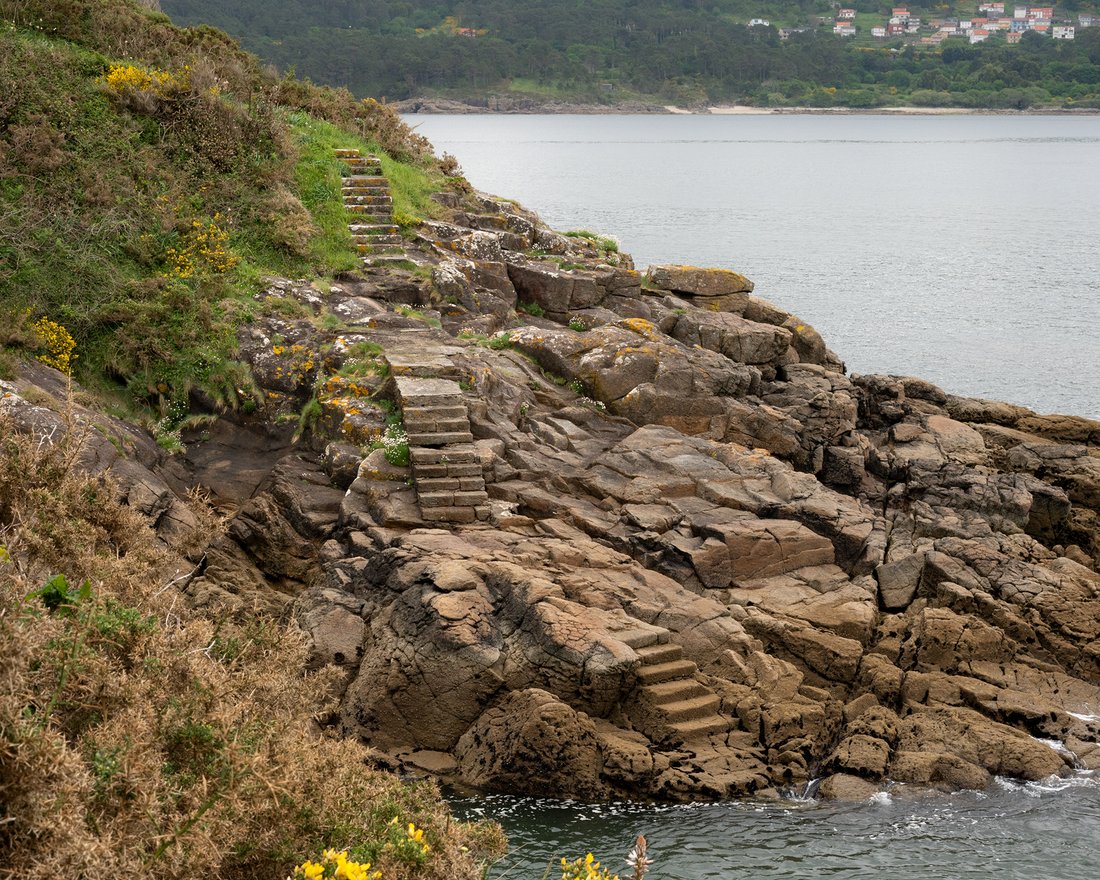
Esta fortificación, junto con la del castillo del Príncipe en CEE, se erige entre 1755-1757 para la defensa del puerto, en la Ría de Corcubión.
La edificación es una península fortificada con forma de estrella, construida en piedra, con materiales procedentes de canteras locales, estas obras supusieron una carga añadida para los vecinos que debían concurrir con carro y bueyes a hacerse cargo del traslado de la piedra, desde las canteras a el castillo.
Con estas características constructivas, lo que se pretendía es que la pieza se mimetizara con el entorno y así sorprender a los atacantes, preservando la seguridad de las expediciones que se dirigían al norte de Europa o al Mediterráneo, así como evitar saqueos a las ciudades del interior.
Tiene 17 cañoneras y ocupa una superficie de 2.800 m2 aproximadamente. En el interior del recinto, rodeando el patio de armas, se dispone un edificio con forma de U abierta, que ahora tiene función residencial pero que en su origen fue cuartel para la tropa, almacenes, polvorín y demás dependencias de un castillo. Tuvo capacidad para 96 hombres.
El interior de la edificación es de una sola planta, y 3 cuerpos en piedra, cocina, cuarto para oficiales, y almacenes de pertrechos y pólvora, todas las estancias cuentan con techos en bóveda de cañón, las paredes estaban encaladas, para protegerse de enfermedades (aún se puede observar, en lo que hoy es la bodega) y cubierta de teja del país.
También contaba con huertos en el interior y pozo de agua dulce para subsistencia en caso de asedio.
La fortaleza se encuentra en un excelente estado de conservación y respeta fielmente su estructura original.
Fue Cardenal arzobispo de Toledo en 1735, primado de España, arzobispo de Sevilla en el año 1741 y cuando abandona el estado eclesiástico, fue nombrado Conde de Chinchón, y fue un importante mecenas que apoyo a pintores como Francisco Goya y Luis Paret.
Esta fortificación, junto con la del castillo del Príncipe en CEE, se erige entre 1755-1757 para la defensa del puerto, en la Ría de Corcubión.
La edificación es una península fortificada con forma de estrella, construida en piedra, con materiales procedentes de canteras locales, estas obras supusieron una carga añadida para los vecinos que debían concurrir con carro y bueyes a hacerse cargo del traslado de la piedra, desde las canteras a el castillo.
Con estas características constructivas, lo que se pretendía es que la pieza se mimetizara con el entorno y así sorprender a los atacantes, preservando la seguridad de las expediciones que se dirigían al norte de Europa o al Mediterráneo, así como evitar saqueos a las ciudades del interior.
Tiene 17 cañoneras y ocupa una superficie de 2.800 m2 aproximadamente. En el interior del recinto, rodeando el patio de armas, se dispone un edificio con forma de U abierta, que ahora tiene función residencial pero que en su origen fue cuartel para la tropa, almacenes, polvorín y demás dependencias de un castillo. Tuvo capacidad para 96 hombres.
El interior de la edificación es de una sola planta, y 3 cuerpos en piedra, cocina, cuarto para oficiales, y almacenes de pertrechos y pólvora, todas las estancias cuentan con techos en bóveda de cañón, las paredes estaban encaladas, para protegerse de enfermedades (aún se puede observar, en lo que hoy es la bodega) y cubierta de teja del país.
También contaba con huertos en el interior y pozo de agua dulce para subsistencia en caso de asedio.
La fortaleza se encuentra en un excelente estado de conservación y respeta fielmente su estructura original.
This unique 18th-century coastal castle, called del Cardenal, was built in honor of the Spanish Infante D. Luis de Borbón y Farnesio, brother of King Carlos III and sixth son of King Felipe V of Spain and Isabel de Farnesio, Duchess of Parma.
He was appointed Cardinal Archbishop of Toledo in 1735, Primate of Spain, Archbishop of Seville in 1741, and when he left the ecclesiastical state, he was appointed Count of Chinchón. He was an important patron who supported painters like Francisco Goya and Luis Paret.
This fort, along with the Prince’s castle in CEE, was built between 1755-1757 to defend the port in the Ria de Corcubión.
The building is a fortified star-shaped peninsula built in stone from local quarries, which was a burden for the villagers who had to use carts and oxen to transport the stone to the castle.
With these construction features, the intention was for the piece to blend in with the surroundings and surprise attackers to protect expeditions heading to northern Europe or the Mediterranean, and to prevent looting of inland cities.
It has 17 gun ports and occupies an area of approximately 2,800 m2. Inside the enclosure, surrounding the courtyard, there is a U-shaped building that now serves as a residence but originally housed troops, warehouses, a gunpowder magazine, and other castle facilities. It had capacity for 96 men.
The interior is one floor with 3 stone bodies, including a kitchen, officers’ quarters, weapon and gunpowder storage, all with barrel-vaulted ceilings and whitewashed walls. It also had vegetable gardens and a freshwater well for sustenance during a siege.
The fortress is in excellent conservation and faithfully respects its original structure.
He was appointed Cardinal Archbishop of Toledo in 1735, Primate of Spain, Archbishop of Seville in 1741, and when he left the ecclesiastical state, he was appointed Count of Chinchón. He was an important patron who supported painters like Francisco Goya and Luis Paret.
This fort, along with the Prince’s castle in CEE, was built between 1755-1757 to defend the port in the Ria de Corcubión.
The building is a fortified star-shaped peninsula built in stone from local quarries, which was a burden for the villagers who had to use carts and oxen to transport the stone to the castle.
With these construction features, the intention was for the piece to blend in with the surroundings and surprise attackers to protect expeditions heading to northern Europe or the Mediterranean, and to prevent looting of inland cities.
It has 17 gun ports and occupies an area of approximately 2,800 m2. Inside the enclosure, surrounding the courtyard, there is a U-shaped building that now serves as a residence but originally housed troops, warehouses, a gunpowder magazine, and other castle facilities. It had capacity for 96 men.
The interior is one floor with 3 stone bodies, including a kitchen, officers’ quarters, weapon and gunpowder storage, all with barrel-vaulted ceilings and whitewashed walls. It also had vegetable gardens and a freshwater well for sustenance during a siege.
The fortress is in excellent conservation and faithfully respects its original structure.
-
Tipo de propiedad
Otros
-
Año de construcción
1800
-
Precio/pie²
$1,361
Características
- Jardín
- Terraza
- Vista al Agua
- Vista a la Montaña
- Bodega
- Frente al mar
- Oficina
- Techo alto
Explorar la zona
Prado Do Castillo, Corcubion, GA 15130, Corcubión, Galicia, España
Ver en Google Maps
Precio por sqft
Bajo
Alto
Se unió hace 2 años
Usted ha preguntado por esta propiedad
El agente se comunicará con usted pronto por
Publicado por
10
Anuncios
2025
Se unió
Reserva una visita con Fernanda Viñas Cue
Elija una fecha y si prefiere una visita virtual o presencial con el agente.
Fecha preferida
Tipo de tour

Spain Sotheby's International Realty
Calle Lagasca 28, 28001, Madrid, Madrid, Spain
Ver perfil de la agencia
Offering high-end properties in the city, villas and equestrian farms on the
outskirts of the city. Madrid, the
outskirts of the city. Madrid, the
Offering high-end properties in the city, villas and equestrian farms on the
outskirts of the city. Madrid, the capital of Spain, is located in the centre of
the Iberian Peninsula. It is a very active city, with a lively nightlife and
scores of daytime allures. It is home to famous museums such as El Prado,
Thyssen-Bornemisza and Reina Sofia, great historic architecture, shopping
boulevards and excellent cuisine. It has a great diversity of districts that
merit visiting.
outskirts of the city. Madrid, the capital of Spain, is located in the centre of
the Iberian Peninsula. It is a very active city, with a lively nightlife and
scores of daytime allures. It is home to famous museums such as El Prado,
Thyssen-Bornemisza and Reina Sofia, great historic architecture, shopping
boulevards and excellent cuisine. It has a great diversity of districts that
merit visiting.
Última actualización
Septiembre 18
Primera publicación
Mayo 10, 2025
Enlace del anuncio
Referencia del anuncio
8TP6YC
La confianza de los mejores brokers del mundo
Los agentes tras las propiedades más excepcionales del mundo publican en JamesEdition.
- Anuncios de Sotheby's, Christie's, BARNES y Engel & Völkers
- Cada anuncio se revisa antes de publicarse
- Conecte directamente con agentes verificados
Al continuar, acepta nuestros Términos y la Política de Privacidad.