Palacio Burgués De Estilo Francés, Con Vistas A La Corte Gobernante De Valaquia
- 45 Hab.
- 14 Baños
- 25,296 Sqft
- 24
Sobre la propiedad
La calle francesa conecta Piata Unirii con Calea Victoriei; aparece en documentos desde 1649, cuando se la conocía como calle Curții; con el tiempo el nombre varía: una parte de ella era «Podul cel Mare din Curtea Veche» (1763), «Podul Curtea Veche» (1804) y «Uliţa Curții Vechi» (1854), la otra, «Uliţa cea Domie» nească» en 1690 o «Calle Işlicarilor y Boiangiilor» en 1804. Con Constantin Brânco
The French Street connects Piata Unirii with Calea Victoriei; it appears in documents since 1649 when it was known as Curții Street; over time the name varies - one part of it was ”Podul cel Mare din Curtea Veche” (1763), ”Podul Curtea Veche” (1804) and ”Uliţa Curții Vechi” (1854), the other - ”Uliţa cea Domnească” in 1690 or ”Işlicarilor & Boiangiilor Street” in 1804. Under Constantin Brân
La calle francesa conecta Piata Unirii con Calea Victoriei; aparece en documentos desde 1649, cuando se la conocía como calle Curții; con el tiempo el nombre varía: una parte de ella era «Podul cel Mare din Curtea Veche» (1763), «Podul Curtea Veche» (1804) y «Uliţa Curții Vechi» (1854), la otra, «Uliţa cea Domie» nească» en 1690 o «Calle Işlicarilor y Boiangiilor» en 1804. Con Constantin Brâncoveanu, la calle se hizo tan larga como la conocemos hoy. El nombre francés proviene de la época en que residía en él el cónsul francés. La calle también se llamó Carol hasta 1947 y luego el 30 de diciembre. Tras la revolución de 1989, pasó a llamarse Iuliu Maniu y, desde 2007, cuando un bulevar recibió el nombre del político, ha vuelto a convertirse en French Street. Es una de las primeras calles iluminadas y pavimentadas de la ciudad, pero también la que pasó a la historia como el lugar donde se inició el gran incendio de 1847, en el que desaparecieron más de 2000 edificios; el incendio se produjo gracias al hijo de un stolnic (empleado local) que jugaba disparando la pistola de su padre contra el ático con techo de paja.
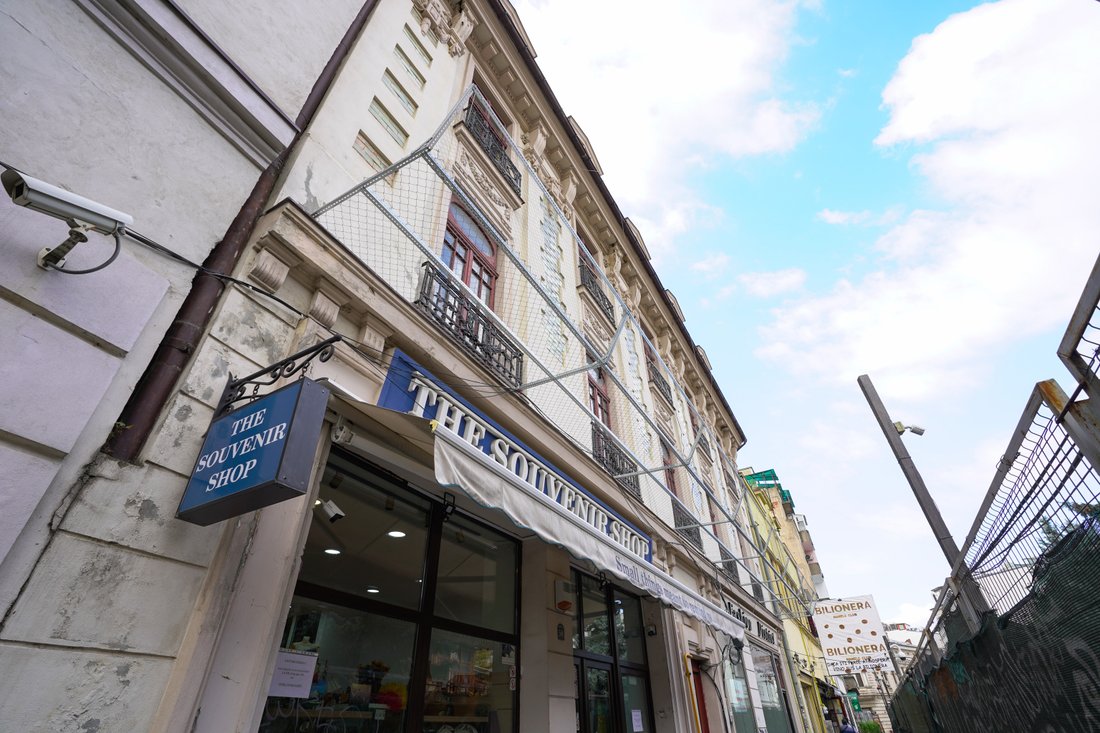
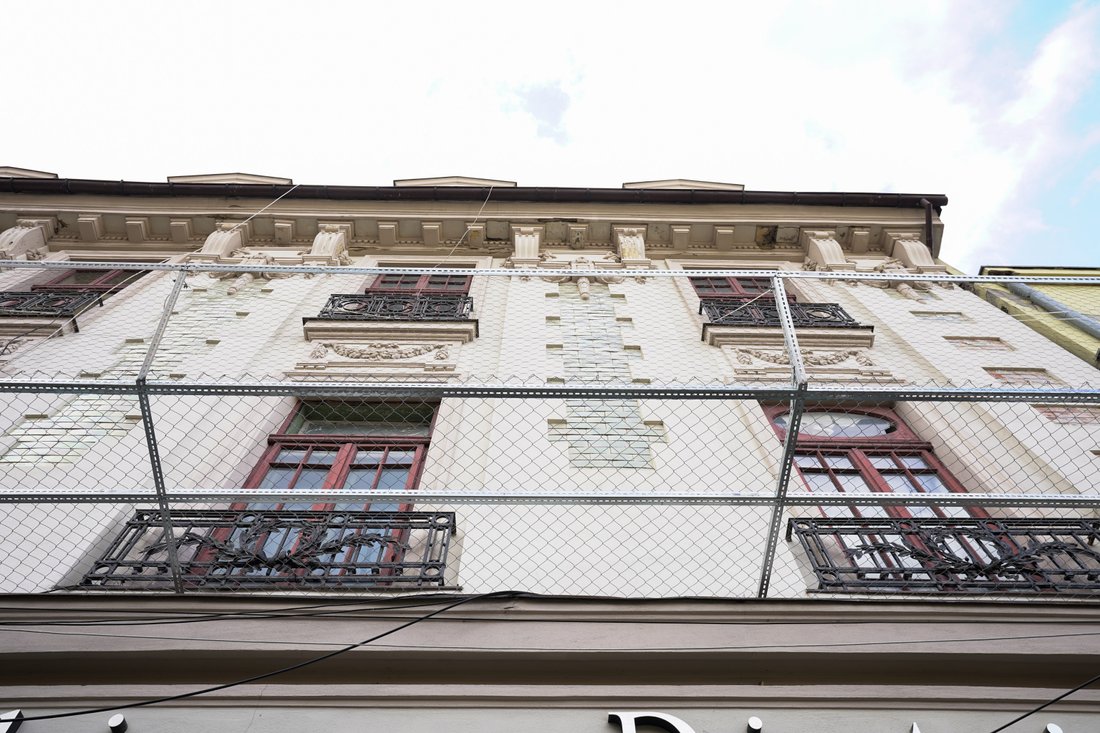
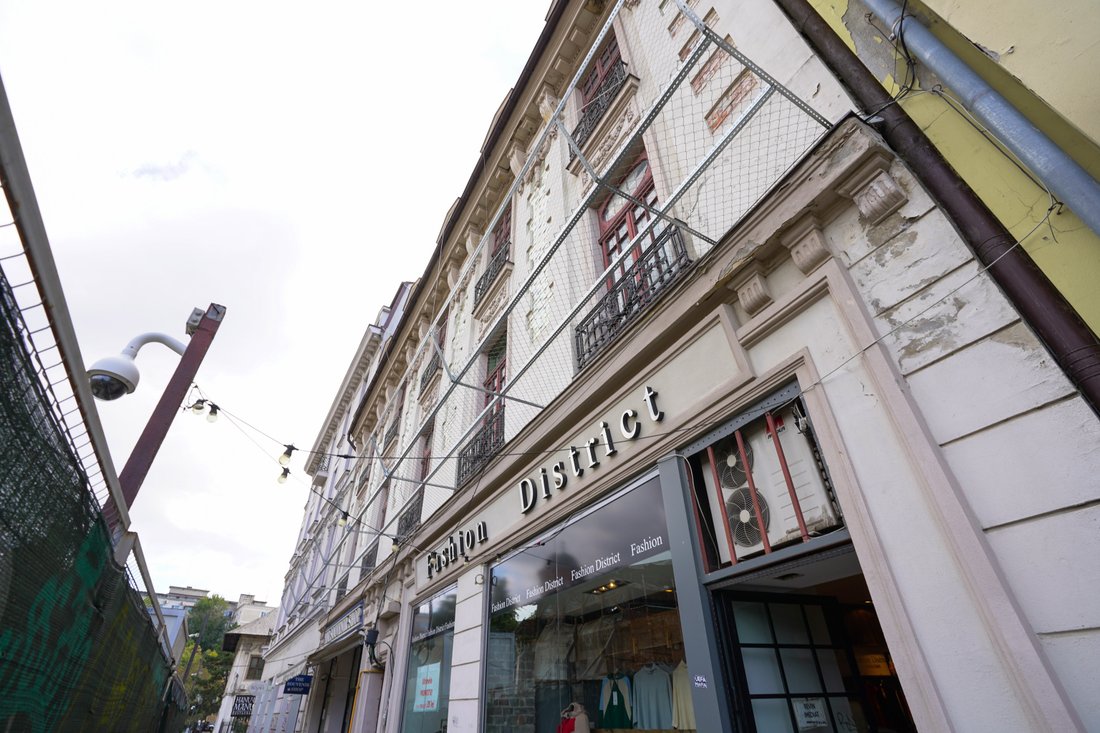
En esta histórica calle, en el número 58, operaban en 1938 Schrems Broderie, un tejedor, y Karmann I, Carol, dentista (parece que Lev Tolstoi vivió en el número 12 en 1854 cuando acompañaba a las tropas rusas a Valaquia). Hoy, en el número 58, hay un elegante edificio con altas láminas de vidrio y balaustradas de hierro forjado que marcan rítmicamente la fachada; lo completan dentículos, medias columnas cortas y otros elementos vegetales y geométricos.
El edificio cuenta con dos locales comerciales en la planta baja y 14 apartamentos en los pisos superiores, con áreas entre 38 y 113 metros cuadrados. El ático (384 m2) y la bodega (211 m2) complementan generosamente las superficies. Se permite el acceso por cuatro escaleras diferentes que conducen al patio interior. Actualmente solo se alquila un apartamento, ya que el edificio necesita obras de reparación y renovación.
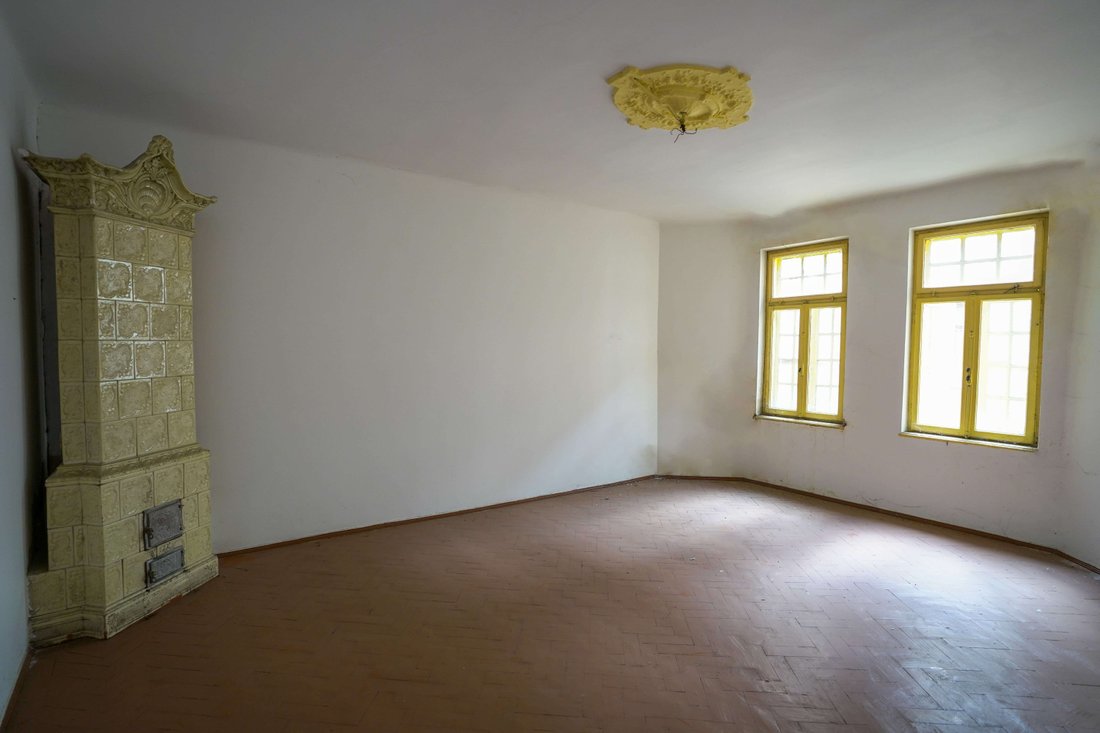
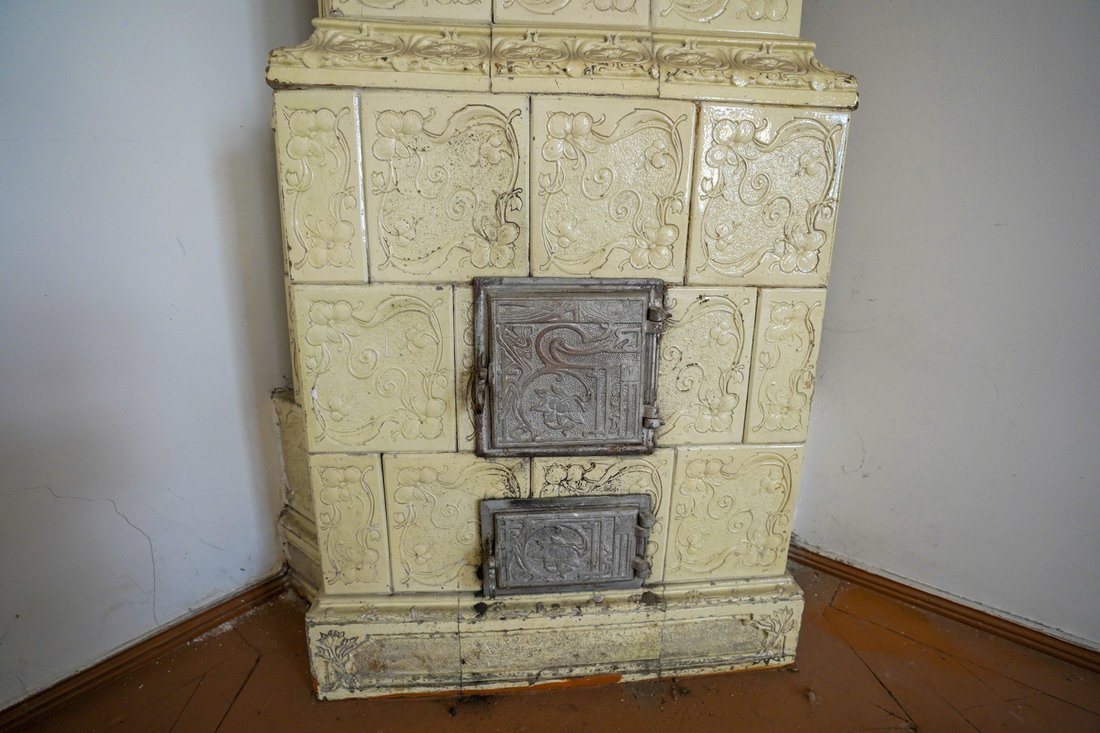
Las estufas de esquina originales, los paneles en los techos y las puertas dobles con ventanas de vidrio son las únicas que aún hoy luchan contra la decoloración, preservando obstinadamente el espíritu de épocas pasadas. Sin embargo, el potencial es enorme teniendo en cuenta su ubicación a un minuto del Manuc Inn; el edificio puede convertirse en una boutique o apartahotel o en apartamentos para alquilar/revender, una vez consolidado.
The French Street connects Piata Unirii with Calea Victoriei; it appears in documents since 1649 when it was known as Curții Street; over time the name varies - one part of it was ”Podul cel Mare din Curtea Veche” (1763), ”Podul Curtea Veche” (1804) and ”Uliţa Curții Vechi” (1854), the other - ”Uliţa cea Domnească” in 1690 or ”Işlicarilor & Boiangiilor Street” in 1804. Under Constantin Brâncoveanu the street becomes as long as we know it today. The French name comes from the time when the French consul resided on it. The street was also called Carol until 1947 and then 30th December. After the 1989 revolution, it became Iuliu Maniu and since 2007, when a boulevard was named after the politician, it has become French Street again. It is one of the first lit and paved streets in the city, but also the one that entered history as the place where the great fire of 1847 started, when over 2000 buildings disappeared; the fire broke out thanks to the son of a stolnic (local clerk) who played by shooting his father’s gun into the thatched attic.
On this historic street, at no. 58, in 1938, Schrems Broderie, a weaver, and Karmann I – Carol, a dentist, were operating (it seems that Lev Tolstoi lived at no. 12 in 1854 when accompanying the Russian troops to Wallachia). Today, at no. 58, there is an elegant building with tall glass sheets and wrought iron balustrades that rhythmically punctuate the facade; denticles, short half-columns and other vegetal and geometric elements complete it.
The building has two commercial spaces on the ground floor and 14 apartments on the upper floors, with areas between 38-113 sqm. The attic (384 sqm) and the cellar (211 sqm) generously complement the surfaces. Access is allowed by four different stairs leading to the inner courtyard. Only one apartment is currently rented, the building being in need of repair and renovation works.
The original corner stoves, paneling on the ceilings and double doors with glass windows are the only ones still fighting the fading today, stubbornly preserving the spirit of past eras. However, the potential is huge considering the positioning one minute away from the Manuc Inn; the building can become a boutique/apart-hotel or apartments for rent/resale, after consolidation.
-
Tipo de propiedad
Otros
-
Año de construcción
1890
-
Precio/pie²
$86
Características
- Sótano
Explorar la zona
El agente se comunicará con usted pronto por
Publicado por
Reserva una visita con the agent
Elija una fecha y si prefiere una visita virtual o presencial con el agente.

Propiedades similares cercanas
Nuevos anuncios en Bucarest

Explorar más viviendas en venta
Bucarest, Rumanía tipos de propiedad
Bucarest, Rumanía búsquedas populares
- Propiedades Moderno en Bucarest, Rumanía
- Propiedades con Garaje en Bucarest, Rumanía
- Propiedades Vista al Agua en Bucarest, Rumanía
- Propiedades Obras nuevas en Bucarest, Rumanía
- Propiedades con Gimnasio en Bucarest, Rumanía
- Propiedades con Piscina en Bucarest, Rumanía
- Propiedades Frente al Agua en Bucarest, Rumanía
- Propiedades Frente al Lago en Bucarest, Rumanía
- Propiedades Vista al Lago en Bucarest, Rumanía
- Propiedades Duplex en Bucarest, Rumanía
- Propiedades Mansión en Bucarest, Rumanía
- Propiedades Ecuestre en Bucarest, Rumanía
- Propiedades con Piscina cubierta en Bucarest, Rumanía
Guías e historias relacionadas
La confianza de los mejores brokers del mundo
Los agentes tras las propiedades más excepcionales del mundo publican en JamesEdition.
- Anuncios de Sotheby's, Christie's, BARNES y Engel & Völkers
- Cada anuncio se revisa antes de publicarse
- Conecte directamente con agentes verificados
Al continuar, acepta nuestros Términos y la Política de Privacidad.