$1,959,677
A House Four Centuries In The Making · Beira Mar, Aveiro
- 4 Hab.
- 5 Baños
- 3,563 Sqft
- 6,826 Sqft lot
- Actualizado: Junio 24
- 6
Sobre la propiedad
La descripción se tradujo automáticamente.
La descripción se muestra en el idioma original.
Hay casas que albergan y casas que albergan. Esta ha estado aguantando cuatrocientos años.
Ubicada en el barrio de Beira-Mar, el antiguo corazón de Aveiro, donde la ciudad nació entre la ría y el mar, esta residencia del siglo XVII se encuentra en una zona tranquila junto a la Capela de São Gonçalinho, un monumento clasificado que ha anclado este rincón de la ciudad desde el siglo XVI.
Ubicada en el barrio de Beira-Mar, el antiguo corazón de Aveiro, donde la ciudad nació entre la ría y el mar, esta residencia del siglo XVII se encuentra en una zona tranquila junto a la Capela de São Gonçalinho, un monumento clasificado que ha anclado este rincón de la ciudad desde el siglo XVI.
There are houses that shelter, and houses that hold. This one has been holding for four hundred years.
Set within the Beira-Mar neighbourhood — the ancient heart of Aveiro, where the city was born between the Ria and the sea — this 17th-century residence stands quietly beside the Capela de São Gonçalinho, a classified monument that has anchored this corner of the city since the 16th centu
Set within the Beira-Mar neighbourhood — the ancient heart of Aveiro, where the city was born between the Ria and the sea — this 17th-century residence stands quietly beside the Capela de São Gonçalinho, a classified monument that has anchored this corner of the city since the 16th centu
Hay casas que albergan y casas que albergan. Esta ha estado aguantando cuatrocientos años.
Ubicada en el barrio de Beira-Mar, el antiguo corazón de Aveiro, donde la ciudad nació entre la ría y el mar, esta residencia del siglo XVII se encuentra en una zona tranquila junto a la Capela de São Gonçalinho, un monumento clasificado que ha anclado este rincón de la ciudad desde el siglo XVI.
La casa en sí comenzó su vida como el hogar de familias notables; durante un tiempo, también albergó a monjes carmelitas. Pasó por siglos y familias, acumulando historia con la misma confianza pausada con la que los canales exteriores acumulan luz.
Una cuidadosa restauración de tres años, completada en 2020, lo devolvió al presente sin borrar lo que había sido.
Dos entradas, una desde la calle y otra desde el jardín, dan a la casa una opción poco común: la formalidad de la llegada o la facilidad de simplemente volver a casa.
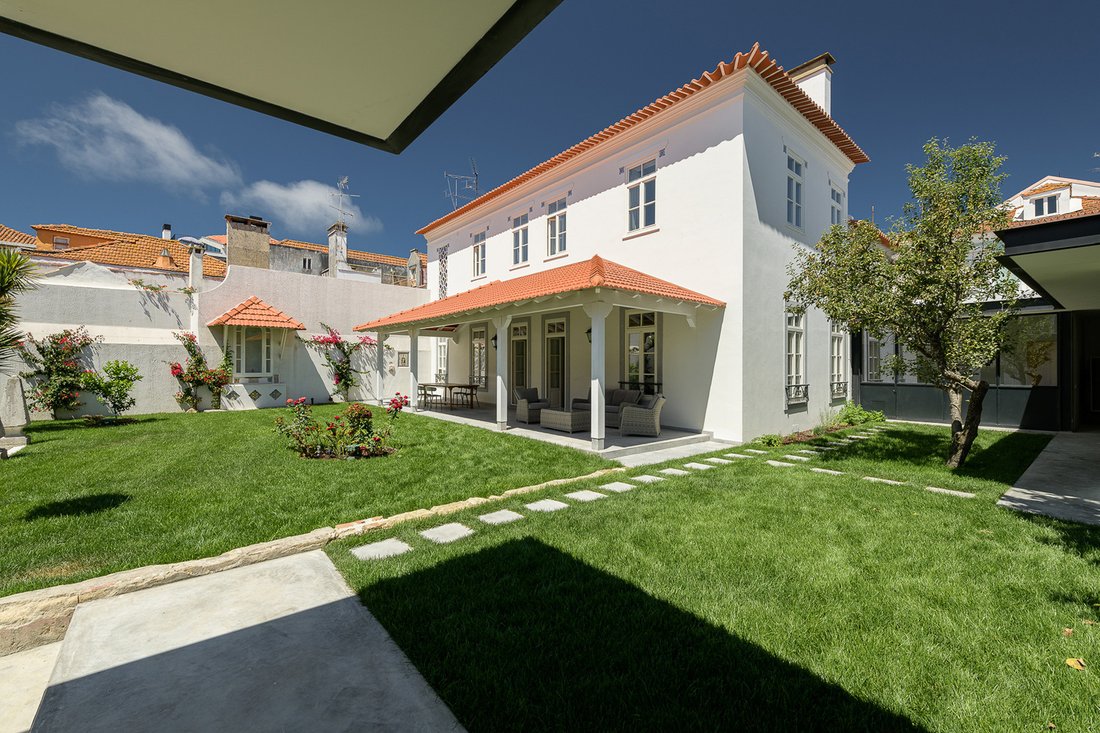
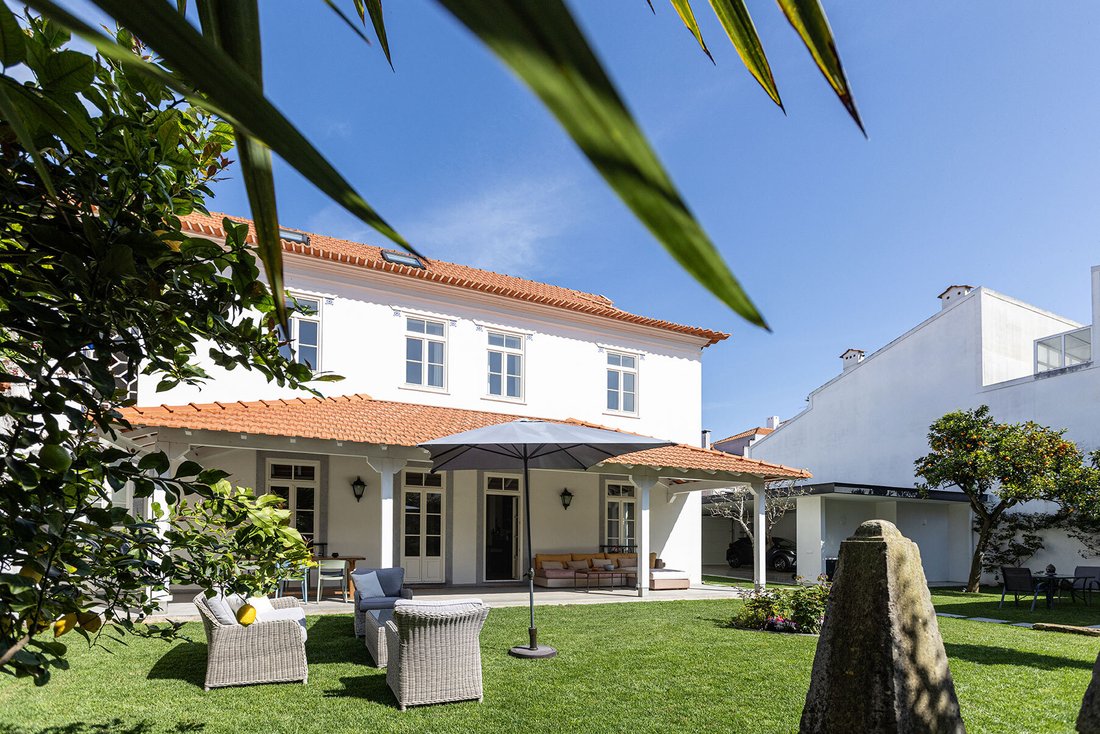
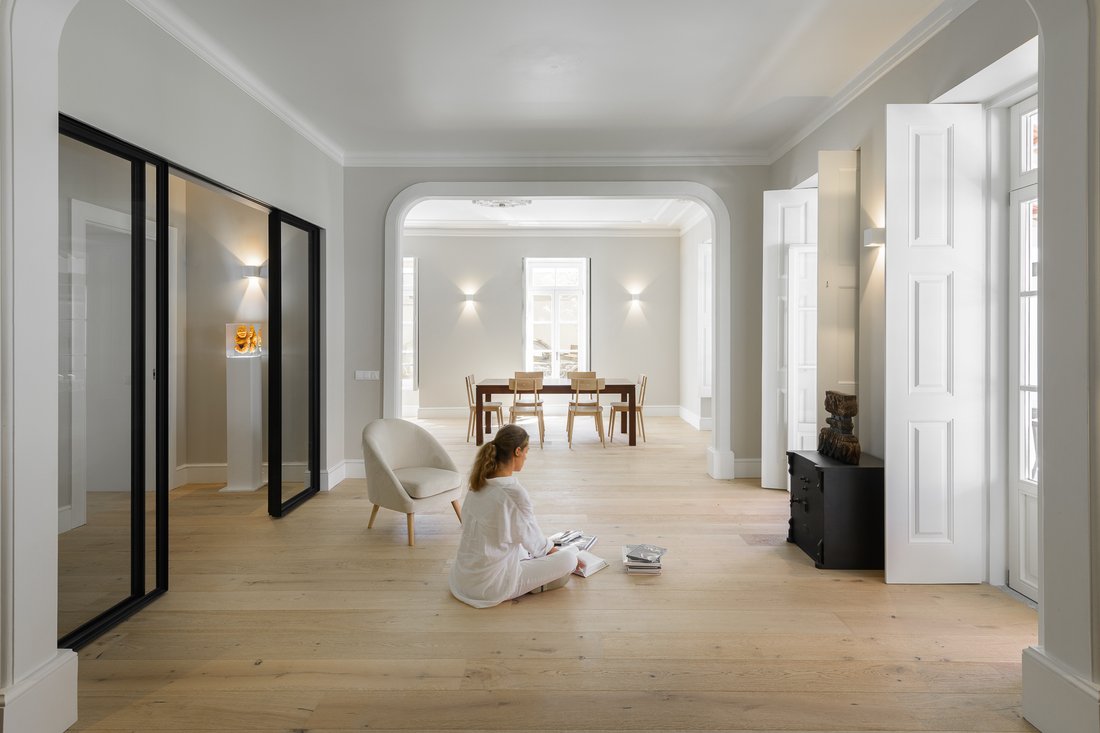
La planta baja se abre a través de un vestíbulo y un estudio a una cocina y lavandería, y luego al corazón de la casa: dos salas de recepción, para sentarse y comer, de carácter distinto pero abiertas entre sí, inundadas por cuatro ventanas y puertas, dos de las cuales dan directamente al jardín y su terraza cubierta.
En el interior, una vidriera de principios del siglo XX —el momento modernista de Portugal, del que Aveiro es uno de los mejores ejemplos que se conservan— proyecta colores lentos sobre los pisos de piedra a determinadas horas y te detiene.
Los paneles decorativos originales del siglo XVII —uno que adorna la fachada principal y otro situado en la pared del jardín— transmiten la identidad de la casa a lo largo de cuatro siglos. Y en todas partes, incrustadas en lo más profundo de las paredes, permanecen las conversadeiras originales: asientos de piedra construidos para sentarse sin prisas junto a una ventana con alguien con quien merezca la pena hablar. Llevan allí cuatrocientos años.
En la planta superior, tres generosas suites de un dormitorio ocupan el primer piso. Aquí, la casa revela discretamente una de sus cualidades más singulares: al pasar del dormitorio al baño, se cruzan tres escalones entre una extensión del siglo XX y la original del siglo XVII, tres siglos recorridos en tres pasos.
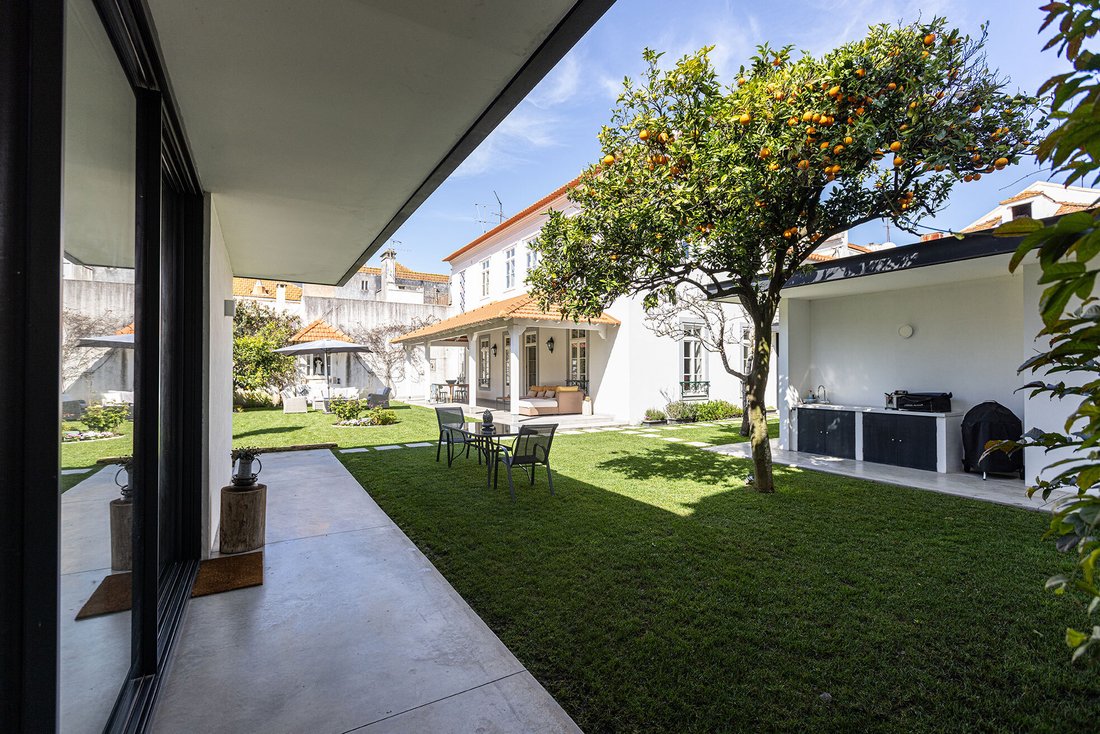
El jardín es el hogar dentro de la casa. Amurallado, orientado al sur y diseñado desde cero durante la restauración, mantiene su tranquilidad en el centro de la ciudad con una autoridad que solo un cuidado deliberado puede producir. Entre sus paredes crecen árboles frutales, lo que añade un tipo particular de abundancia a la tranquilidad. Un verdadero refugio escondido.
En su extremo sur, conectado por un camino que cruza el césped, se ha construido un estudio independiente de 56 metros cuadrados a partir de los huesos del edificio anexo original: un dormitorio, un baño y una cocina, completa e independiente. Su privacidad y autonomía hacen que sea ideal para huéspedes, familiares o para los usos que el próximo propietario pueda imaginar.
El terreno tiene capacidad para dos o tres vehículos.
El estudio (56 m²) y la habitación abuhardillada (aproximadamente 40 m²) son estructuras adicionales independientes de la residencia principal y no están incluidas en sus 331 m² de superficie privada.
Cada mes de enero, las calles exteriores se llenan para celebrar la Festa de São Gonçalinho, la celebración propia del barrio que se celebra en la capilla de al lado, una de las tradiciones más queridas y perdurables de Aveiro. Vivir aquí es ser parte de eso.
Aveiro es una de las ciudades más silenciosas y extraordinarias de Portugal y uno de sus secretos menos exportados. Por sus canales, construidos para conectar la ciudad con el Atlántico, todavía navegan los «moliceiros»: barcos tradicionales pintados a mano cuyos paneles vibrantes muestran el humor, la devoción y la memoria de la ciudad.
El barrio de Beira-Mar, donde se encuentra esta casa, fue la cuna de todo esto. El patrimonio modernista de la ciudad, uno de los mejores de la Península Ibérica y reconocido por la presidencia de Aveiro de la Red Europea de Modernismo para el período 2025-2028, se extiende por las calles a poca distancia.
La ría de Aveiro, uno de los hábitats de flamencos más importantes de Iberia y un santuario para los observadores de aves, se extiende hacia el oeste. Las playas atlánticas de Costa Nova y Barra se encuentran dentro de los límites de la ciudad, a pocos kilómetros en coche. Oporto está a 33 minutos en tren; Lisboa, a menos de dos horas y media. El aeropuerto internacional de Oporto está a menos de una hora en coche.
La vida cotidiana aquí se mueve entre el Mercado do Peixe, con las panaderías, bares y tascas del barrio por un lado, y una mesa con una estrella Michelin por el otro. Ambas existen, sin contradicción, en las mismas calles.
Vivir aquí no es visitar Aveiro. Es pertenecer a ella.
Para obtener más información, visite [información oculta]
Si desea obtener más información sobre Aveiro, podemos compartir con usted un libro electrónico completo si lo solicita.
Ubicada en el barrio de Beira-Mar, el antiguo corazón de Aveiro, donde la ciudad nació entre la ría y el mar, esta residencia del siglo XVII se encuentra en una zona tranquila junto a la Capela de São Gonçalinho, un monumento clasificado que ha anclado este rincón de la ciudad desde el siglo XVI.
La casa en sí comenzó su vida como el hogar de familias notables; durante un tiempo, también albergó a monjes carmelitas. Pasó por siglos y familias, acumulando historia con la misma confianza pausada con la que los canales exteriores acumulan luz.
Una cuidadosa restauración de tres años, completada en 2020, lo devolvió al presente sin borrar lo que había sido.
Dos entradas, una desde la calle y otra desde el jardín, dan a la casa una opción poco común: la formalidad de la llegada o la facilidad de simplemente volver a casa.
La planta baja se abre a través de un vestíbulo y un estudio a una cocina y lavandería, y luego al corazón de la casa: dos salas de recepción, para sentarse y comer, de carácter distinto pero abiertas entre sí, inundadas por cuatro ventanas y puertas, dos de las cuales dan directamente al jardín y su terraza cubierta.
En el interior, una vidriera de principios del siglo XX —el momento modernista de Portugal, del que Aveiro es uno de los mejores ejemplos que se conservan— proyecta colores lentos sobre los pisos de piedra a determinadas horas y te detiene.
Los paneles decorativos originales del siglo XVII —uno que adorna la fachada principal y otro situado en la pared del jardín— transmiten la identidad de la casa a lo largo de cuatro siglos. Y en todas partes, incrustadas en lo más profundo de las paredes, permanecen las conversadeiras originales: asientos de piedra construidos para sentarse sin prisas junto a una ventana con alguien con quien merezca la pena hablar. Llevan allí cuatrocientos años.
En la planta superior, tres generosas suites de un dormitorio ocupan el primer piso. Aquí, la casa revela discretamente una de sus cualidades más singulares: al pasar del dormitorio al baño, se cruzan tres escalones entre una extensión del siglo XX y la original del siglo XVII, tres siglos recorridos en tres pasos.
El jardín es el hogar dentro de la casa. Amurallado, orientado al sur y diseñado desde cero durante la restauración, mantiene su tranquilidad en el centro de la ciudad con una autoridad que solo un cuidado deliberado puede producir. Entre sus paredes crecen árboles frutales, lo que añade un tipo particular de abundancia a la tranquilidad. Un verdadero refugio escondido.
En su extremo sur, conectado por un camino que cruza el césped, se ha construido un estudio independiente de 56 metros cuadrados a partir de los huesos del edificio anexo original: un dormitorio, un baño y una cocina, completa e independiente. Su privacidad y autonomía hacen que sea ideal para huéspedes, familiares o para los usos que el próximo propietario pueda imaginar.
El terreno tiene capacidad para dos o tres vehículos.
El estudio (56 m²) y la habitación abuhardillada (aproximadamente 40 m²) son estructuras adicionales independientes de la residencia principal y no están incluidas en sus 331 m² de superficie privada.
Cada mes de enero, las calles exteriores se llenan para celebrar la Festa de São Gonçalinho, la celebración propia del barrio que se celebra en la capilla de al lado, una de las tradiciones más queridas y perdurables de Aveiro. Vivir aquí es ser parte de eso.
Aveiro es una de las ciudades más silenciosas y extraordinarias de Portugal y uno de sus secretos menos exportados. Por sus canales, construidos para conectar la ciudad con el Atlántico, todavía navegan los «moliceiros»: barcos tradicionales pintados a mano cuyos paneles vibrantes muestran el humor, la devoción y la memoria de la ciudad.
El barrio de Beira-Mar, donde se encuentra esta casa, fue la cuna de todo esto. El patrimonio modernista de la ciudad, uno de los mejores de la Península Ibérica y reconocido por la presidencia de Aveiro de la Red Europea de Modernismo para el período 2025-2028, se extiende por las calles a poca distancia.
La ría de Aveiro, uno de los hábitats de flamencos más importantes de Iberia y un santuario para los observadores de aves, se extiende hacia el oeste. Las playas atlánticas de Costa Nova y Barra se encuentran dentro de los límites de la ciudad, a pocos kilómetros en coche. Oporto está a 33 minutos en tren; Lisboa, a menos de dos horas y media. El aeropuerto internacional de Oporto está a menos de una hora en coche.
La vida cotidiana aquí se mueve entre el Mercado do Peixe, con las panaderías, bares y tascas del barrio por un lado, y una mesa con una estrella Michelin por el otro. Ambas existen, sin contradicción, en las mismas calles.
Vivir aquí no es visitar Aveiro. Es pertenecer a ella.
Para obtener más información, visite [información oculta]
Si desea obtener más información sobre Aveiro, podemos compartir con usted un libro electrónico completo si lo solicita.
There are houses that shelter, and houses that hold. This one has been holding for four hundred years.
Set within the Beira-Mar neighbourhood — the ancient heart of Aveiro, where the city was born between the Ria and the sea — this 17th-century residence stands quietly beside the Capela de São Gonçalinho, a classified monument that has anchored this corner of the city since the 16th century.
The house itself began its life as the home of notable families; for a period, it also sheltered Carmelite monks. It passed through centuries and families, accumulating history with the same unhurried confidence with which the canals outside accumulate light.
A careful, three-year restoration completed in 2020 brought it into the present without erasing what it had been.
Two entrances — one from the street, one from the garden — give the house a rare quality of choice: the formality of arrival, or the ease of simply coming home.
The ground floor opens through a vestibule and study into a kitchen and laundry, and then into the heart of the house: two reception rooms — sitting and dining — distinct in character yet open to each other, flooded by four windows and doors, two of which give directly onto the garden and its covered terrace.
Inside, a stained-glass window from the early 20th century — Portugal’s Art Nouveau moment, of which Aveiro is one of the finest surviving examples — throws slow colour across the stone floors at certain hours, and stops you.
The original 17th-century decorative panels — one gracing the principal façade, one set into the garden wall — carry the identity of the house across four centuries. And throughout, set deep into the thickness of the walls, the original conversadeiras remain: stone window seats, built for the unhurried act of sitting beside a window with someone worth talking to. They have been there for four hundred years.
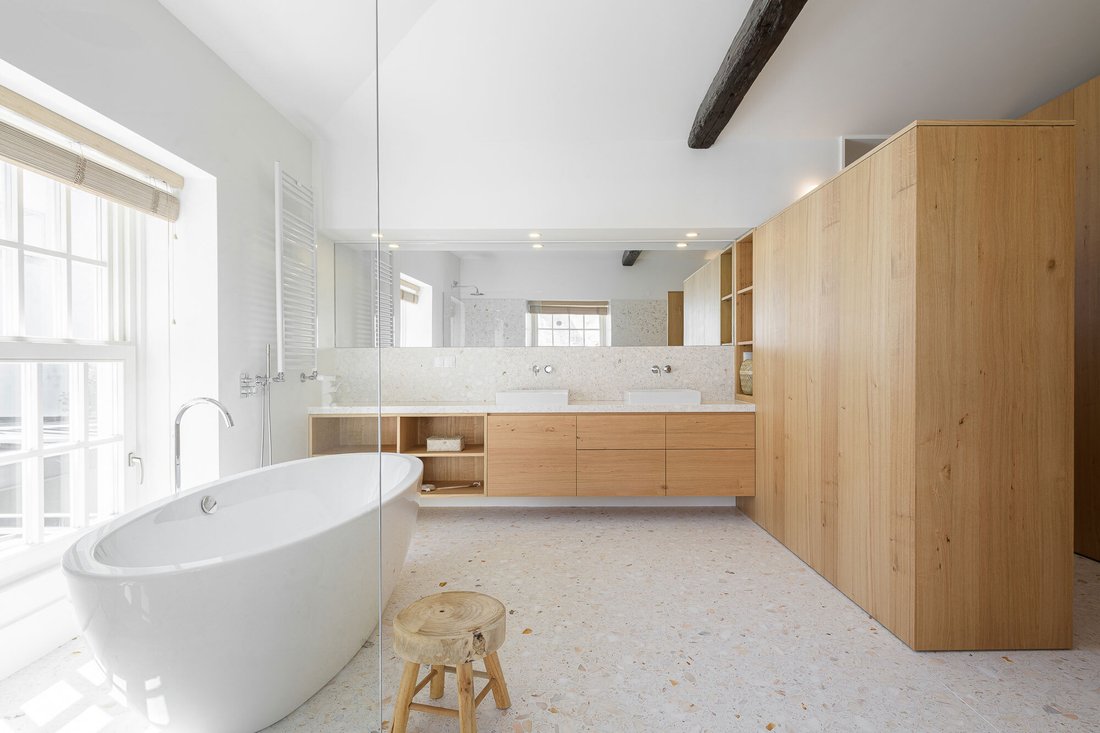
Upstairs, three generous bedroom suites occupy the first floor. Here the house quietly reveals one of its most singular qualities: moving from bedroom to bathroom, you cross three steps between a 20th-century extension and the 17th-century original — three centuries covered in three paces.
The garden is the home inside the home. Walled, south-facing, and designed from the ground up during the restoration, it holds its quiet in the middle of the city with an authority that only deliberate care can produce. Fruit trees grow within its walls, adding a particular kind of abundance to the quiet. A true hidden refuge.
At its southern edge, connected by a path across the lawn, a self-contained studio of 56 sqm has been drawn from the bones of the original outbuilding: one bedroom, one bathroom, one kitchen — complete and independent. Its privacy and autonomy make it naturally suited to guests, extended family, or uses the next owner will imagine.
The grounds accommodate two to three vehicles.
The studio (56 sqm) and attic room (approx. 40 sqm) are additional structures independent of the main residence and not included in its 331 sqm of private floor area.
Every January, the street outside fills for the Festa de São Gonçalinho — the neighbourhood’s own celebration, held at the chapel next door, one of Aveiro’s most beloved and enduring traditions. To live here is to be part of that.
Aveiro is one of Portugal’s most quietly extraordinary cities, and one of its least exported secrets. Its canals — built to link the city to the Atlantic — are still navigated by ”moliceiros”: hand-painted traditional boats whose vibrant panels carry the city’s humour, its devotions, its memory.
The Beira-Mar neighbourhood, where this house stands, was the cradle of it all. The city’s Art Nouveau heritage — among the finest in the Iberian Peninsula, and recognised by Aveiro’s presidency of the European Art Nouveau Network for 2025–2028 — lines the streets within walking distance.
The Ria de Aveiro, one of Iberia’s most important flamingo habitats and a sanctuary for birdwatchers, stretches to the west. The Atlantic beaches of Costa Nova and Barra lie within the city limits, a few kilometres by car. Porto is 33 minutes by train; Lisbon under two and a half hours. Porto International Airport is less than an hour by car.
Daily life here moves between the Mercado do Peixe, neighbourhood bakeries, bars and tascas on one side, and a Michelin-starred table on the other — the two existing, without contradiction, within the same few streets.
To live here is not to visit Aveiro. It is to belong to it.
For more information visit [hidden information]
If you want to know more about Aveiro, we can share with you an comprehensive e-book upon request.
Set within the Beira-Mar neighbourhood — the ancient heart of Aveiro, where the city was born between the Ria and the sea — this 17th-century residence stands quietly beside the Capela de São Gonçalinho, a classified monument that has anchored this corner of the city since the 16th century.
The house itself began its life as the home of notable families; for a period, it also sheltered Carmelite monks. It passed through centuries and families, accumulating history with the same unhurried confidence with which the canals outside accumulate light.
A careful, three-year restoration completed in 2020 brought it into the present without erasing what it had been.
Two entrances — one from the street, one from the garden — give the house a rare quality of choice: the formality of arrival, or the ease of simply coming home.
The ground floor opens through a vestibule and study into a kitchen and laundry, and then into the heart of the house: two reception rooms — sitting and dining — distinct in character yet open to each other, flooded by four windows and doors, two of which give directly onto the garden and its covered terrace.
Inside, a stained-glass window from the early 20th century — Portugal’s Art Nouveau moment, of which Aveiro is one of the finest surviving examples — throws slow colour across the stone floors at certain hours, and stops you.
The original 17th-century decorative panels — one gracing the principal façade, one set into the garden wall — carry the identity of the house across four centuries. And throughout, set deep into the thickness of the walls, the original conversadeiras remain: stone window seats, built for the unhurried act of sitting beside a window with someone worth talking to. They have been there for four hundred years.
Upstairs, three generous bedroom suites occupy the first floor. Here the house quietly reveals one of its most singular qualities: moving from bedroom to bathroom, you cross three steps between a 20th-century extension and the 17th-century original — three centuries covered in three paces.
The garden is the home inside the home. Walled, south-facing, and designed from the ground up during the restoration, it holds its quiet in the middle of the city with an authority that only deliberate care can produce. Fruit trees grow within its walls, adding a particular kind of abundance to the quiet. A true hidden refuge.
At its southern edge, connected by a path across the lawn, a self-contained studio of 56 sqm has been drawn from the bones of the original outbuilding: one bedroom, one bathroom, one kitchen — complete and independent. Its privacy and autonomy make it naturally suited to guests, extended family, or uses the next owner will imagine.
The grounds accommodate two to three vehicles.
The studio (56 sqm) and attic room (approx. 40 sqm) are additional structures independent of the main residence and not included in its 331 sqm of private floor area.
Every January, the street outside fills for the Festa de São Gonçalinho — the neighbourhood’s own celebration, held at the chapel next door, one of Aveiro’s most beloved and enduring traditions. To live here is to be part of that.
Aveiro is one of Portugal’s most quietly extraordinary cities, and one of its least exported secrets. Its canals — built to link the city to the Atlantic — are still navigated by ”moliceiros”: hand-painted traditional boats whose vibrant panels carry the city’s humour, its devotions, its memory.
The Beira-Mar neighbourhood, where this house stands, was the cradle of it all. The city’s Art Nouveau heritage — among the finest in the Iberian Peninsula, and recognised by Aveiro’s presidency of the European Art Nouveau Network for 2025–2028 — lines the streets within walking distance.
The Ria de Aveiro, one of Iberia’s most important flamingo habitats and a sanctuary for birdwatchers, stretches to the west. The Atlantic beaches of Costa Nova and Barra lie within the city limits, a few kilometres by car. Porto is 33 minutes by train; Lisbon under two and a half hours. Porto International Airport is less than an hour by car.
Daily life here moves between the Mercado do Peixe, neighbourhood bakeries, bars and tascas on one side, and a Michelin-starred table on the other — the two existing, without contradiction, within the same few streets.
To live here is not to visit Aveiro. It is to belong to it.
For more information visit [hidden information]
If you want to know more about Aveiro, we can share with you an comprehensive e-book upon request.
-
Tipo de propiedad
Villa
-
Pisos
2
-
Año de construcción
2020
-
Precio/pie²
$550
-
Consumo
C
Características
- Jardín
- Terraza
- Garaje
- Cocina exterior
- Frente al mar
- Vista de la ciudad
- Pérgola
- Renovado
- Lavadora Secadora
Explorar la zona
R. das Salineiras 19, 3800-103 Aveiro, Gloria y Vera Cruz, Distrito de Aveiro, Portugal
Ver en Google Maps
Precio por sqft
Bajo
Alto

Se unió hace 4 meses
Usted ha preguntado por esta propiedad
El agente se comunicará con usted pronto por
Publicado por
1
Anuncios
2026
Se unió
Reserva una visita con Paula Macedo
Elija una fecha y si prefiere una visita virtual o presencial con el agente.
Fecha preferida
Tipo de tour
PDA Portugal
Av. Luís Azevedo Coutinho, 170, 4460-170, Matosinhos, Portugal
Ver perfil de la agencia
At PDA Portugal, every listing we bring to market has passed through a rigorous due diligence process — legal, tech
At PDA Portugal, every listing we bring to market has passed through a rigorous due diligence process — legal, technical, and market-based. When you enquire about one of our properties, the groundwork a discerning buyer would typically commission has already been done, and is ready to share.
Beyond our listings, we offer a full buyer advisory service for international clients looking to purchase high-quality residential property in Portugal. We identify the right property, in the right location, at the right price — and stay with you through every step of the acquisition, with independent expertise and no conflict of interest.
A boutique practice. A single point of contact. Complete discretion.
Beyond our listings, we offer a full buyer advisory service for international clients looking to purchase high-quality residential property in Portugal. We identify the right property, in the right location, at the right price — and stay with you through every step of the acquisition, with independent expertise and no conflict of interest.
A boutique practice. A single point of contact. Complete discretion.
Última actualización
Junio 24
Primera publicación
Junio 22
Licencia del agente
#17943
Referencia del anuncio
R-0011-26
Propiedades similares cercanas
Nuevos anuncios en Gloria y Vera Cruz

Explorar más viviendas en venta
Gloria y Vera Cruz, Distrito de Aveiro, Portugal tipos de propiedad
- Apartamentos en venta en Gloria y Vera Cruz, Distrito de Aveiro, Portugal
- Casas en venta en Gloria y Vera Cruz, Distrito de Aveiro, Portugal
- Terreno en venta en Gloria y Vera Cruz, Distrito de Aveiro, Portugal
- Villas en venta en Gloria y Vera Cruz, Distrito de Aveiro, Portugal
- Casas adosadas en venta en Gloria y Vera Cruz, Distrito de Aveiro, Portugal
- Fincas en venta en Gloria y Vera Cruz, Distrito de Aveiro, Portugal
- Fincas en venta en Gloria y Vera Cruz, Distrito de Aveiro, Portugal
Gloria y Vera Cruz, Distrito de Aveiro, Portugal búsquedas populares
- Propiedades Vista Panorámica en Gloria y Vera Cruz, Distrito de Aveiro, Portugal
- Propiedades Vista al Mar en Gloria y Vera Cruz, Distrito de Aveiro, Portugal
- Propiedades Vista al Lago en Gloria y Vera Cruz, Distrito de Aveiro, Portugal
- Propiedades con Terraza en Gloria y Vera Cruz, Distrito de Aveiro, Portugal
- Propiedades con Bar en Gloria y Vera Cruz, Distrito de Aveiro, Portugal
- Propiedades con Sala de juegos en Gloria y Vera Cruz, Distrito de Aveiro, Portugal
- Propiedades con Oficina en Gloria y Vera Cruz, Distrito de Aveiro, Portugal
- Propiedades Vista al Río en Gloria y Vera Cruz, Distrito de Aveiro, Portugal
- Propiedades con Ascensor en Gloria y Vera Cruz, Distrito de Aveiro, Portugal
- Propiedades Vista de la ciudad en Gloria y Vera Cruz, Distrito de Aveiro, Portugal
- Propiedades Vista a la Montaña en Gloria y Vera Cruz, Distrito de Aveiro, Portugal
- Propiedades con Jardín en Gloria y Vera Cruz, Distrito de Aveiro, Portugal
- Propiedades con Cocina exterior en Gloria y Vera Cruz, Distrito de Aveiro, Portugal
- Propiedades Duplex en Gloria y Vera Cruz, Distrito de Aveiro, Portugal
- Propiedades Frente al mar en Gloria y Vera Cruz, Distrito de Aveiro, Portugal
- Propiedades Comunidad Cerrada en Gloria y Vera Cruz, Distrito de Aveiro, Portugal
- Propiedades Privacidad en Gloria y Vera Cruz, Distrito de Aveiro, Portugal
- Propiedades Gran Altitud en Gloria y Vera Cruz, Distrito de Aveiro, Portugal
- Propiedades Frente al Agua en Gloria y Vera Cruz, Distrito de Aveiro, Portugal
- Propiedades Propiedad de Inversión en Gloria y Vera Cruz, Distrito de Aveiro, Portugal
- Propiedades Moderno en Gloria y Vera Cruz, Distrito de Aveiro, Portugal
- Propiedades Ecuestre en Gloria y Vera Cruz, Distrito de Aveiro, Portugal
- Propiedades Obras nuevas en Gloria y Vera Cruz, Distrito de Aveiro, Portugal
- Propiedades con Gimnasio en Gloria y Vera Cruz, Distrito de Aveiro, Portugal
- Propiedades con Sauna en Gloria y Vera Cruz, Distrito de Aveiro, Portugal
- Propiedades con Biblioteca en Gloria y Vera Cruz, Distrito de Aveiro, Portugal
- Propiedades con Aire Acondicionado en Gloria y Vera Cruz, Distrito de Aveiro, Portugal
- Propiedades Frente al Mar en Gloria y Vera Cruz, Distrito de Aveiro, Portugal
- Propiedades con Bodega en Gloria y Vera Cruz, Distrito de Aveiro, Portugal
- Propiedades con Jacuzzi en Gloria y Vera Cruz, Distrito de Aveiro, Portugal
- Propiedades con Chimenea en Gloria y Vera Cruz, Distrito de Aveiro, Portugal
- Propiedades con Piscina en Gloria y Vera Cruz, Distrito de Aveiro, Portugal
- Propiedades con Garaje en Gloria y Vera Cruz, Distrito de Aveiro, Portugal
- Propiedades con Balcón en Gloria y Vera Cruz, Distrito de Aveiro, Portugal
- Propiedades con Cancha de Tenis en Gloria y Vera Cruz, Distrito de Aveiro, Portugal
- Propiedades con Cocina abierta en Gloria y Vera Cruz, Distrito de Aveiro, Portugal
- Propiedades Renovado en Gloria y Vera Cruz, Distrito de Aveiro, Portugal
- Propiedades con Cine en Gloria y Vera Cruz, Distrito de Aveiro, Portugal
- Propiedades Frente al Lago en Gloria y Vera Cruz, Distrito de Aveiro, Portugal
- Propiedades Frente a la Playa en Gloria y Vera Cruz, Distrito de Aveiro, Portugal
- Propiedades Vista al Agua en Gloria y Vera Cruz, Distrito de Aveiro, Portugal
- Propiedades Vista al Mar en Gloria y Vera Cruz, Distrito de Aveiro, Portugal
Guías e historias relacionadas
La confianza de los mejores brokers del mundo
Los agentes tras las propiedades más excepcionales del mundo publican en JamesEdition.
- Anuncios de Sotheby's, Christie's, BARNES y Engel & Völkers
- Cada anuncio se revisa antes de publicarse
- Conecte directamente con agentes verificados
Al continuar, acepta nuestros Términos y la Política de Privacidad.