
$8,401,497
Una Abadía Verdaderamente Hermosa, Que Requiere Una Modernización Completa
- 20 Hab.
- 22 Baños
- 22,605 Sqft
- 13.99 Ac lot
- 26
Sobre la propiedad
La descripción se tradujo automáticamente.
La descripción se muestra en el idioma original.
Una oportunidad realmente maravillosa para comprar posiblemente la abadía más hermosa que hayamos tenido el placer de presentar. Situada en una zona cuyos orígenes se pierden en medio del tiempo y las leyendas, se cree que la Badia di San Sebastiano, fundada a finales del siglo V, fue una fuente de inspiración para San Benito. Su influyente gobierno allanó el camino para la formación de una vida m
A truly wonderful opportunity to purchase possibly the most beautiful Abbey we have ever had the pleasure to present. Set in an area whose beginnings are lost in the midst of time and legends, the Badia di San Sebastiano, founded in the late 5th century, is understood to have been a source of inspiration for St. Benedict. His influential rule paved the way for the formation of communal monastic li
Una oportunidad realmente maravillosa para comprar posiblemente la abadía más hermosa que hayamos tenido el placer de presentar. Situada en una zona cuyos orígenes se pierden en medio del tiempo y las leyendas, se cree que la Badia di San Sebastiano, fundada a finales del siglo V, fue una fuente de inspiración para San Benito. Su influyente gobierno allanó el camino para la formación de una vida monástica en comunidad, en contraposición a la antigua forma de vida eremítica, y sobre la que se construyó la fe cristiana moderna. Se cree que las enseñanzas de San Benito se convirtieron en la base sobre la que evolucionó el cristianismo en Europa occidental tal como lo conocemos.
Esta extraordinaria finca, que data de finales del siglo V, está situada en la cima del monte Pizzuto, en la antigua carretera a Veroli, con vistas ininterrumpidas del valle del río Cosa hasta la imponente presencia de la acrópolis prerromana de Alatri, y se encuentra a 90 minutos en coche de Roma y Nápoles. Ubicado en olivares muy antiguos que están todos protegidos y a unos 500 m de altura sobre el Mont Hernici, tiene una vista imponente sobre el valle. Estas estribaciones son lo que se convierte en el Parque Nacional de los Abruzos, la región más verde de Europa, con un 36% de toda su superficie cubierta por 3 parques nacionales, un parque regional y más de 30 reservas naturales. Aquí también se encuentra el hogar del oso pardo.
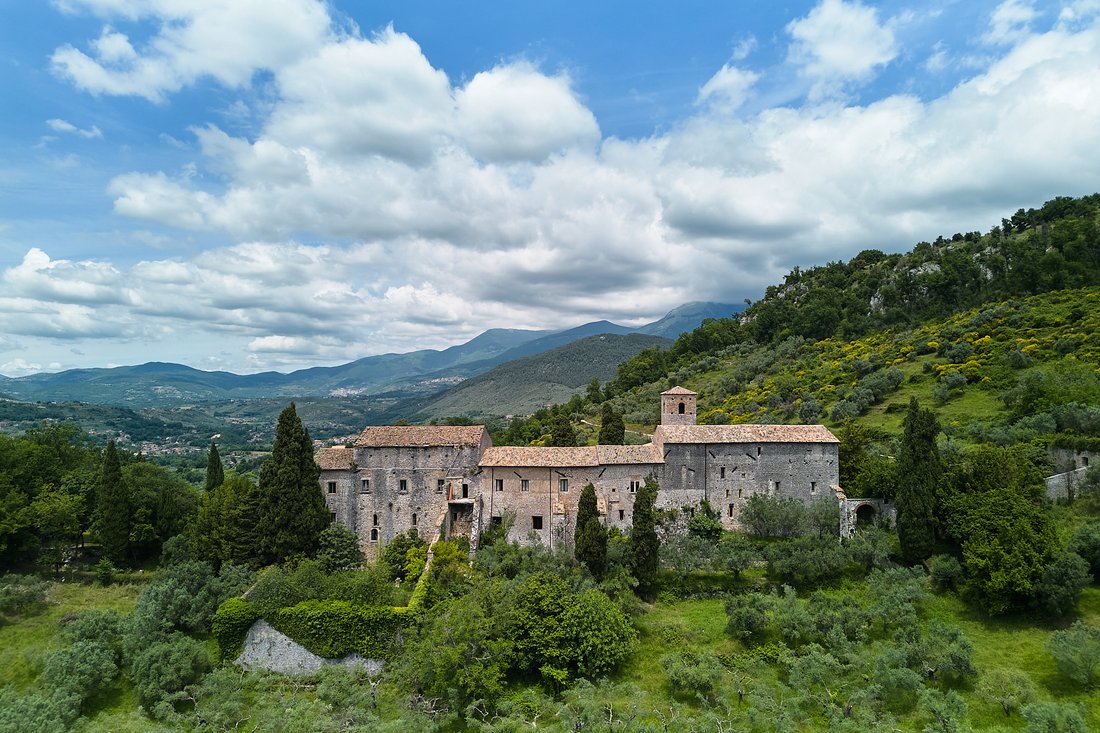
El exterior de piedra del edificio sirve de contrapunto a los grises y verdes de los olivos centenarios esparcidos por el paisaje que se levanta detrás y resalta la restauración reciente e históricamente precisa que expone sus elegantes proporciones. La Abadía, que recibe su nombre en honor al mártir San Sebastián, contiene importantes salas de recepción, una gran cantidad de cámaras más pequeñas tanto en la planta baja como en la primera, y varias capillas de importancia histórica (que todavía están consagradas en la actualidad).
El sitio está conectado a un abundante manantial local mediante un elaborado acueducto romano subterráneo, que data aproximadamente de finales del siglo IV. Se decía que el monasterio estaba situado cerca de la cueva donde vivía una diosa de la sabiduría, que tenía el poder de predecir el futuro. Esta diosa se convirtió en bruja, y de la cueva donde residía brotaba un gran manantial. Los romanos aprovecharon el agua y construyeron un acueducto que todavía proporciona agua increíble para el uso local y de la abadía. La Badia di San Sebastiano ha disfrutado de una larga existencia y, a lo largo de su historia, ha tenido estrechas asociaciones históricas con figuras importantes como Liberio, San Benito, San Servando, el cardenal Stephano Conti y los humanistas renacentistas Giovanni Tortelli y el Papa Nicolás V y los Doria Paphilj.
Un asentamiento cenobita: «Uno de los edificios monásticos mejor conservados y más antiguos que se conocen en Europa»
La estructura de la Badia, rara incluso para los estándares italianos, permanece prácticamente inalterada, un punto que ha sido estudiado por la arqueóloga Elizabeth Fentress y su equipo, quienes realizaron estudios sobre el edificio en la década de 2000. Sus hallazgos culminaron en un espectacular tratado titulado Muros y memoria: la abadía de San Sebastiano en Alatri (Lazio), del monasterio romano tardío a la villa renacentista y más allá, publicado en 2005 y que sigue siendo el estudio más definitivo sobre la Badia hasta la fecha. Los espacios monásticos de la planta baja del edificio permanecen intactos y conservan todas sus características originales. Estos espacios incluyen la Capilla Inferior del siglo XIII, con su gran cantidad de frescos, las salas de almacenamiento con bóveda de arista, una sala capitular con una columna central tallada, el refectorio de los monjes, aún completo con su atril de abad, y las cocinas y almacenes de alimentos con bóveda de cañón.
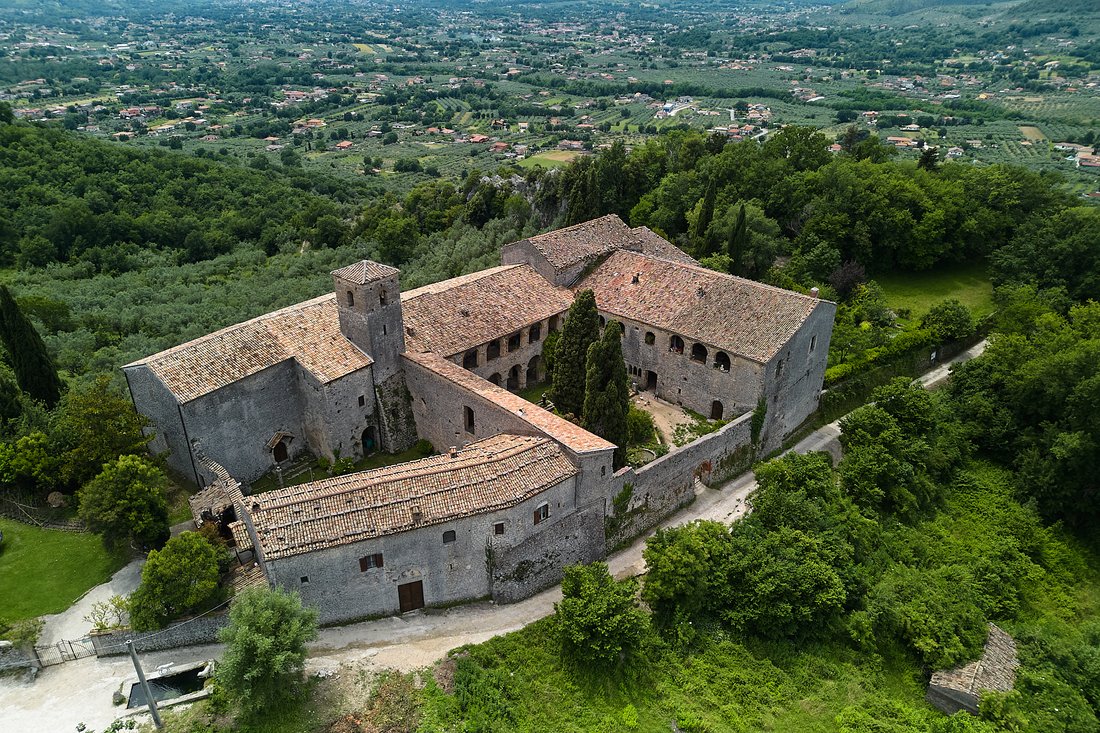
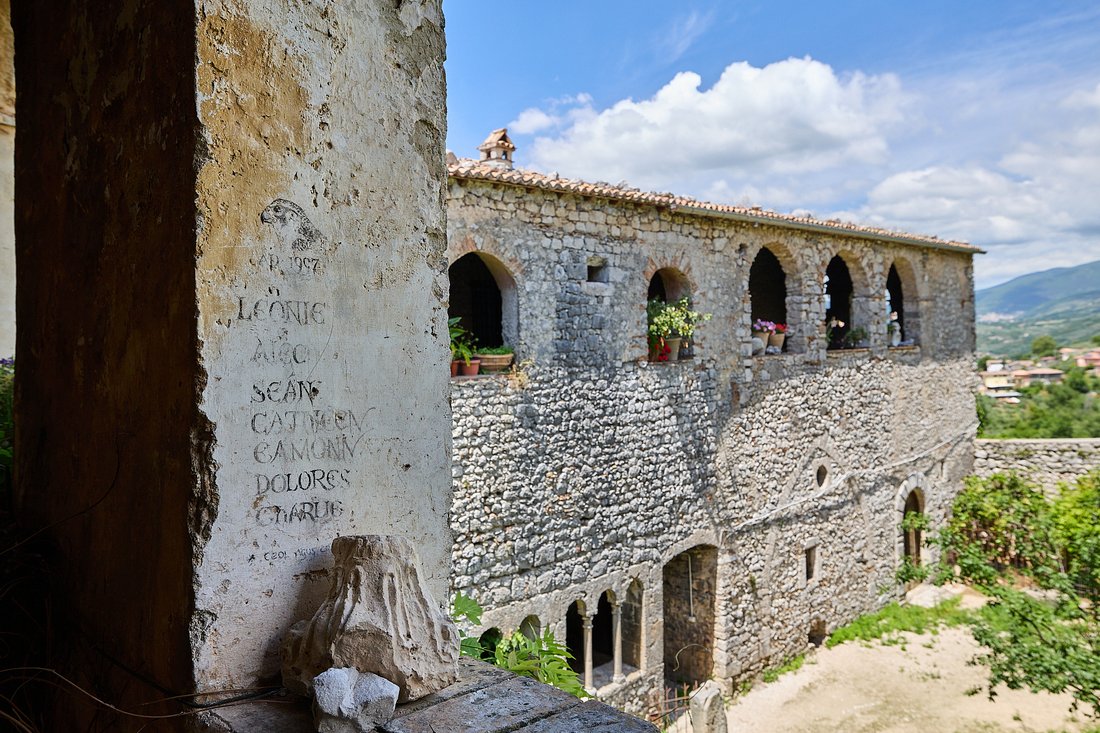
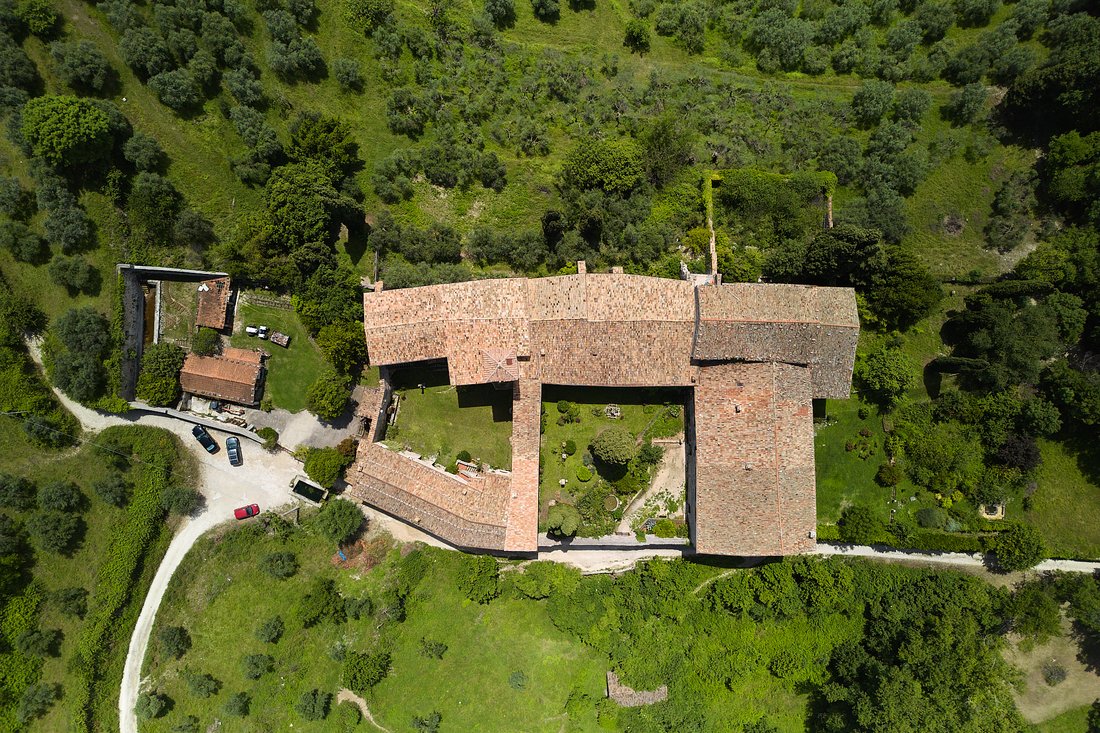
Los interiores rústicos sencillos se complementan con cuatro generosos patios exteriores y áreas ajardinadas, incluida una piscina alimentada por el acueducto romano, que le da exuberancia e introduce luz en el espacio. El nivel superior tiene un conjunto de dormitorios con techos pintados, insertados cuando la Badia estaba en uso como villa romana. La mayoría de estos espacios conservan sus mismas características medievales originales que se reflejan en la planta baja. La Capilla Superior, la Logia, la Sala Capitular Superior y el Dormitorio de los Monjes forman parte de estos espacios superiores.
Esta extraordinaria finca, que data de finales del siglo V, está situada en la cima del monte Pizzuto, en la antigua carretera a Veroli, con vistas ininterrumpidas del valle del río Cosa hasta la imponente presencia de la acrópolis prerromana de Alatri, y se encuentra a 90 minutos en coche de Roma y Nápoles. Ubicado en olivares muy antiguos que están todos protegidos y a unos 500 m de altura sobre el Mont Hernici, tiene una vista imponente sobre el valle. Estas estribaciones son lo que se convierte en el Parque Nacional de los Abruzos, la región más verde de Europa, con un 36% de toda su superficie cubierta por 3 parques nacionales, un parque regional y más de 30 reservas naturales. Aquí también se encuentra el hogar del oso pardo.
El exterior de piedra del edificio sirve de contrapunto a los grises y verdes de los olivos centenarios esparcidos por el paisaje que se levanta detrás y resalta la restauración reciente e históricamente precisa que expone sus elegantes proporciones. La Abadía, que recibe su nombre en honor al mártir San Sebastián, contiene importantes salas de recepción, una gran cantidad de cámaras más pequeñas tanto en la planta baja como en la primera, y varias capillas de importancia histórica (que todavía están consagradas en la actualidad).
El sitio está conectado a un abundante manantial local mediante un elaborado acueducto romano subterráneo, que data aproximadamente de finales del siglo IV. Se decía que el monasterio estaba situado cerca de la cueva donde vivía una diosa de la sabiduría, que tenía el poder de predecir el futuro. Esta diosa se convirtió en bruja, y de la cueva donde residía brotaba un gran manantial. Los romanos aprovecharon el agua y construyeron un acueducto que todavía proporciona agua increíble para el uso local y de la abadía. La Badia di San Sebastiano ha disfrutado de una larga existencia y, a lo largo de su historia, ha tenido estrechas asociaciones históricas con figuras importantes como Liberio, San Benito, San Servando, el cardenal Stephano Conti y los humanistas renacentistas Giovanni Tortelli y el Papa Nicolás V y los Doria Paphilj.
Un asentamiento cenobita: «Uno de los edificios monásticos mejor conservados y más antiguos que se conocen en Europa»
La estructura de la Badia, rara incluso para los estándares italianos, permanece prácticamente inalterada, un punto que ha sido estudiado por la arqueóloga Elizabeth Fentress y su equipo, quienes realizaron estudios sobre el edificio en la década de 2000. Sus hallazgos culminaron en un espectacular tratado titulado Muros y memoria: la abadía de San Sebastiano en Alatri (Lazio), del monasterio romano tardío a la villa renacentista y más allá, publicado en 2005 y que sigue siendo el estudio más definitivo sobre la Badia hasta la fecha. Los espacios monásticos de la planta baja del edificio permanecen intactos y conservan todas sus características originales. Estos espacios incluyen la Capilla Inferior del siglo XIII, con su gran cantidad de frescos, las salas de almacenamiento con bóveda de arista, una sala capitular con una columna central tallada, el refectorio de los monjes, aún completo con su atril de abad, y las cocinas y almacenes de alimentos con bóveda de cañón.
Los interiores rústicos sencillos se complementan con cuatro generosos patios exteriores y áreas ajardinadas, incluida una piscina alimentada por el acueducto romano, que le da exuberancia e introduce luz en el espacio. El nivel superior tiene un conjunto de dormitorios con techos pintados, insertados cuando la Badia estaba en uso como villa romana. La mayoría de estos espacios conservan sus mismas características medievales originales que se reflejan en la planta baja. La Capilla Superior, la Logia, la Sala Capitular Superior y el Dormitorio de los Monjes forman parte de estos espacios superiores.
A truly wonderful opportunity to purchase possibly the most beautiful Abbey we have ever had the pleasure to present. Set in an area whose beginnings are lost in the midst of time and legends, the Badia di San Sebastiano, founded in the late 5th century, is understood to have been a source of inspiration for St. Benedict. His influential rule paved the way for the formation of communal monastic living as opposed to the old hermitic way of life, and upon which the modern Christian faith was built. It is thought that St. Benedict’s teachings became the bedrock on which Christianity in Western Europe evolved as we know it.
This extraordinary estate, dating to the end of the 5th century, is situated in the saddle of Mount Pizzuto on the ancient road to Veroli, with uninterrupted views across the valley of the River Cosa to the commanding presence of the pre-Roman acropolis of Alatri, and is a 90-minute drive from Rome and Naples. Sitting within very ancient olive groves that are all protected and at about 500ms height up Mont Hernici, it has a commanding view over the valley. These foothills are what becomes the Abruzzo nation park, the greenest region in Europe with 36% of its entire surface covered by 3 National Parks, a Regional Park and more than 30 nature reserves. Here is also the home of the Brown Bear.
The stone exterior of the building serves as a counterpoint to the greys and greens of the centuries old olive trees scattered in the landscape that rises behind and highlights the recent and historically accurate restoration that exposes its elegant proportions. Named in honour of the martyred Saint Sebastian, the Abbey contains substantial reception rooms, a wealth of smaller chambers on both the ground and first floors, and a number of historically significant chapels (that are still consecrated at present).
The site is connected to an abundant local spring by an elaborate underground Roman aqueduct, dating to roughly to the late 4th century. It was said that the monastery was sited close to the cave where a Goddess of Wisdom lived and held the power to tell the future. This goddess was turned into a witch, and from the cave where she resided flowed a great spring. The Romans tapped the water, building an aqueduct that still provides amazing water for local and Abbey use. The Badia di San Sebastiano has enjoyed a long existence and through its history has had close historical associations with major figures such as Liberius, St. Benedict, St. Servando, Cardinal Stephano Conti, and Renaissance humanists Giovanni Tortelli and Pope Nicholas V and the Doria Paphilj.
A Cenobite settlement: ‘One of the best preserved, and earliest, monastic buildings known in Europe’
Rare by even Italian standards, the structure of the Badia remains virtually unaltered, a point which has been studied by archaeologist Elizabeth Fentress and her team, who carried out studies on the building in the 2000s. Their findings culminated in a spectacular treatise entitled Walls and Memory: The Abbey of San Sebastiano at Alatri (Lazio), from Late Roman Monastery to Renaissance Villa and Beyond, published in 2005 and remaining the most definitive study of the Badia to date. The monastic spaces on the ground level of the building remain untouched and retain all their original features. These spaces include the 13th century Lower Chapel with its wealth of frescoes, the groin-vaulted storage rooms, a Chapter Room with a carved central column, the Monks Refectory still complete with its abbot’s lectern, and barrel-vaulted kitchens and food stores.
The simple rustic interiors are complemented by four generous outdoor courtyards and garden areas including a pool fed by the roman aqueduct, giving lushness and introducing light into the space. The upper level has a suite of bedrooms with painted ceilings, inserted when the Badia was in use as a Roman villa. Most of these spaces retain their same original medieval features as reflected on the ground floor. The Upper Chapel, the Loggia, the Upper Chapter Room and the Monks Dormitory comprise these upper spaces.
This extraordinary estate, dating to the end of the 5th century, is situated in the saddle of Mount Pizzuto on the ancient road to Veroli, with uninterrupted views across the valley of the River Cosa to the commanding presence of the pre-Roman acropolis of Alatri, and is a 90-minute drive from Rome and Naples. Sitting within very ancient olive groves that are all protected and at about 500ms height up Mont Hernici, it has a commanding view over the valley. These foothills are what becomes the Abruzzo nation park, the greenest region in Europe with 36% of its entire surface covered by 3 National Parks, a Regional Park and more than 30 nature reserves. Here is also the home of the Brown Bear.
The stone exterior of the building serves as a counterpoint to the greys and greens of the centuries old olive trees scattered in the landscape that rises behind and highlights the recent and historically accurate restoration that exposes its elegant proportions. Named in honour of the martyred Saint Sebastian, the Abbey contains substantial reception rooms, a wealth of smaller chambers on both the ground and first floors, and a number of historically significant chapels (that are still consecrated at present).
The site is connected to an abundant local spring by an elaborate underground Roman aqueduct, dating to roughly to the late 4th century. It was said that the monastery was sited close to the cave where a Goddess of Wisdom lived and held the power to tell the future. This goddess was turned into a witch, and from the cave where she resided flowed a great spring. The Romans tapped the water, building an aqueduct that still provides amazing water for local and Abbey use. The Badia di San Sebastiano has enjoyed a long existence and through its history has had close historical associations with major figures such as Liberius, St. Benedict, St. Servando, Cardinal Stephano Conti, and Renaissance humanists Giovanni Tortelli and Pope Nicholas V and the Doria Paphilj.
A Cenobite settlement: ‘One of the best preserved, and earliest, monastic buildings known in Europe’
Rare by even Italian standards, the structure of the Badia remains virtually unaltered, a point which has been studied by archaeologist Elizabeth Fentress and her team, who carried out studies on the building in the 2000s. Their findings culminated in a spectacular treatise entitled Walls and Memory: The Abbey of San Sebastiano at Alatri (Lazio), from Late Roman Monastery to Renaissance Villa and Beyond, published in 2005 and remaining the most definitive study of the Badia to date. The monastic spaces on the ground level of the building remain untouched and retain all their original features. These spaces include the 13th century Lower Chapel with its wealth of frescoes, the groin-vaulted storage rooms, a Chapter Room with a carved central column, the Monks Refectory still complete with its abbot’s lectern, and barrel-vaulted kitchens and food stores.
The simple rustic interiors are complemented by four generous outdoor courtyards and garden areas including a pool fed by the roman aqueduct, giving lushness and introducing light into the space. The upper level has a suite of bedrooms with painted ceilings, inserted when the Badia was in use as a Roman villa. Most of these spaces retain their same original medieval features as reflected on the ground floor. The Upper Chapel, the Loggia, the Upper Chapter Room and the Monks Dormitory comprise these upper spaces.
-
Tipo de propiedad
Finca
-
Pisos
3
-
Año de construcción
1000
-
Precio/pie²
$371
Características
- Jardín
- Terraza
- Chimenea
- Vestidor
- Viñedo / Bodega
- Biblioteca
- Bodega
- Fogata
- Comunidad Cerrada
Características
Lote
- Comunidad Cerrada
- Vista Panorámica
- Vista a la Montaña
- Privacidad
- Cima de una colina
- Mansión
- Propiedad de Inversión
Interior
- Techo alto
- Oficina
- Chimenea
- Bar
- Lavadero
- Bodega
- Cocina abierta
- Biblioteca
- Encimeras de piedra
- Vestidor
Outdoor
- Terraza
- Balcón
- Aparcamiento
- Fogata
- Espacio de vida al aire libre
- Puerta
- Pérgola
- Jardín
- Viñedo / Bodega
Explorar la zona
03011 Alatri, Province of Frosinone, Italy, Lacio, Italia
Ver en Google Maps
Precio por sqft
Bajo
Alto
Ubicada en la encantadora ciudad de Alatri, esta propiedad ofrece una vida serena con acceso conveniente a servicios clave. Un corto trayecto le conecta con Roma para una vida urbana vibrante o escapa a la belleza natural de las colinas circundantes. Disfrute de la gastronomía local, experiencias culturales y un sentido de la historia italiana. Con escuelas y enlaces de transporte cercanos, asegura comodidad y conveniencia.
Ver lugares cercanos
Atracciones
Escuelas
Aeropuerto de Ciampino
Aeropuerto
64 min
Estación de Roma Termini
Estación de tren
75 min
Castillo de Fumone
Cultura & Patrimonio
15 min
Cuevas de Collepardo
Aire Libre & Naturaleza
24 min
Escuela Internacional de Frosinone
Escuela Internacional
30 min
Se unió hace 7 años
Usted ha preguntado por esta propiedad
El agente se comunicará con usted pronto por
Publicado por
70
Anuncios
2019
Se unió
Reserva una visita con the agent
Elija una fecha y si prefiere una visita virtual o presencial con el agente.
Fecha preferida
Tipo de tour

Knight Frank Tuscany
Via del Purgatorio 18R, 50123 Firenze, Via XX Settembre 5, 53017, Radda in Chianti, Italy
Ver perfil de la agencia
In 2024, Knight Frank celebrates 30 years of selling luxury real estate in Tuscany. Represented since day one by C
In 2024, Knight Frank celebrates 30 years of selling luxury real estate in Tuscany. Represented since day one by Chianti Estates – with offices in Florence and in Chianti, we have seen the business grow with the addition of more associate offices, to cover all of the main areas of international interest throughout Tuscany and beyond. Knight Frank in Tuscany provides the full range of real estate services for prospective property buyers and existing owners. From reliable research documents to valuations and purchase assistance, our aim is to help you every step of the way to owning your ideal home – and then to offer you all of the after sales services that you may require. If you are interested in a property: be it a city centre apartment, a beautiful farmhouse, a Villa or a large wine estate; we have 28 years of experience of helping people realise and enjoy their Tuscan dream.
Primera publicación
Abril 4, 2024
Propiedades similares cercanas
Nuevos anuncios en Alatri


Explorar más viviendas en venta
Alatri, Lacio, Italia tipos de propiedad
Alatri, Lacio, Italia búsquedas populares
Guías e historias relacionadas
La confianza de los mejores brokers del mundo
Los agentes tras las propiedades más excepcionales del mundo publican en JamesEdition.
- Anuncios de Sotheby's, Christie's, BARNES y Engel & Völkers
- Cada anuncio se revisa antes de publicarse
- Conecte directamente con agentes verificados
Al continuar, acepta nuestros Términos y la Política de Privacidad.